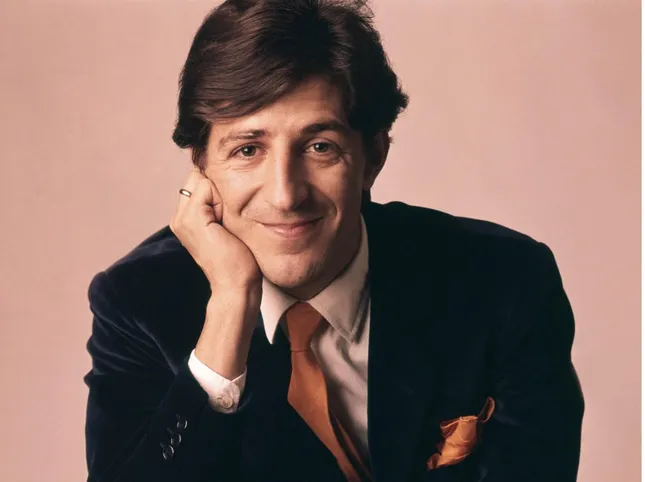
Why Giorgio Gaber still puts us in crisis in 2026
On January 1, 2003, I had just turned four and was abroad with my parents, when we received news from Italy: he had died. Giorgio Gaber. I was too young to know who Giorgio Gaber was and to understand why, after learning of his passing, my mother began to cry as if she had lost a parent. I only recorded this: Giorgio Gaber must have been someone important. At the beginning of summer 2017, in front of the classical high school exam commission, I discussed a thesis on Giorgio Gaber and irony. It took a few years, but in the end I understood (and shared) all the reasons for mother’s tears: Gaber knows how to accompany you by the hand in any phase of your existence, because he is eternally current. Always. Even in 2026.
Because Gaber is eternal
In many pieces of the Teatro Canzone by Giorgio Gaber and Sandro Luporini (another epochal genius) there are explicit references to the sociopolitical context of their times (Aldo Moro, to name one), but we must not be fooled by some specific coordinates: in Gaberian songbook the prevailing intimate human dimensionwhich is universal and timeless; an analytical look at the human being who flies beyond any space-time limit.
If we recognize “our” dynamics in the myths handed down by Homer, it is not because we have remained in the eighth century BC (although sometimes, in fact, one would think so), but because the human being is that stuff right there: it is love, war, envy, happiness, jealousy, deception, fear, pride, compassion. The texts written by Gaber and Luporini are a distorting magnifying glass which exposes all our social schizophrenias; and it works even now, despite the advent of digital and its new mechanisms, for a very simple reason.
The anatomy of doubt
Those texts still work because digital can change the asbut not the What. The questions raised by Mr. G — about the individual within his four walls, or immersed in the community — they are not outdated at all: if anything, they are amplified from new technologies.
Gaber-Luporini’s thought model continues to put us in crisis because it has no expiry date or pre-packaged solutions. It forces us to confront the very structure of what we hear and experience. After that masterpiece which is “Farmed chickens”, arranged by Franco Battiato and Giusto Pio (!), in 1978 it was the audience itself that turned against Gaber, who one moment before consoled the audience with the story of common values and the next moment he pulled the earth under their feet, questioning those same values. No more companions and winks: doubt must be cultivatedwhile there is time, before thought atrophies in its ivory tower.
Some examples
For the more sceptical, that is, for those who believe that Gaberian repertoire cannot or does not know how to attack the present, let’s try to interpret some songs with contemporary eyes: what do we use social media for, if not for “Pretend to be healthy“? The criticism of the (material) well-being that has taken away our (emotional) pain resonates today as a warning against the anesthesia of our comfort zone digital, or of useless consumerism (“when in doubt I’ll buy a motorbike”) with which we hope to satisfy anxiety.
What in 1994 was a satirical list of cultural “tics” is now a terminal diagnosis: in 2026 the distinction between “Right left”, instead of being based on the values that still divide the two schools of thought, evaporates in the global market of opinions without substance (“Where every intellectual makes an opinion, but if you look at him carefully… he’s the usual idiot” he will say in 2001, in “The endangered race”).
“When it’s fashion it’s fashion“, one of his most powerful and divisive invectives, does not attack an opponent, but the simulacrum of the revolution: we are no longer capable of rebelling because rebellion has become a question of aesthetics. Gaber puts us in crisis because he reveals to us that our participation is often just a pose, a brands ethical code that we wear to feel on the right side without ever question our privileges.
There is only the road
Gaber puts us in crisis because, in this voracious society of increasingly extreme and polarized positions, an author who dismantles our certainties with the precision of a surgeon is necessarily (and fortunately) uncomfortable and destabilizing. Mr. G is the surgeon who immediately disillusiones us: our wounds are still all open. But Mr. G – who is God after all, otherwise I don’t see who – it doesn’t just give a diagnosis: it also explains what the treatment is.
The cure is to question yourself, yes, but how? Going beyond our domestic and ideological boundariesdiscovering others who are different from us, revitalizing the streets, eschewing intellectual laziness and shortcuts and rediscovering the pleasure of the unexpected. There is only the road you can count on.