
Christmas Notes: “Frosty the Snowman”
From the book “Note di Natale” by Davide Pezzi (with a preface by Arturo Stàlteri) published by VoloLibero we publish some of the 95 songs covered by the author in the 300 pages of the volume; we tried to choose the least “predictable”.
Among the many episodes of the life of Saint Francis there is one that is fascinating but perhaps less well-known than others. The fact is reported in at least two very similar passages of the Franciscan Sources: in Chapter LXXXII of the “Second Life” of Tommaso da Celano (FF 703) and in Chapter V of the “Major Legend” of Saint Bonaventure of Bagnoregio (FF 1091) and takes place in the hermitage of the friars of Sarteano, near Siena. One winter day the evil one appears to the Saint to tempt him to the pleasures of the flesh. Francesco, to resist him, begins to flagellate himself but the pain of his body is not enough to overcome the temptation of lust that the devil sends him, so he leaves his cell and starts running naked through the snow of the garden. He collects some of it and, shaping it into the shape of a sphere, builds seven mannequins, and begins to speak to its body: «Behold, this largest one is your wife; these four, two are your sons and two your daughters; the other two are the servant and the maid, necessary for the service. Hurry, we need to dress them all, because they’re dying from the cold. If this multiple concern is a burden to you, serve the Lord alone with diligence.” The devil, confused, leaves and the Saint returns to his cell, glorifying God.
The snowman, therefore, has been part of our culture for a long time, even if he has not always been a good-natured friend of children like today. Snowmen were originally used as representations of unwelcome figures within the community, for example the Victorians often built snowmen dressed as policemen and threw snowballs at them. The first illustration in which a snowman appears is found in the “Book of Hours”, dated 1380, and preserved at the National Library in The Hague.
For our story, however, we don’t have to go back that far in time, but only to 1950. The place is however uncertain, as both West Virginia and White Plains in the state of New York and Armonk, also in the state of New York, compete for the setting of the song. “Frosty the Snowman” was written by Walter “Jack” Rollins and Steve Nelson in the spring
from 1950; in fact Rollins, the author of the text, was born in Keyser, West Virginia, and probably the inspiration for the
The song comes from trips he took as a child to the snow-capped Allegheny Mountains. The idea of writing a song dedicated to winter came to the two authors from the success of “Rudolph, the Red-Nosed Reindeer” by country singer Gene Autry in Christmas 1949. After the great success of “Rudolph”, Autry was looking for another seasonal success, so he willingly accepted the little song that Rollins and Nelson proposed to him, which tells the story of a snowman who comes to life when a group of children put a magical snow hat on his head. silk; the puppet and the children spend a day playing, until the heat forces Frosty to leave for a colder climate, promising the children “Don’t cry / I’ll come back again one day”.
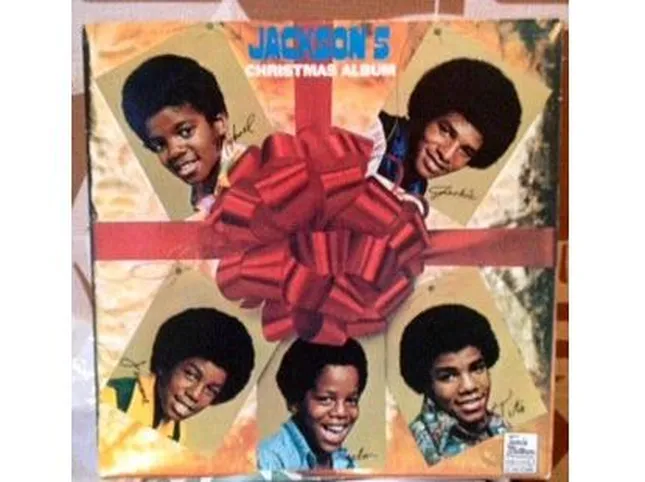
Gene Autry’s version reached seventh position on the Billboard charts. Although “Frosty the Snowman” is closely associated with Christmas, the holiday is never actually mentioned in the song. However, over the years, the song will be included in numerous Christmas albums and performed by many singers, including Nat King Cole, the comedian Jimmy Durante and the Jackson 5 for the voice of a very young Michael Jackson. In 1950 the song also gives life to a children’s book, “Frosty the Snow Man”, adapted by Annie North Bedford and illustrated by Corinne Malvern, and in the same year also to a three-minute animated short film, which in the United States is a small classic broadcast regularly every year in
Christmas, demonstrating that even a simple little Christmas song sometimes has the power to enter the collective imagination.
