“Stranger Things”, the meaning of “Heroes” in the final titles
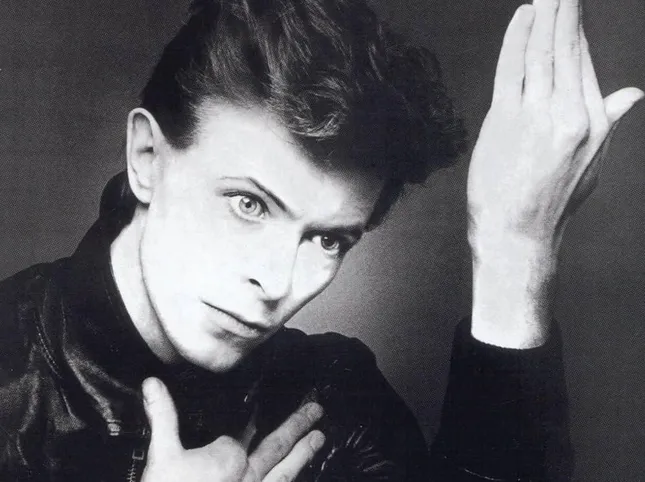
Even in the ending of “Stranger Things“, which concluded last January 1st with the eighth episode of the fifth season after nine years, music continues to occupy a central position within the narrative. The songs that accompany the closing of the most followed series on Netflix come once again from the Eighties (here is the list and here is the official playlist) and, as happened in the previous season with “Running up that hill” by Kate Bush – even back in the charts after 35 years – and “Master of puppets” by Metallica, they function as real narrative elements, emotional and temporal reference points capable of connecting characters, eras and different levels of the story. After Prince’s “Purple Rain” (here is our in-depth analysis), there is no room for background noise even when the narrative traditionally ends and the characters seem to leave the scene. In fact, the series relies on just one song, “Heroes” by David Bowie his last breath, transforming the end credits in a gesture of synthesis, memory and meaning, capable of holding together story, history and collective imagination.
The choice was not born from a marketing strategy nor from a nostalgic calculation, but from a decision made at the moment in which the series was defining its epilogue. “It was Joe Keery himself who suggested using Bowie’s version“, Tudum tells Netflix Ross Duffercreator, screenwriter and director together with his brother Matt Duffer of the famous series.
“Once Joe said that, we immediately knew that it was the right song to close the series with because, in many ways, it’s a ‘Stranger Things’ anthem. Using Bowie’s original version just seemed perfect for the conclusion.”
A statement that clarifies how “Heroes” is not used as a simple emotional accompanimentbut as a final narrative element, capable of summarizing the path of a series built on friendship, sacrifice, resistance and loss. It is no coincidence that “Stranger Things” had already intertwined its musical language with that of Bowie through the famous reinterpretation by Peter Gabrielused in the third episode of first season“Chapter Three: Holly, Jolly” (“Chapter Three: Christmas Lights”), when the police recover what everyone believes to be the body of Will Byers, and then again in the final episode of third season“Chapter Eight: The Battle of Starcourt” (“Chapter Eight: The Battle of Starcourt”). Gabriel’s cover had given the song a funereal and suspended dimension. Bowie’s originalchosen for the finale, returns instead the sense of conscious closurecrossed by a form of dignity and resistance.
Published in 1977, “Heroes” was born in the summer of 1977 during David Bowie’s Berlin period, in the Hansa Studios in West Berlin, a few meters from the Wall, while the artist was engaged in a phase of personal and creative reconstruction that would lead to the so-called Berlin Trilogy. The idea for the song took shape starting from a casually observed image of two people kissing near the bordera minimal gesture that Bowie transformed into a story of daily resistance and the possibility, even temporary, of victory. Upon release, the song did not achieve immediate success and remained on the margins of the charts, but over time it took on growing weight, becoming one of its author’s most representative songs. Recorded with Brian Eno and produced by Tony Visconti, with decisive contributions from Carlos Alomar and Robert Fripp, “Heroes” spanned different decades and contexts, until it took on an explicit political meaning during the Berlin concerts of 1987, when Bowie performed it near the Wall in front of a divided audience. Since then, and even more so after the artist’s death in 2016, “Heroes” has established itself as a song capable of surpassing its time of origintransforming itself into a cultural point of reference, continually reread and reinterpreted, also through famous covers such as that of Peter Gabriel, which has become part of the imagination of “Stranger Things” since its first season.
On the occasion of the finale of the Netflix serieswas published on the official channels dedicated to David Bowie a long text on “Heroes” with some memories of the same author who passed away on January 10, 2016:
Ten years after the release of “Heroes” in 1977, Bowie brought his Glass Spider Tour to Berlin in the summer of 1987. He performed as part of a series of concerts in the Reichstag, a highly evocative symbol of a divided city, just meters from the Wall. The concert was held near the border, where many East Berliners flocked to listen to music banned by the Soviet government, allowing both halves of the city to witness the same show, with “Heroes” being the most emotionally intense moment for both sides.
Bowie later recalled: “We had heard that some East Berliners might have the chance to hear the concert, but we didn’t realize how many there would be. And on the other side there were thousands of people who had come up to the wall. So it was like a double concert, with the wall dividing it. And we could hear them cheering and singing along with us on the other side. God, it still gives me a lump in my throat today. It broke my heart. I’d never done anything like it in my life. life, and I don’t think I’ll ever do it again.”
During the shows, East German authorities reacted harshly against fans, attacking them with water cannons and arresting hundreds of people. Those concerts helped change the climate around the Wall, which had stood for over a quarter of a century and was now viewed with renewed anger. Within two years the Wall fell, and the Concerts For Berlin have long been believed to be a turning point for the East.
When Bowie died in 2016, the German Foreign Ministry confirmed this by posting a live version of “Heroes” on social media and declaring: “Goodbye David Bowie. You are now among the #Heroes. Thank you for helping to break down the #wall.”
It is within this accumulation of history, memory, music and imagination that “Stranger Things” chooses to place one’s farewell as an act of narrative coherence and not as an ornamental citation. “Heroes”, in the final titles, does not just tell the end of a series, but brings back the sense of a shared resistance, of a community that fought together, even if only “for one last ‘Dungeons & Dragons’ campaign”, against what seemed invincible.