Some of the memorable Grammy performances
Choose which ones Grammy performance they may be defined as truly memorable it is, by its nature, an imperfect and inevitably subjective exercise. The history of the awards awarded by the National Academy of Recording Arts and Sciences is dotted with moments which, in different ways, have left a mark, not only for their musical valuebut also for thevisual, symbolic, cultural or overtly social impact that they were able to generate. Over the course of the editions, the Grammy stage has transformed several times into a place of revelations, of sudden consecrations, of strong stances, of tributes full of emotion and of ruptures capable of redefining the very boundaries of the musical television show. On the eve of the 68th Grammy Awardss, scheduled for February 1, 2026 at the Crypto.com Arena in Los Angeles, is almost automatic return in mind to performances that contributed to building the very identity of the ceremonysometimes even stealing attention from the awards ceremonies, also fueling curiosity about what the artists called to perform this year will decide to bring to the stage. On Sunday evening, with Trevor Noah as host for the sixth and last time, they are expected as performer Lady GagaAddison Rae, Alex Warren, Andrew Watt, Brandy Clark, Chad Smith, Clipse, Duff McKagan, Justin Bieber, KATSEYE, Leon Thomas, Lola Young, Lukas Nelson, Ms. Lauryn Hill, Olivia Dean, Pharrell Williams, Post Malone, Reba McEntire, Sabrina Carpenter, Slash, SOMBR and The Marías. On stage, but as presenters, they will see each other also Carole King, Chappell Roan, Charli xcx, Doechii, Harry Styles, Jeff Goldblum, Karol G, Lainey Wilson, Marcello Hernández, Nikki Glaser, Q-Tip, Queen Latifah, and Teyana Taylor. Among the eagerly awaited moments of the ceremony is the segment “In memoriam“, which often offers emotional performances in memory of personalities who passed away in the year just ended. For this year’s edition, the performances of Ms. Lauryn Hill in honor of D’Angelo and Roberta Flack. Post Malone, Andrew Watt, Chad Smith, Duff McKagan and Slash will perform instead tribute to Ozzy Osbourne.
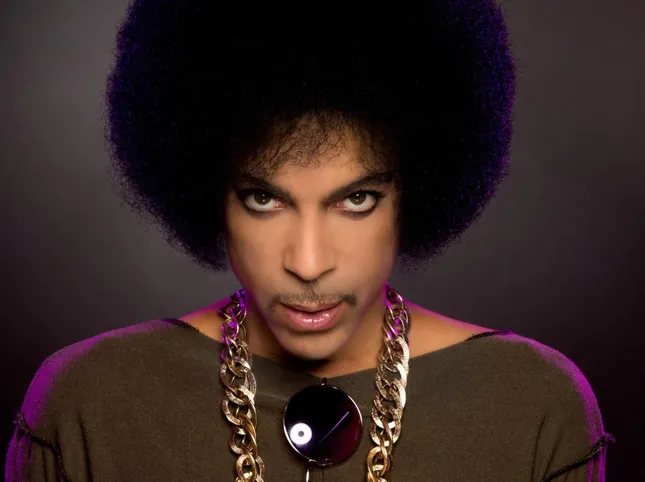
In over sixty years of history, the Grammys have crossed eras, languages and profound transformations of popular music. Since the seventies, when soul and funk became a vehicle of pride and social awareness – as in the performances of Gladys Knight and the Pips with “Midnight Train to Georgia” in 1974 or by Stevie Wonder with “You Haven’t Done Nothing” in 1975 – until the first visual and cultural fractures of the 1980s. In 1984 the Eurythmics they undermine genre codes with a “Sweet Dreams” destined to change the pop imagination forever and, the following year, Prince and his band the Revolution explode on stage with “Baby I’m a Star”, imposing a new idea of charisma and sensuality, while Herbie Hancock and his guests – nothing but Howard Jones, Thomas Dolby and Stevie Wonder – they transform technology into pure spectacle with a legendary “Synthesizer Battle”, a sonic manifesto of the electronic aesthetics of the 1980s.
In 1988, Michael Jackson signs one of the highest moments in the history of the Grammys by performing “Man in the Mirror”, accompanied by a gospel choir, giving a performance suspended between spirituality and introspection. This was followed in 1989 by the irruption of Metallicawho with “One” bring metal to a stage that had almost always ignored it until then.
The nineties opened under the sign of vocal consecration: in 1994 Whitney Houston he opens the ceremony with an “I Will Always Love You” that instantly becomes legend. In 1998, the same stage hosts two opposite and complementary moments: Bob Dylan envelops the atmosphere in an uneasy darkness with “Love Sick,” while Aretha Franklincalled at the last minute, transforms “Nessun dorma” into an act of pure musical greatness. In 1999, in that red kimono designed for her by Jean-Paul Gaultier which became iconic together with Japanese-inspired choreography and scenography, Madonna dominates the scene with “Nothing Else Matters”, while Ricky Martinwith “La Copa de la Vida”, inaugurates the era of global Latin pop, rewriting the very concept of the star-making moment.
In 2001, the meeting between Elton John and Eminem on “Stan” breaks down cultural and symbolic barriers, while in 2003 the tribute to Joe Strummer takes shape in a choral version of “London Calling”, played by Bruce Springsteen, Dave Grohl, Elvis Costello and Little Steven.
The following year, in 2004, Prince and Beyoncé share the spotlight, blending “Purple Rain” and “Let’s Go Crazy” into a lesson in intergenerational charisma.
2005 is the year of great organized chaos: “Across the Universe”, sung by an army of stars, transforms the Grammy stage into a surreal collective choir. In 2008, Amy Winehouseconnecting from London, leaves an indelible mark with “You Know I’m No Good” and “Rehab”, while Tina Turner and Beyoncé they celebrate the raw energy of “Proud Mary”; in the same edition, the Foo Fighters transform “The Pretender” into a tribute full of emotional power. In 2009, i Radiohead bring the polyrhythm of “15 Step” into an unexpected orchestral dimension, while in 2010 Pink suspends time and the body with the aerial performance of “Glitter in the Air”.
In 2011, Lady Gaga emerges from a giant egg to sing “Born This Way,” transforming the Grammy stage into a manifesto of identity and inclusion. 2012 is the year of Adelewhich excites with “Someone Like You” and “Rolling in the Deep”, and Jennifer Hudson, called to pay homage to Whitney Houston with a touching “I Will Always Love You”. In 2014, Beyoncé and Jay-Z they open the ceremony with “Drunk in Love”, imposing a new idea of pop power and sensuality.
2016 marks a political and aesthetic watershed: Kendrick Lamar shakes the audience with “The Blacker the Berry” and “Alright”, while Lady Gaga pays homage to David Bowie through a medley that runs through “Space Oddity,” “Changes,” “Ziggy Stardust,” “Suffragette City,” “Rebel Rebel,” “Fashion,” “Fame,” “Let’s Dance” and “Heroes,” fusing technology and memory.
In 2017, Beyoncé returns to center stage with “Love Drought” and “Sandcastles”, A Tribe Called Quest brings the political anger of “Space Program” and “We the People”, while Adele signs another key moment with “Hello” and pays homage to George Michael with “Fastlove”. 2018 is the year of busy messages with Bruno Mars and Cardi B who celebrate nineties funk with “Finesse”, while Kendrick Lamar, along with U2 and Dave Chappelleturns “XXX” into a visual and political statement.
In 2019, Dua Lipa and St. Vincent take over the stage with the medley “Respect”, “Masseduction” and “One Kiss”, while Alicia Keyslandlady, tells her story through “Songs I Wish I Wrote”. In 2021, Harry Styles opens the evening with “Watermelon Sugar”, Cardi B and Megan Thee Stallion bring “Up” and “WAP” to the center of the pop debate, and Taylor Swift transforms the stage into an enchanted forest with “Cardigan”, “August” and “Willow”.
2022 marks the definitive rise of a new generation: Billie Eilish makes “Happier Than Ever” cathartic, i BTS confirm the global energy of K-pop and their status with “Butter” and Lil Nas stages a triple identity manifesto with “Dead Right Now”, “Montero” and “Industry Baby”. In 2023, hip hop celebrates itself with “Hip Hop 50”, fifteen minutes of history condensed into a single pass of the microphone. The following year the Grammys became a place of memory and celebration: Joni Mitchell returns to the stage with “Both Sides, Now”, the U2 connect live from the Sphere in Las Vegas for “Atomic City,” while the “In Memoriam” segment turns into a long collective act that runs through “For Once in My Life,” “The Best Is Yet to Come,” “Nothing Compares 2 U,” “Ain’t No Sunshine,” “Lean on Me,” “Optimistic” and “Proud Mary,” making tribute to Tony Bennett, Sinéad O’Connor, Clarence Avant and Tina Turner.
Finally, last year, he proposed reflections of the more immediate present: Sabrina Carpenter conquers the public with “Espresso” and “Please Please Please”, Chappell Roan affirms its identity with “Pink Pony Club”, while the tribute to Quincy Jones takes shape through a medley that combines “Fly Me to the Moon”, “Let the Good Times Roll”, “Bluesette”, “We Are the World” and “Don’t Stop ‘Til You Get Enough”; to close, Benson Boone brings “Beautiful Things” to the stage, giving a glimpse of the future.