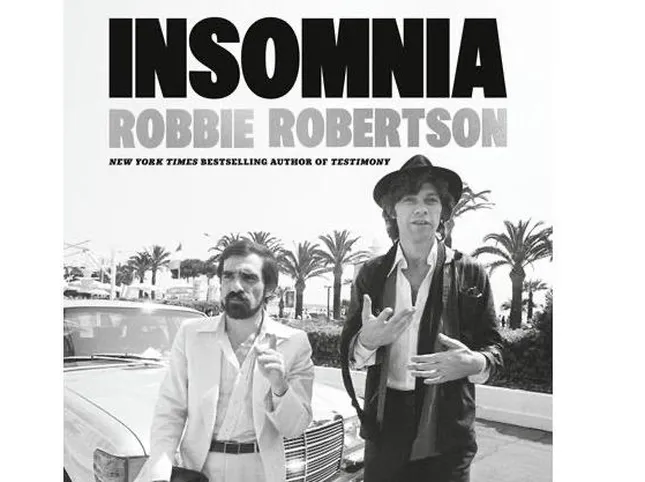
Scorsese and Robbie Robertson, a musical (and toxic) friendship
A few weeks ago, Francesco De Gregori closed his concert dedicated to Rimmel by quoting “The Last Waltz” and its theme, included in “Buonanotte fiorellino”. It is just the latest testimony to how important that film – the story of the Band’s last concert, with guests Dylan, Van Morrison, Joni Mitchell and many others – is in the rock imagination.
The mind was that of Robbie Robertson, the camera that of the great Martin Scorsese, in the initial phase of his career as a director.
Robertson, who passed away in 2023, is one of the greats of rock, as an author (“The weight” and who knows how many others) and as leader of the Band, with which he rediscovered the roots of American rock and accompanied Dylan in his electric breakthrough. After “The Last Waltz” the Band broke up to reform without him, who dedicated himself mainly to soundtracks – although he recorded some wonderful solo albums. Scorsese is Scorsese: one of the greatest directors of all time, who had one of his great strands in rock. The recent docuseries “Mr. Scorsese” on AppleTV, among other runs, recounts his beginnings, precisely in music: in “Woodstock” (1970) he was co-director but credited only as editor (and the film won an Oscar, as well as creating the myth of the festival).
Then the two met: a collaboration born in the chaos of the 70s and continued without interruption from “Raging Bull” (1980) to “Killers of the Flower Moon” (2023). Their story is now at the center of “Insomnia”, Robertson’s posthumous book, released in Anglo-Saxon countries a few weeks ago.
A creative and self-destructive friendship
The book focuses above all on the period 1976-1980, immediately after the filming of “The Last Waltz”, the period in which the two worked on the editing and the final version, in the midst of a turbulent phase: addictions, relationships that crumble, nights without sleep and a bond that becomes both salvation and trap.
Robertson recounts Scorsese’s invitation to move into his house: it was a sort of rescue that immediately became a vortex of insomnia, drugs and a delirious pace of life. After the end of the Band, as his family life fell apart, Marty was in the only stable relationship but also a “bromance” – as we would say today – that almost destroyed two of the great minds of American pop culture.
The Construction of “The Last Waltz”
The pages dedicated to the film tell of an authentic shared obsession: Scorsese, still shaken by the flop of “New York, New York” (1977), was experiencing personal and artistic crises. Robertson was trying to close the story of the Band, which was now disintegrated. The book shows how the making of the film united them in an almost symbiotic way: they exchanged rare films and 45s, spoke the same language between music and cinema, lived in the same emotional chaos. In those pages were born the conditions for a collaboration that overcame that apparently chronic phase and was destined to last over forty years, until “Killers of the Flower Moon”, released in 2023 when Robertson had already passed away, and with his last song.
In the book Robertson does not absolve himself, he tells his story in a crude way: he shows a man who “didn’t know how to undo anything anymore” and who found a brother in Scorsese. And it is moving to read how, after those extreme years, the relationship transforms into a mature and stable collaboration: Robertson effectively becomes Scorsese’s permanent musical consultant.
Robertson’s wife, Dominique, in the afterword explicitly tells how that relationship was both a blessing and a curse, but also the origin of a friendship destined to last a lifetime: “a profound and loving friendship that spanned a lifetime”.
Robbie Robertson’s Last Waltz
“Insomnia” is a precious document because it testifies to how “The Last Waltz” was born from chaos, not from celebration, and how Scorsese built his own method on his relationship with music, long before Hollywood recognized it. It is a less “large” book than “Testimony”, Robertson’s autobiography (also published in Italian), but it should be combined with the viewing of the beautiful docuseries “Mr. Scorsese” on Apple TV. It recounts one of the most relevant artistic paths of recent decades, between successes and failures, the many lights but also the shadows and the human cost of things we have seen and heard dozens of times.