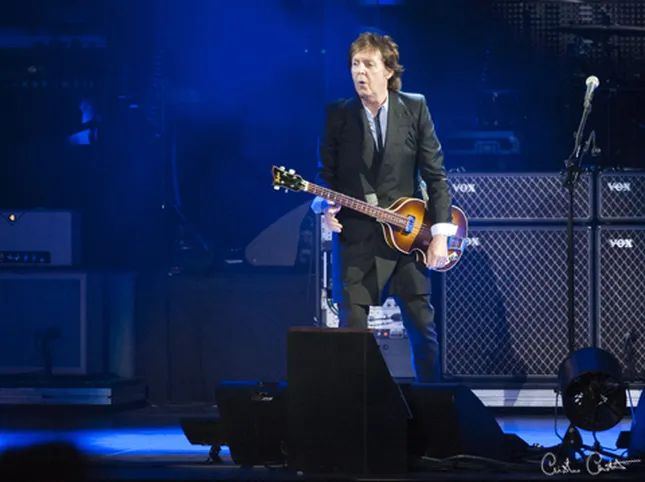
Paul McCartney criticized the Rock and Roll Hall of Fame
Paul McCartney entered the Rock and Roll Hall of Fame as a solo artist in 1999. An inevitable recognition, which however arrived, according to him, four years late compared to a promise received. This is told in an interview that remained unpublished for years, conducted in March 2015 by journalist Joe Hagan while he was working on the biography of Jann Wenner (Hall co-founder), “Sticky Fingers: The Life and Times of Jann Wenner and Rolling Stone Magazine,” published in 2017. Only part of that long conversation ended up in the book; the rest were recently made public by Vanity Fair.
The point of McCartney’s frustration dates back to 1994. The Beatles had already been inducted into the Rock Hall in 1988 and Sir Paul was a regular presence at the ceremonies over the years: in 2015 he participated in Ringo Starr’s entrance, while in 2021 he gave the speech for the Foo Fighters. But in ’94 he received a phone call that shocked him: Wenner wanted him to introduce John Lennon. McCartney initially accepted, then had second thoughts. He realized that he himself would not be inducted into the class of 1994 due to his solo career. “Wait a minute. What about me?” he remembers saying. “Maybe I’ll give the speech for John, and then maybe I’ll come in too.” The answer, according to his account, was negative. “No, we can’t do that.” McCartney adds with a hint of sarcasm that, in all his negotiations with Wenner, “it’s never him who decides, but someone else down the hall.”
At that point, again according to his version, Wenner promised him entry in 1995. “I said ok. I accepted the deal. The following year nothing happened“, he says. Hence the outburst: calls to ask for explanations and the feeling of having been made fun of. Wenner, in the following years, declared that he did not remember that agreement. Behind the disappointment there was also a relationship that was never simple. McCartney always had the perception that Wenner was closer to Lennon’s narrative. “John and I have always been equals,” he explains in the interview. After the 1980 assassination, however, Lennon became the martyr, “the Buddy Holly, the James Dean of the situation”. An inevitable process, but which according to Paul has triggered historical revisionism. In this context he also mentions Yoko Ono as a figure who would have contributed to consolidating that public image. “All this inevitably influenced my way of thinking,” he admits.
Induction into the Rock Hall finally came in 1999. With one detail that remained famous: his daughter Stella showed up wearing a t-shirt with the words “About f—ing time”, more or less “It’s about fucking time”. Today McCartney looks ahead. After the long “Got Back” tour between 2022 and 2025, he took a break from live performances. Recent projects include the documentary “Man on the Run”, directed by Morgan Neville, dedicated to his post-Beatles career in the Seventies and the birth of Wings. A period that produced fundamental albums such as “Band on the Run”, symbol of his artistic rebirth.