Ornella Vanoni, when she was disqualified from Sanremo
The fault of the non-original song: but the artist was absolutely innocent. All born from a mess that occurred in Mogol’s musical school who fished out a piano and voice audition of that song.
Carlo Conti and Laura Pausini on the stage of the Ariston in Sanremo from 24 to 28 February will remember the three protagonists in the history of the Festival who passed away in recent months: the record holder of conducting Pippo Baudo, the doyen of conductors Peppe Vessicchio and the unrivaled interpreter of eight editions Ornella Vanoni. Who knows if one of the two presenters will also remember that exactly thirty years ago the Sanremo jury inflicted on Ornella the most bitter humiliation of her career?
In 1996 the artist was disqualified for plagiarism and they didn’t even allow her to reach Ariston to confront and attempt to defend herself with the organizing commission that had decreed her expulsion. She took it very badly. In an interview with the weekly The Express he fired nothing at the demonstration he defined «Corrupt festival, with the winner decided on the table, in a patronage exchange between record companies and the organization». From the columns of Corriere della Sera she received the contemptuous response from Pippo Baudo, host and artistic director: «Just nonsense. A way to vent the pain of being excluded. Of course I didn’t expect such a lack of class from a lady. Once you leave, you don’t try to get back in through the window. But prima donnas, especially if embittered, always want to be right». The fact was that Ornella Vanoni was indeed right. Already on the eve of the race she was among the favorites to win. He had personally written the lyrics to “Bello amore”, his song: “Beautiful, beautiful love / Beautiful love that no one can deny / We want you eternal / We beg you on our knees to stay / Don’t go away, you’ll make us die…”.
The disqualification was not expressed with a formal accusation of plagiarism, but rather as a violation of the Festival regulations: the judges – the lyricist Sergio Bardotti, the choreographer Gino Landi, the musician Marco Diano, the Rai official Sandra Bemporad – decided to apply article 18, which establishes that the competing song cannot have previously been performed and listened to in public. In reality it was a classic self-plagiarism, not of the lyrics of the innocent Vanoni but of the music: two songs had been created with the same melody.
Even then, the circumstance was nothing new: Italian discography and the Siae archives abounded in cases of this kind. Also illustrious: “Luci a San Siro”, the greatest success of the singer-songwriter Roberto Vecchioni, written in 1971 with Andrea Lo Vecchio, had already been recorded months earlier by Rossano with another text and the title “Ho lost count” also signed by Vecchioni-Lo Vecchio. In 1972 Mia Martini recorded “Neve bianca” and Ivana Spagna published “Ari Ari”, an identical melody with different titles and lyrics composed by the same authors: Bruno Lauzi and the brothers Carmelo and Michelangelo La Bionda.
But Sanremo is Sanremo and article 18 was authentic. At least in the case of “Bello amore”. Replacing the disqualified Vanoni was, as per the rules, another singer from her record company, Enrico Ruggeri who had no scruples in confessing that before the Festival he had played his song “L’amore è uninterno” to at least one hundred people.
The case of “Bello amore” arose from a hodgepodge conceived in the Centro Europeo Toscolano, the musical specialization school founded and animated by Mogol. That melody was composed by CET student Giuseppe “Gioni” Barbera and combined with the text written by another student, Cecilia, with the title “Mare mare”. Performing it on a couple of occasions – in the annual CET concert at the Avigliano Umbro theater and at the Vallemaria Recording gathering in Ancona – was Emilia Pellegrino, also enrolled in Mogol’s school. “Mare mare” had not been registered with Siae.
After leaving the CET, Emilia Pellegrino showed herself to be so fond of that song that she presented it as “unreleased” and sang it at the end of a long performance as a guest on the Sunday program “Tornando a casa” conducted by Paolo Testa and Laura Tanziani on Rai Radio2.
The program was broadcast just fifteen days before Sanremo 1996, burning the song admitted to the competition “Bello amore”, the identical melody of “Mare mare” with the new lyrics written for her own voice by Ornella Vanoni, to the dismay of the artist and the discouragement mixed with embarrassment of the composer Giuseppe “Gioni” Barbera and of the artistic director of the CET Mario Lavezzi, producer of Ornella Vanoni. Rai Radio2 had made Rai1 the flagship network responsible for broadcasting the Festival. An uproar that resulted in the application of article 18 and the elimination of Ornella.
The artist made peace with Sanremo only three years later when she was awarded the Lifetime Achievement Award and participated with a song sung together with Enzo Gragnaniello, “Alberi”. He returned again in 2018, once again not as a soloist but together with Bungaro and Pacifico for the song “Imparare ad amarsi”.
Time has led everyone to forgiveness, without apparent scars. On the contrary. Mogol already hired Giuseppe “Gioni” Barbera as a CET teacher in 1996, promoting him as musical coordinator of the school’s courses in 2000. Mario Lavezzi has always been Mogol’s most assiduous collaborator.
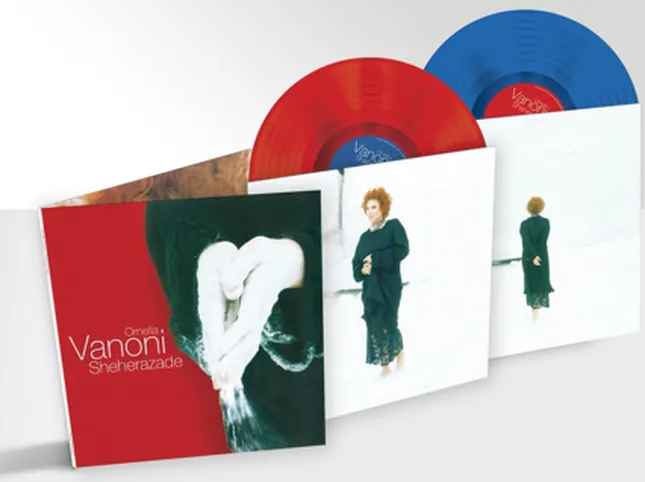
Thirty years after that accident and a few weeks before Sanremo 2026, a special edition of Ornella Vanoni’s album “Sheherazade” was published «enriched by a piano and voice audition of “Bello amore”, performed by the authors of the song Giuseppe Barbera and Ornella Vanoni».
Of “Mare mare”, sung by Emilia Pellegrino and explicitly credited to maestro Barbera, the excerpt of when she performed it on the Rai Radio2 program, generating chaos in Sanremo, remains on Youtube.
It must be said that Ornella immediately had fiery words for the organizers of the Festival without mentioning any grievances towards Mogol. To whom she has since limited herself only to blaming the worst album of her career. He did it in 2019 during the Rai Radio1 broadcast “Un giorno da pecora” in which he hilariously mocked the author of the lyrics of her 45 rpm single from 1963 containing the songs “Mario” and “Coccodrillo”: «It was before Mogol became the author of Battisti – the singer told the interviewers Geppi Cucciari and Giorgio Lauro – Once I made a friend of mine listen to it and she laughed out loud.”
“Mario” and “Coccodrillo” were the Italian adaptations of two American successes. The second was born from the interpretation of the queen of rockabilly Wanda Jackson: the song was titled “Whirlpool” (whirlpool), but Mogol in a fit of animalist fantasy had translated it as “Coccodrillo” and Ornella Vanoni was accompanied in the orchestration by none other than a choir group called Gli Alligatori.
“Coccodrillo” has never been captured on video, that is, never performed by Ornella in front of a camera. There is only a very rare color film from 1963 – complete with ministerial authorization for public screening – in which she sings the song directed by Vito Molinari, the historic RAI director: a film intended, however, not for state TV but for the Cinebox, a device that had a short life, from 1959 to 1967. Therefore, to Ornella’s great relief, it cannot be shown again in the various Techetechete’.
“Crocodile” (Bovi archive)