Kneecap: “Fear of consequences cannot be a brake”
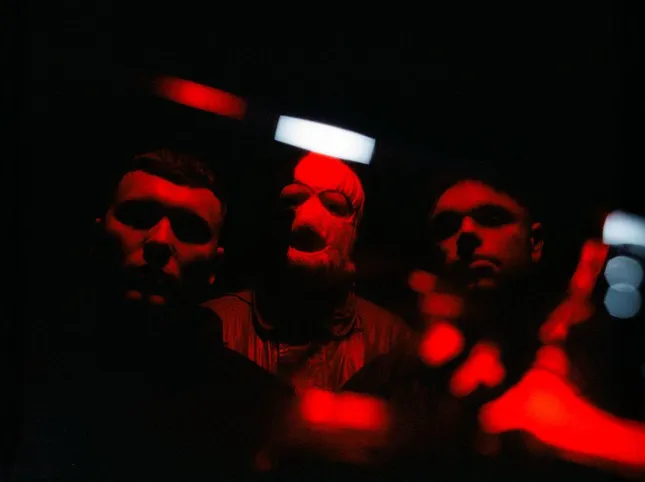
Kneecap, in the last two years, have been among the most controversial bands on the world scene. Ended up in the sights of the authorities, they had to face trials on charges of terrorism: their songs were considered, by some, to instigate violence and insurrection. An attempt was also made to block its activity. In September 2025, however, the charges were dismissed, marking a recently confirmed turning point. The Irish rap trio, formed by Mo Chara, Móglaí Bap and DJ Próvaí, returns with their second album, “Fenian”, out on May 1st. An incendiary album, produced by Dan Carey, which channels political tensions, identity and provocation. This is told by DJ Próvaí, who shows up for the interview with his balaclava. In the film “Kneecap”, released in 2024, it is explained how it all came about: at the beginning he wore it because he worked as a teacher and didn’t want to be recognized during his first concerts, a crazy magma of rap, punk, drugs and electronics. Over time, however, that balaclava became much more than a simple covering: it became a symbol. They will be in Italy in June for several dates.
The first question concerns the context in which this album was born, the difficulties and censorship you suffered. This album is incredibly inspired: has everything that happened to you paradoxically given you greater conviction?
Yes, 100%, absolutely. We spent a year and a half, maybe two, between trials and accusations of terrorism. But being labeled a terrorist is an old method used by governments to try to diminish and prevent the spread of an uncomfortable message. If you say something that makes a government uncomfortable, it’s usually something that many people identify with and want to hear. This gave us strength. It’s true: there was a lot of censorship, at different levels. The British government moved to try to stop us from travelling, because they knew that if we were involved in a trial, as we happened, many countries would not approve our arrival, including America.
The trials were fuel for the fire for your music.
We knew that we could use a lot of material from those processes on the album. I think of a piece like “Carnival” where we talk about a “carnival of distraction”: every time we were in the media or on the news, there was less time to talk about Palestine or what was happening there with the genocide. The more they talked about us, the less they talked about certain topics. Those processes were the true genesis of the album.
Why “Fenian”?
“Fenian” has been used in recent times, in the last hundred years or so, as a derogatory term, as a slur against Irish nationalists and Irish people, portraying them as backwards living in the forest, as savages. It’s part of the propaganda used against the Irish. But originally, “Fenian” was a term that came from mythology and folklore. There was a figure called Finn: Finn was the leader of the Fianna, a kind of giant, and the Fianna were his band of warriors. Thus, being called “Fenian” was a term that suggested pride, a sign of distinction.
Do you exalt its traditional meaning?
Yes, that meaning has been lost, but many movements and struggles throughout Irish history have used the term “Fenian” in its historical sense. With this album, we’re redeeming that word and using it again as a sign of reclamation. Instead of being something that brings us down, it is something that makes us proud and uplifts us. All this connects to the discussion we had earlier.
In your film released in 2024, you explain well the importance of recovering the Irish language as a political gesture. How necessary is it to tell the story, but without nostalgia?
In the way of telling the Irish there’s a lot of nostalgia, especially in the Irish-American films that are made. Everyone wears orange sweaters, the setting looks like a college, there’s talk of leprechauns and stuff like that. But the real Irish story is, in large part, a story of oppression: 800 years of colonialism and oppression, and of systematic destruction of Irish culture, language and music. The harp, for example, was banned in Ireland, along with many other instruments and even the methods of making them. They tried to destroy it to prevent people from expressing themselves, because the first thing a colonial power does is take away the language and the ways to talk about themselves. In this way, one can subjugate and control a people much more easily. That’s why it’s important for us to draw from Irish folklore and popular music: because that’s where the real story of Ireland lies.
But isn’t there a risk of being understood by fewer people?
When the English occupied Ireland, they created a school system where instruction was given in English. Now English is one of its major spoken languages. The Irish language, however, has somehow survived and we are now recovering it, bringing it back from the brink of extinction to a new flowering. And how are we doing it? With music. With rap, which is once again at the service of the oppressed.
Do you see a higher drawing?
Absolutely. We tell the story of Ireland, but for us it has also become an international story of linguistic struggles and of the fight against oppression, against those who want homologation.
Is this why “Éire Go Deo”, with which you open the album, is a manifesto?
That song it’s about people we know, people who have inspired us in our lives: Móglaí’s parents, who helped revive the Irish language movement in the North, our teachers, our friends, all people who fought for the language. We also pay homage to other figures: a radio host who allowed us to organize our first concert and broadcast us on the radio for the first time.
Don’t you want to take credit for the sacrifice of others?
That’s right, many credit us with bringing the Irish language back into vogue, but we build on the work of giants who came before us. There are many people in history who planted seeds that they never saw grow, they did it for the common good, for future generations they would never know. We are now benefiting from their sacrifices and struggles. And let’s not forget it. The song is a “thank you” and wants to unite generations.
In this album there is a greater balance between rap, punk and rave. Maybe it’s darker. How did you work with Dan Carey?
We went to the studio and stayed there for seven weeks. Dan works entirely analogue, he doesn’t use computers, so he would bring a synthesizer or instrument, play it and experiment with the sounds. Every time he added a new sound, he got very excited, and that energy was contagious. Only two songs on the album were written before entering the studio, everything else was created there. So working from that energy was very important to the making of the album.
Was there a moment that you consider fundamental?
The Wembley Arena concert in 2025. Dan came up with ideas about the setlist, the kind of sounds he wanted and how those sounds could fill an arena. That live show made us understand what direction the album would take. You said that the record sounds darker….
Isn’t that so?
That’s how it is. It’s a bit industrial. It reflects what’s going on in the world right now, with so many wars going on. But at the same time, it’s full of hope. There are melancholy songs that reflect some of the personal tragedies the band has experienced over the past couple of years. But overall, the message is one of hope.
What is the most important difference with the first album?
The first had the energy of youth, the desire to go out, to party. It was more of a party album, and it has its reasons. This instead reflects aging a little more, it is the first gray hair that appears in the beard. It’s an album about maturation.
Is “Palestine”, featuring rapper Fawzi, a hymn to solidarity?
Móglaí’s brother has a girlfriend from Ramallah, and Fawzi is also from Ramallah. We have been in solidarity with Palestine for many years. If you walk the streets of Belfast or Derry, you will see Palestinian flags. This solidarity has existed since we were very young. We understand what it means for people to be forced to abandon their land: forced displacement, hunger, violence. We weren’t just interested in talking about Palestine. The most important thing was to give a Palestinian artist the chance to tell his story. The piece talks about resistance, hope and prayer.
In Italy there are artists and rappers who express themselves on war and politics, but they are very few. I think a big problem today is self-censorship. Many are afraid of losing success and their audience, so they don’t take a stand. What do you think?
They are afraid of “cancellation”. Self-censorship is linked to self-preservation. It is a process that can also come from record labels, especially in the music industry, because labels are very powerful and have influence on different aspects of society. For an emerging band, for example, it can be difficult to take a stand because they risk not being signed by any label. We experienced it firsthand: there were lobbyists who targeted us, trying to “cancel” us after the live show at Coachella. Letters were circulating, including from people in the music industry, trying to get us excluded from festivals around the world.
Music can be contested, but politics can’t?
You put your finger on the problem. Benjamin Netanyahu is a wanted war criminal, yet he can move freely. And the artists? They must make themselves heard, they must use their voice.
In “Liar’s Tale” you attack UK Prime Minister Starmer, Netanyahu and politics in general. When you compose a song like this, even a heavy one in terms of language, do you think about the consequences or do you always feel free?
I believe it is necessary to feel free. And in our case, the consequences had already happened: the British government had already sued us. We come from a context in which people have made heavy sacrifices so that we, like others, could have even just this opportunity to express ourselves. So, for us, taking a step back would be like betraying all those who allowed us to get this far.
So the consequences don’t scare you?
The real consequences are those that others are suffering: people bombed in hospitals, schools destroyed, humanitarian and social crises. People need to understand their power, come together collectively. Many of these politicians are elected by the people, so if they act against the will of the people, there should be a way to remove them. With our music we just want more people to realize that they have the opportunity to challenge governments and those in power. The belief that we cannot act is one of the great evils of this time.
Are there limits in the language of music?
I think that’s exactly the point. We should aim for a society where there is truly freedom of speech. It is important to be able to question all ideas. Not everyone has to agree, and that’s okay. Many don’t like our songs, what we say and how we say it, and that’s okay. It’s okay to open a dialogue. But censoring or erasing people, without interacting with them, without dialogue, exacerbates a problem, creates even more trenches.
Censorship makes the situation worse.
Certainly, and history confirms it. There has to be space for conversation, and that’s what art does: it opens dialogue. You may not like it, it may be confrontational at times, but it gets people talking and interacting. And that’s the power of music.
What does the label “political band” arouse in you?
We never intended to be a political band, it just happened. We come from a very political background. But we don’t go on stage and just talk about Palestine or heavy topics. Most of our music is about having fun. Many kids today are glued to their cell phones, watching the news, feeling discouraged. Our concerts are a space where you can dance, have fun and connect through music. We make music to keep people united, to make them stay together and in company, not alone.