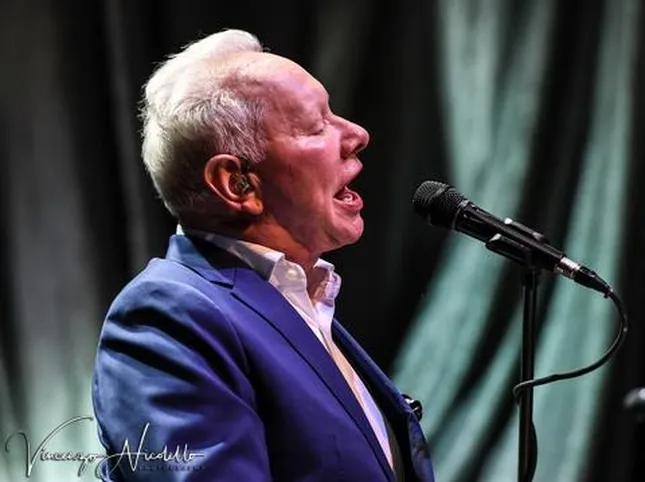
Joe Jackson: “I’m sick of artists playing politics”
“I’m sorry to generalize, but you journalists and music critics always seem to see anger, sadness, bitterness or political statements”: Joe Jackson is one who doesn’t say them in interviews. The English singer-songwriter releases “Hope and Fury”, out on April 10, the first album of unreleased songs after years of transversal work, and returns to his most recognizable format, piano-based pop-rock, the one that brought him success in the ’80s with “Night and day”, a classic of the genre.
He hasn’t lost a iota of his sarcasm: I remember interviewing him some time ago and being, as a naive and passionate young man, getting pissed off for a question about the meaning of “concept album” – not even the worst one I could ask him, looking back on it. It happened again, when I asked him for clarification on the lyrics of this album, which describes the English identity in these times of conflict with sharp irony. But he claims a difference: “I’m tired of artists and celebrities making ‘political’ statements or promoting ’causes’. They usually don’t really know what they’re talking about,” he tells me.
Recorded between Berlin and New York with his historic band, “Hope and Fury” moves between piano, pop melodies, orchestral arrangements, along a line that starts from “Night and day”
The album title, “Hope and Fury” seems to ironically recall the patriotic song “Land of Hope and Glory”…
I’m a musician. I don’t make grand statements about “today’s world.” As an observer, I see a lot of fury but I think we must always have hope because… what is the alternative?!
In your career you have explored many genres and released albums with a very different sound. This seems to bring you back to a more direct, “mainstream” sound — if that word still makes sense today. How was it born?
With one exception (“Heaven and Hell”) I never start with a “plan”. I just keep putting one foot in front of the other, until I get somewhere that feels exciting and interesting. Then it seems to find its shape on its own. It’s an intuitive process.
How do you decide – if you decide – when to switch between different musical forms and styles?
Is there really any artist who makes decisions like this deliberately?! When I’m trying to create something, I’m not thinking “what STYLE is this? Wait a minute, if I use this instrument, or that rhythm, does it become this genre or that? And is it something I SHOULD do or not? Is it allowed? How will people categorize it?”
When you eat something, it doesn’t matter where all the ingredients come from, it matters that it tastes good. I am the chef, I don’t follow a recipe, I throw in all kinds of ingredients, trying to make something that is mine, but above all something delicious.
What you’re asking me, to me it’s like: “What kind of cuisine does this belong to? Whose recipe did you follow? Exactly what ingredients did you use, and why did you use them?” And I want to say, to hell with all this… did you like it?”
“Welcome to Burning-By-Sea” seems like a very English postcard: seaside resort, dark humour, nostalgia and decadence. Is it a real or symbolic place?
Yes, “English postcard” is a good description, and it is symbolic. There are elements of Brighton and my hometown Portsmouth, but it’s really about England. Yes, dark humor but also “light” humor. Nostalgia and decadence but also tradition and survival. Violence and ignorance but also fun, sex, food, drinks and music!
Graham Maby, Teddy Kumpel and Doug Yowell: How important is it to have a stable band when working in the studio?
There are no rules. I like these guys.
We live in an increasingly conflictual context. Has writing songs today become more political than in the past?
When we talk or write about music we often put excessive emphasis on the lyrics… as if they couldn’t simply be observations or expressions of feelings, or even just a play with words, perhaps even meaningless… no, they have to be something didactic and “important”: as if it weren’t a song but a lesson, or a controversy, or a manifesto. But it’s music that really moves people. I think this isn’t emphasized enough!
Sure, but the words of a song are important and are inevitably one of the first things you notice.
A song is a collaboration between music and words, but it’s usually not an equal collaboration. I love Cuban music even though I know very little Spanish. I like Balkan music even though I don’t understand a word of Serbian, Romanian, etc. I think my songs are probably 75% music and 25% words.
Today, however, it is difficult for an artist not to be political: aren’t the songs, in their own way, a stance?
“Political songs”? Ridiculous. “Imagine” by John Lennon didn’t change the world, if you actually listen to the lyrics it makes him sound silly. Although musically it’s very good, so I still like it. But I’m tired of artists and celebrities making “political” statements or promoting “causes.” First, they usually don’t really know what they’re talking about, and second, they echo each other, they think they’re brave or radical but it’s still the same fashionable opinions. If you’re so “political” then get involved and do something – there aren’t enough good people in politics, so why don’t you try if you think you can do better? Otherwise, if you’re a musician or an actor, I feel like saying, go to hell and make better music, or better movies.
The album mixes piano, groove and more orchestral arrangements. Did you think of the sound of this album as a continuation of a line that starts from albums like “Night and Day”?
Of course he continues that line: I’m still the same guy!
Does it bother you to still be associated above all with that piano-rock dimension of your music? In the end it’s just part of your job.
Like the samurai, I try to “have no expectations but to be ready for anything”. I’m happy if anyone is interested.
What relationship do you have with musical nostalgia, which today seems to be one of the dominant forms of narrating and consuming music?
Nostalgia is like a recreational drug: a little, every now and then, can be good but you have to be careful not to overdo it.
After such a long career, what still drives you to make a new album instead of just touring the repertoire?
When I no longer have new songs, or new ideas, I will stop recording or touring. This is a promise.