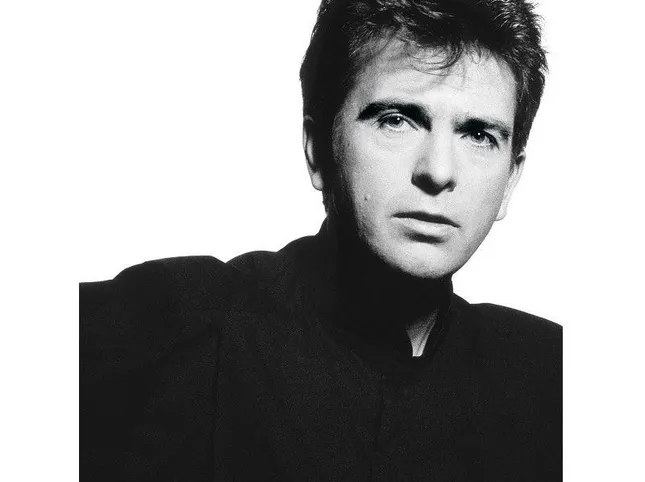
The story of “So” told by Peter Gabriel and Daniel Lanois
“I know” it remains Peter Gabriel’s biggest commercial success and his most popular album to date. It therefore marks the beginning of a new era that launches the English artist into the musical mainstream, making him a pop star and opening a phase that will last approximately until 1994.
Combining his compositional skills with his taste for experimentation, Gabriel managed to create a pop album, full of memorable melodies, catchy riffs and chart hits without completely giving up the search for unusual and out-of-the-ordinary sounds and instrumental textures. “I know” confirmed his ability to combine different musical languages and traditions effectively also from a commercial perspective, with results that would never be equaled again in the rest of his career.
Two trips to Brazil, and as many stays in Senegal between 1983 and 1984, stimulated Peter to find new melodic and rhythmic ideas. The recordings of “So” they began in February 1985, with a trio of musicians composed of Gabriel himself, Daniel Lanois (both also producers) and David Rhodes, supported by David Bascombe in the role of sound engineer. However, the involvement of two historical members of the band proved problematic. Drummer Jerry Marotta attended the sessions only intermittently, due to his commitment to Paul McCartney for the “Press to Play” album sessions. and the program changes decided during the work by Peter; The short notice given by Gabriel and another assignment given to him by Bonnie Tyler forced Larry Fast to abandon the project.
Over the course of the three months spent at the Ashcombe Studio, the Gabriel-Lanois-Rhodes trio recorded the basic tracks of the songs that would be part of the album: Peter provided the other two musicians with nothing more than the chord structures on which they all began to improvise together.
Lanois:
“In a situation like that it was a good place to start. It’s never a good idea to have too many people around, you get nervous if you start to think you’re wasting other people’s time.”
The climate in which the team worked mixed professionalism and lightheartedness, so as to avoid taking things too seriously.
Lanois:
“We started with some vocal sketches, with guitars and a drum machine, putting everything on a 24-track until the songs were in an acceptable shape. We had a lot of fun: among us we called ourselves the three stooges and we wore protective helmets as if we were working on a construction site. When things got complicated, we just had to look at the others with that yellow helmet on our heads and everything fell into place.”
On the other hand, the recording represented a technical challenge and not everything was without problems, so much so that it raised many doubts about the methods used. Lanois:
“The three of us continued to work on a song until we found the perfect mood and captured it on tape. At that point we brought the rhythm section into the studio, who overdubbed what we had already prepared using the electronic drums as a reference for the tempo, although in the end most of the parts recorded with the drum machine were eliminated.”
The combination of analog and digital produced interesting results.
Gabriel:
“Halfway through the album we rented a thirty-two-track Mitsubishi
The instrumentation used in the album remained reduced to the bare bones, but the brilliant inventiveness of the musicians still allowed them to guarantee a notable timbral variety to the sound.
Lanois:
“The interesting thing about that record is that if you listen to it carefully you realize that there aren’t many unusual instruments: yet it sounds very innovative. It was made with quite a limited number of tools, so to speak.”
With Larry Fast out of the picture (but credited in the liner notes for his “additional work”), it is Peter who plays many of the keyboard parts on the album. The renewed desire to dedicate himself with more commitment to playing was the result of the experience gained with the previous project.
Gabriel:
“I think I vented my ambitions as an instrumentalist in the ‘Birdy’ soundtrack. I was quite satisfied with it, but what I wanted to do with this album was to make songs that were more solid, maybe even more sparse, and I think that the new album is more based on feeling and feeling than on sound. In a certain sense there is less technology than in the past. The impression is that the electronically produced rhythms and the sound are still there, but in a more nuanced way than in the past.”
Sampling was still an important part of the recording process, and for a very specific reason.
Gabriel:
“I particularly like samples constructed in such a way that you can perceive a bit of humanity within the sound: it’s not about sampling a single note, but a sequence of notes which, in the end, have something strange about them, in which perhaps you can hear the noise of fingers or human breathing.”
At the beginning of the recordings many different ideas were tried, but step by step the number of songs was drastically reduced. Gabriel:
“We started with about thirty ideas, recording more or less twenty tracks, but as you know, I’m not good at finishing things. If I remember correctly, there were about a dozen pieces almost completed.”
Gabriel’s memories seem accurate. In addition to the nine songs selected for the album (in the CD version), in fact, over the years five other songs recorded during those sessions have seen the light of day. Since two of those songs represent different versions of compositions that appeared on the album, the real total actually amounts to twelve: the outtakes released to date are “Don’t Break This Rhythm” (the starting point of “Mercy Street”, released as the B-side of the single “Sledgehammer”), “Curtains” (the B-side of the single “Big Time”), “This Is the Road” (made available as a download in 2005) as well as “Courage” and “Sagrada” (a sort of first experiment in developing the rhythmic idea behind “In Your Eyes”), both published as part of the special edition of “So” created for the 25th anniversary.
Throughout the album, Peter managed to maintain a certain balance between pop music and experimentalism.
Gabriel:
“I was particularly excited by the idea of going back to writing actual songs. ‘Sledgehammer’ is definitely an attempt to recreate the classic soul style of the 1960s, while some sections of ‘Don’t Give Up’ contain elements of gospel music. In some ways I’m still very interested in the craft of songwriting, but I remain torn between trying to explore and develop the compositional aspects and dealing with the creation of atmospheres and soundscapes.”
It took a long time for the album to take shape. In particular, Gabriel worked hard over the lyrics, resulting in Lanois getting impatient with whom he ended up clashing and even threatening to fire him. Called to lend a hand, sound engineer Dave Bottrill witnessed the friction between the two.
Bottrill:
“Peter likes to take his time to do things well and always has a lot of things to do that distract him from writing lyrics. At one point Dan got so angry with him that he nailed the door of the studio where he was writing lyrics shut from the inside, so that he couldn’t get out to make yet another phone call!”
The mixing was also quite laborious.
Kevin Killen (sound engineer):
“The making of most albums can be divided into distinct periods: preproduction, recording, overdubs, mixing. With Peter we never really got into any of those phases. We were always busy mixing.”
However, Peter was very satisfied with the final result and immediately had the feeling that the album would be a great success.
Gabriel:
“When I listened to “So” for the first time I was very happy about it. He wasn’t rich in textures and sonic experiments like my previous albums, but it had a very strong character and spirit. When we heard it again in the studio we understood that we had achieved something good.”
Alfredo Marziano and Luca Perasi are the authors of this book: