
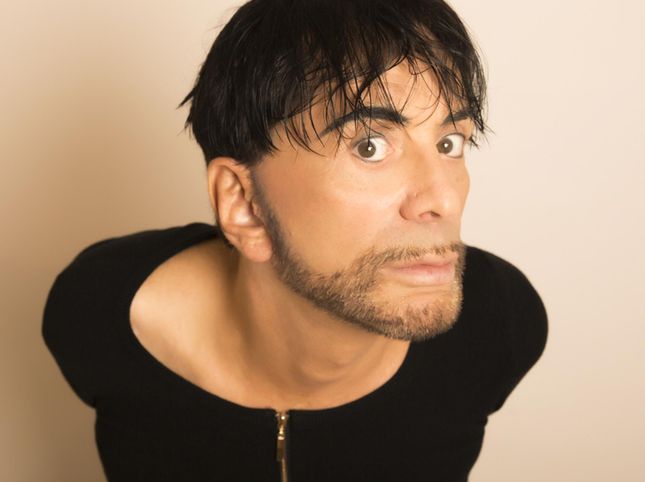
Ivan Cattaneo: “I was killed like Mia Martini and Giuni Russo”
«In London, at the end of the 70s, I hung out with David Bowie’s producer, Alan Edwards. One day I made him listen to some ideas I was working on, some songs with particular vocalizations, alien stuff for the music of that period. He didn’t seem very enthusiastic to me. When Nanni Ricordi, the father of all Italian singer-songwriters, took me to Rome, I made him listen to the same things. Lucio Dalla entered Ricordi’s room and Ennio Melis asked him: “Lucio, what do you think?”. And he: “This boy does what I would like to do, but which you don’t allow me to do”. Then he climbed onto a desk and with a ruler began to direct me like an orchestra conductor. I still wonder if he was teasing me or not.” Ivan Cattaneo memories. He contributed to creating the Anna Oxa phenomenon (he was the creator of the androgynous look with which the singer of Albanian origins presented herself to the general public at the Sanremo Festival in 1978, with “Un’economia da poco”), he was one of the first in Italy to merge pop music, electronics, theater and visual art (bringing the lessons of David Bowie and the Talking Heads to our country), he contributed in the 1980s to that revival of the 1960s which then also conquered TV and cinema (go and listen again to “Duemila60 Italian Graffiati” from 1981, with which he revisited the various “Una zebra a polka dot”, “No one can judge me”, “Abbronzatissima” in a ska and nu-beat key), was a symbol of sexual freedom and a precursor of queer culture in Italy. Now at 72, the singer-songwriter from Bergamo returns to the scene after twenty years with a new album of unreleased songs. Actually, two. Last October 31st “Due.I” was released, a bizarre multimedia project divided into two parts, “Titanic-Orkestra” and “Un mammal che canta”, with 24 songs collected over these two decades, a DVD and even a 130-page novel. “It’s my will,” he says.
In the sense that with this project you close your career?
“Yes. Record-wise I will never do something so complex again. I have been working on this project for eight years. “Titanic-Orkestra” is a sort of Spoon River on the sea: it is a concept album that reinterprets the story of the transatlantic through 24 imaginary characters, each of whom takes voice in one of the 24 songs. It is a metaphor for today: there the exaltation of speed, today that of artificial intelligence. We think we are free, but we are slaves to one image after another. Flipping the volume over takes you into the second part, “A singing mammal”, an autobiography that traces my 50-year career. I also collected poems dated 1967, written when I was 14 years old. I was waiting for the interest of a right, far-sighted record company. I found it in Marco Rossi of Azzurra Music. With him I no longer felt like an orphan, as I had since the death of Nanni Ricordi. However, I also put in the money: I self-produced all the musical parts.”
Who made you do it, today when the body is practically dead and only rappers and trappers work on streaming platforms?
«I wanted to leave something for my fans. And then who cares about the market. I would be ridiculous if at 72 I wanted to compete with Annalisa and Fedez. I am proudly old. Today, not even Nannini or Vanoni make hit records anymore. You have to make music just for the pleasure and pleasure of doing it.”
Haven’t you tried knocking on the doors of some multinationals?
«No, because I already predicted that they would say no. I was very good friends with Roberto Rossi, a former Sony executive. He told me: “Ivan, your projects are interesting, but my hands are tied”».
On the album there is also your version of “La carezza che mi manca”, which Patty Pravo should have brought to the competition at the Sanremo Festival in 2019. Why was it discarded?
«Because they proposed that she go to the competition paired with Briga, with a song chosen by the record company. She was forced to accept compromises that later turned out to be a bloodbath. Maybe it would have been better for her if she had chosen my song.”
Haven’t you tried to apply to Sanremo in recent years?
“No. I know how things work there: they only take you if you have a recent history.”
What do you think of the winner of the last edition, Olly?
«Which is good (laughs). He has an incredible physicality.”
Okay, but artistically?
«But what do I know, I don’t even know what he sang. The last song I liked at the Sanremo Festival, however, was “Cenere” by Lazza, produced by my friend Dardust, who in the past revisited my “Giochi d’insetti”».
And Lucio Corsi, the revelation of the latest edition?
«Well. It’s a vintage flashback to the 70s. Well done: it reminds me and Alberto Camerini a bit. But it comes fifty years later.”
How do you explain the Achille Lauro phenomenon?
«I can’t explain it. I don’t even know if it’s original. If I really have to choose, I prefer a Lucio Corsi who puts packets of crisps on the shoulder straps of his jacket to a Lauro behind whom there are big fashion brands: it is no longer known where the artist is and where the mannequin who becomes the brand’s testimonial is. I have always been much more naive. And I still am today, at 72 years old.”
Has Italy clipped your wings?
«Patty Pravo also tells me: “If I had been born in England…”».
Was reinterpreting “A Zebra with Polka Dots” and other hits from the ’60s more of a hardship or more of a delight?
“Cross. Because even today I am only classified as that of the 80s and Zebra. Let me be clear: I love Zebra, which has kept me eating up until today, written by the great jazz musician Lelio Luttazzi and sung primarily by the great Mina. But it would have been fine if it had been an average success, that cover. Instead I felt imprisoned. And my identity as a singer-songwriter was swept away. Only a few really understood me and fought with me.”
Who?
«I think of Nanni Ricordi himself. The others hindered me.”
Everyone?
«Caterina Caselli no. She was my accomplice. But at a certain point she herself began to see in me only a revival phenomenon.”
What are your relationships today?
«We talk every now and then, by phone. I went to see his docu-film. It’s a shame that among all the artists he launched, from Bocelli onwards, he didn’t mention me. And like me, Avion Travel and Gerardina Trovato. At least I was in good company, among the unmentioned.”
What feelings do cases like those of Sangiovanni and Angelina Mango arouse in you?
«I see myself in them and feel empathy. I also had a nervous breakdown around the time of the success. In our work we need to know how to say no and be respected. The great Giuni Russo also said it. But if you say no then you come off as unpleasant and they’ll kill you. This is what happened to her and other greats, like Mia Martini. I abandoned the world of music and began to be a painter.”
Do you see any creative people around?
“No. I practically hear the same song around: Italian pop is now a gigantic karaoke. In my opinion, true art is not having a beautiful voice, which is more or less like having a natural gift, like having a nice nose or a nice ass. True creativity is inventing worlds, stories and new ways of making music and making sounds. This then explains why a Madonna or a Jovanotti or a Guccini, who even don’t have a great voice, have left a mark with their music.”
Is it true that an autobiographical book will also be released?
“Yes. Without the usual sugar-coated stories about himself and his colleagues. It’s ready. It’s called “False names, true stories”. Because if I name names, I get complaints.”
