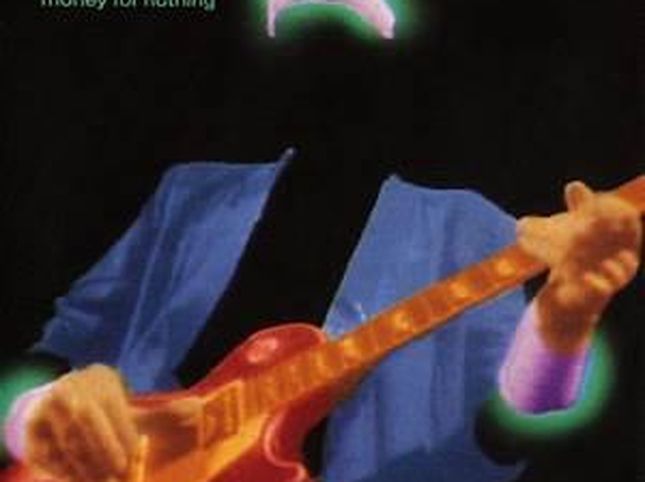
Dire Straits: The Story of “Money for Nothing” and the Impact on MTV
2025 is the year of the 40th anniversary of the release of “Brothers in Arms”, the album that established Dire Straits as global superstars. An anniversary celebrated with new deluxe reprints and archive materials, but also an opportunity to rediscover the genesis, the controversies and the historical impact of the single that, more than any other, determined its success: “Money for Nothing”. A song born by chance, written with a satirical intent towards rock success and against MTV… and instead became one of the symbols of the network which in those years was changing the way of listening – and seeing – music. So much so that it was the song that was broadcast first at the inauguration of MTV Europe in 1987 – the news of the closure of the station in the UK has recently emerged.
A new sound (like ZZ Top)
In 1984, Mark Knopfler and the band found themselves at a crossroads. After four successful albums and growing notoriety in Europe, Dire Straits were still struggling to really break into the United States. The key to reaching the American market, the management suggested, was only one: MTV. But Knopfler, always reluctant about the video, wasn’t convinced. Dire Straits had made videos, but you only saw the band playing and they weren’t that interesting, according to Steve Barron, who made the “Money for Nothing” clip.
So it was that Knopfler decided to deliberately write a song “for MTV”, taking inspiration from the sound of one of the groups that dominated the channel’s programming: ZZ Top. The riff was born in the studio, almost by chance, due to an imperfect microphone setup which however produced a “dirty” and powerful sound. Producer Neil Dorfsman immediately saw the potential: “It was the right sound, we never touched it again.”
Knopfler went further, and asked ZZ Top’s Billy Gibbons directly for advice on replicating their guitar tone. “He didn’t do a bad job, since I didn’t say anything to him!” Gibbons joked in a 1986 interview.
“I want my MTV”: from slogan to jingle
The text, however, was born inside an appliance store in New York. Knopfler accidentally listened to the comments of a salesman in front of a wall of TVs tuned to MTV: he heard his words a mix of envy, sarcasm and homophobia, Knopfler transcribed everything, with the idea of keeping the realistic and crude language of that dialogue and put those words in the mouth of an imaginary character who addresses rock stars who “earn money for doing nothing”.. A choice which over the years will bring censorship and criticism, until the song was banned on radio in Canada in 2011.
But it was the line “I want my MTV” that turned the song into an icon. Knopfler asked his friend Sting to sing it, modeling it on the melody of “Don’t Stand So Close to Me” by The Police. The result — recorded in less than an hour — became one of the most memorable hooks of the ’80s.
The video that changed everything
The final piece was the video. Barron proposed to Knopfler to use the fledgling Paintbox technology to create rudimentary but impactful 3D characters, combined with footage of the band. Knopfler was skeptical, but his American partner convinced him: “This is exactly what MTV needs.”
The intuition was a winner. The video became one of the first to be broadcast in heavy rotation by MTV US and, symbolically, was chosen as the first video clip ever broadcast by MTV Europe on 1 August 1987. Precisely for this reason, in recent months the recent closure of MTV UK has rekindled interest in that clip: on the one hand a symbol of the birth of the European video clip format, on the other an ironic testament to a finished era.
A global success (and full of contradictions)
Released in June 1985, “Money for Nothing” reached number one on the Billboard Hot 100 and drove sales of “Brothers in Arms,” which surpassed 30 million copies worldwide and won two Grammy Awards. The video clip won the Video of the Year award at the 1986 MTV Video Music Awards, completing the circle: from criticism of MTV to its emblem.
Yet there was no shortage of contradictions. The song was long censored for offensive language, and Knopfler said he was uncomfortable with the way his guitar playing was exploited in the media.
40 years later: between reissue and revival
In 2025, “Brothers in Arms” turns 40: it is back in stores in deluxe celebratory editions, with expanded booklets and an unreleased live performance recorded in San Antonio in 1985. But the beating heart of the operation remains “Money for Nothing”, symbol of an era and a paradox: the song that aimed to criticize MTV ended up becoming one of its most iconic theme songs. And perhaps precisely for this reason, decades later, it still remains so relevant.