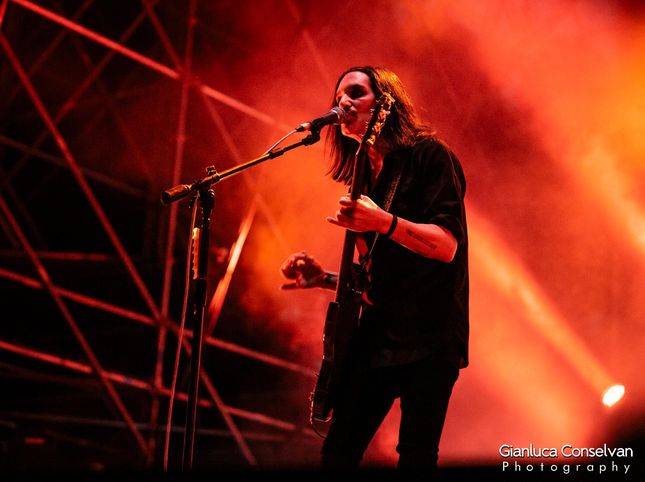
Placebo: the self-analysis of “This Search For Meaning”
The title is not accidental. “This Search For Meaning”, recently released in physical format, addresses the central themes that have always run through Molko’s writing: gender identity, addiction, alienation, social apathy, climate crisis, and the constant tension between pain and the desire for redemption. The documentary film alternates intimate interviews with the two band members with studio footage and never-before-seen archive material, offering a lucid and personal reflection on the evolution of Placebo as artists and as individuals. There is also a tribute to David Bowie, mentor and influence that hovers over their entire history. “The director asked me to be brave, not to hide behind the character,” said Brian Molko. “There are moments I would have liked to cut, but that’s where the truth lies”.
The documentary features a series of celebrity guests and friends of the band who offer different perspectives on Placebo’s cultural impact. Among them: Shirley Manson (Garbage), Robbie Williams, Yungblud, Rebecca Lucy Taylor (Self Esteem), Joe Talbot (Idles), actor Benedict Cumberbatch and contemporary artist Stuart Semple. The result is a mosaic of testimonies that place Placebo in a transversal artistic landscape between music, cinema, activism and contemporary art, showing how their vision continues to influence different generations. The film is accompanied by the concert “This Is What You Wanted – Live in Mexico City”, one of the stops of the 2023 tour. There Placebo rediscovered contact with the public after years of pandemic and silence, returning their songs to the cathartic dimension of live. The new performances filmed ai Twickenham Film Studios they add a cinematic touch: minimal lights, industrial atmospheres, an almost claustrophobic sound. It all contributes to that sense of vulnerability and searching that runs through the entire project.
“This Search For Meaning” is not a celebratory doc, but a work of radical self-analysis. A visual diary that asks what it means to continue making music in an era of hyperconnection, environmental crisis and collective confusion. As Molko explained: “We didn’t want to make a documentary to say ‘look how good we were.’” VWe wanted to ask ourselves if all this, the music, the fame, the resistance, still really makes sense. And if so, which one“. With “This Search For Meaning”, Placebo sign one of their most ambitious and sincere projects. It is an act of emotional resistance, a declaration of love for vulnerability, and perhaps the key to truly understanding their artistic longevity. In a time where everything runs and disappears, Molko and Olsdal choose slowness, doubt and depth. They search for meaning.
There are many interesting moments: the doc shows archive videos from the nineties, when Placebo first exploded with a provocative image at odds with the dominant “macho Britpop”. Brian Molko photographs the fluid identity with make-up, non-conforming clothes, challenging looks. In one of these old TV reports, a presenter asks himself: “Is the singer a man or a woman?”, is a moment that highlights not only the prejudice of the time, but also how the band immediately challenged certain rigid categories. There are sequences dedicated to the relationship (both real and spiritual) with David Bowie: how Bowie admired them, influenced them, what it means for Molko to have known them or to have Bowie as a point of reference. Not only as a myth, but as a person who also teaches with his behavior, his choices.
One part questions itself on the culture of surveillance (the cover of the doc is a “tree” of cameras, increasingly present in our cities): how privacy has changed, how feeling “observed” influences creation, the extent to which one is a slave to gossip. There is no shortage of fragments with a strong vulnerability at the centre: not only drugs or abuse, but the discomfort within the tours, the difficulty of maintaining yourself when you are “the frontman” when external pressure is felt. But there are also poetic interludes: performances in the studio, soft lights, the voice vibrating in Twickenham Studios, the songs of “Never Let Me Go” rising in a breathing space. A breath of life that has always fueled Placebo.