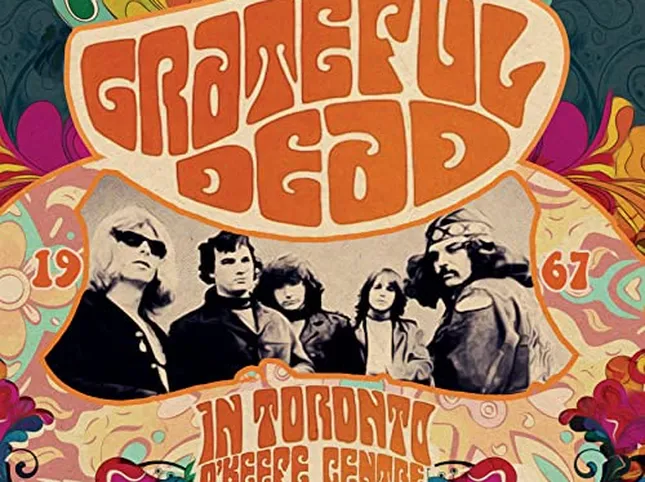
How Bob Weir changed psychedelia (and beyond) forever
While Jerry Garcia he enchanted the crowds with his celestial solos, Bob Weir built the scaffolding from which the spaceship of Grateful Dead could take off. Too underestimated by neophytes, Weir was one of the secret engines of Californian psychedelia, the one who allowed the “organized chaos” of the band to never collapse on itself.
The reinvention of the rhythm guitar
In one genre, psychedelic rock, dominated by long lead guitar solos, Weir chose a radically different path. Instead of just marking time with standard chords, he developed a style influenced by jazz piano (particularly by McCoy Tyner).
In classic rock, the rhythm guitar has a supporting function. Weir made it anything but. Inspired by jazz, modal music and an almost “orchestral” listening to the group, he developed a fragmented stylesyncopated, anti-blues, made of incomplete chords, bold inversions and strategic pauses.
In fact, Weir used unusual positions on the keyboard, avoiding tonics so as not to overlap with Phil Lesh’s bass. His guitar didn’t follow Garcia, but communicated with him. If Jerry went up towards the high notes, Bob went down towards the mids, creating a sonic weave that became the trademark of the Dead sound.
He writes Bob Dylan in “The Philosophy of Modern Song”:
Then there’s Bob Weir. A very unconventional rhythm player. She has her own style, not unlike Joni Mitchell, but different. He plays strange, augmented, half-chords at unpredictable intervals that somehow fit together with Jerry Garcia – who sounds like Charlie Christian and Doc Watson at the same time. All this plus a writer-poet in the house, Robert Hunter, influenced by many – everyone from Kerouac to Rilke – and steeped in the songs of Stephen Foster. This creates a wide range of opportunities for the Dead to play almost any type of music and make it their own.
The psychedelic cowboy
Weir introduced a fundamental element into the band’s aesthetic: the union between the American West el’lysergic exploration. Through songs like “Sugar Magnolia”, “Jack Straw” or “Mexicali Blues”, he fused country and folk storytelling with avant-garde improvisations.
This fusion changed the history of psychedelia, proving that it wasn’t necessary to just use unorthodox noises or endless feedback to be psychedelic; it could also be done by telling frontier stories, as long as the musical structure was present allowed the mind to travel.
And Bob Weir has indeed traveled on that planet called music. In addition to being an excellent musician, he was also a pioneer of sound. Together with Owsley “Bear” Stanley, he contributed to the creation of the famous in the mid-seventies Wall of Soundthe most massive and faithful sound system ever built for live concerts, a huge tower with hundreds of speakers positioned behind the band.
His obsessive search for the “perfect tone” led him to collaborate with luthiers to create custom tools: the idea was to manage the enormous distortions of lysergic travel without losing the clarity of the notes. Without his technical push, the immersive experience of the Dead – fundamental to hippie culture, but not only – would not have been the same.
A timeless legacy
Another important change introduced by Weir and the Grateful Dead concerns the relationship between music and audience. The band favored the birth of Deadheadsa nomadic community that saw concerts as a shared ritual. Weir has always embodied this dimension: no sacred distance between stage and audience, but a continuous flow of energy. In this sense, the Dead’s psychedelia was not escapism, but participation.
Bob Weir taught the world that musical freedom comes not from anarchy, but from one deep knowledge of the rules – to be able to break them with elegance. If Garcia was the soul of the Grateful Dead, Weir was its backbone and nervous system.