The greatest Christmas song ever written is about misery and alcohol
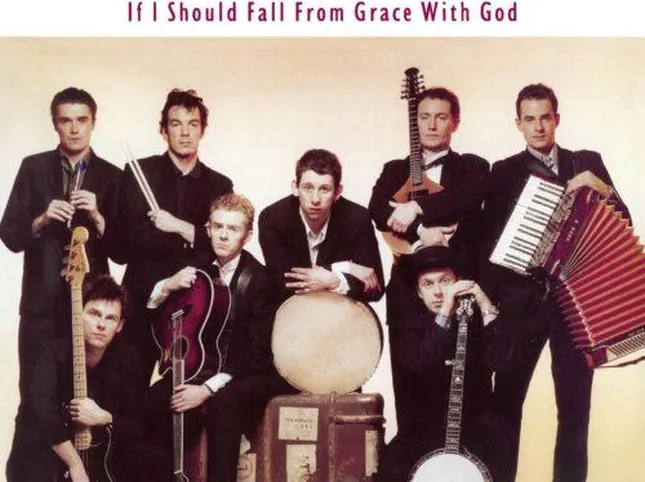
The most beautiful Christmas song ever written, egr Nick Cave this aspect is unquestionable, it doesn’t talk about Santa Claus, holidays, snow or gifts, but about people on the margins of society who, between an alcoholic dream and a bittersweet memory, never stop holding on to life. “Fairytale of New York” is a Christmas song by the legendary Irish group The Poguespublished in 1987and performed together with singer Kirsty MacColl. The song, a folk-style ballad, was written by Jem Finer and Shane MacGowan and is part of the group’s album entitled “If I Should Fall from Grace with God”. The arrangement is by Fiachra Trench. It has been voted the best Christmas song of all time in various television, radio and newspaper polls carried out in the UK and Ireland and every year, like a miracle, it reappears in the charts precisely in this holiday period, becoming current.
Between truth and legend
Shane MacGowan he wrote it more than three decades ago years ago. There are various legends about the making of the song: the first is that MacGowan, reluctant to write a Christmas song, took two years to finish it and was inspired by the film to do so “Once upon a time in America” by Sergio Leone. The second evokes Elvis Costello: the producer of “Rum, Sodomy & the Lash”, the Pogues’ 1985 album, and at the time engaged to what would become his first wife, Pogues bassist Cait O’Riordan, is said to have thrown down a gauntlet to MacGowan: “Let’s see if you can write a Christmas song in the form of a duetOnce the song was written, Cait O’Riordan left the group, effectively missing a fundamental axis for the success of the piece: the female voice. In the end it is Kirsty MacColl who sings itthen wife of producer Steve Lillywhite.
The song describes a sort of daydream of an alcoholic Irish immigrant who is spending Christmas Eve sobering up in a cell in New York. When another drunk, locked up with him in prison, starts singing a verse of the Irish ballad “The Rare Auld Mountain Dew”, the narrator, i.e. MacGowan, Moved, he begins to dream of the woman he loves who followed him to America hoping for a better tomorrow, which however has not yet come true. But all is not lost: “I feel like this will be our year, so merry Christmas, I love you baby, I already see better times when our dreams will come true.” The rest of the song, which can also be interpreted as an interior and intimate monologue, takes the form of a call and response between the protagonist and the girlwho on Christmas Eve, arguing, talk about their youthful hopes destroyed by alcoholism and drug addiction.
Censorship and the defense of Nick Cave
MacColl’s melodic voice creates a strong contrast to that hoarse and scratched by MacGowan: the verses are marked by a bittersweet and even ironic tone: “Merry Christmas asshole! I pray to God it’s our last one together.”. The two insult each other, they call each other bad words: for this reason the song, in its history, has undergone censorship operations several times. A controversy that also resurfaced a few years ago due to some radio appearances. The BBC said in a statement: “We have sent an edited version because some listeners may find the original offensive.” An outcry was raised in defense of the initial text to avoid the removal of words that have ended up under the ax of censorship.
Also Nick Cave defended the piece vigorously: “’Fairytale’ is a lyrical act of dizzying scope and power, and rightly so takes its place as the greatest Christmas song ever made – wrote Cave, responding to some fans – it stands shoulder to shoulder with any great song, from any era, not just in its audacity or its profound empathy, but in its astonishing technical brilliance. He speaks with deep compassion to the marginalized and the poor. It doesn’t have a patronizing tone, but speaks its truth, naked and raw. It is a magnificent gift to the marginalized, the unfortunate, and the brokenhearted. We empathize with the plight of the two rebellious characters, who live their lonely and desperate lives against all the Christmas promises of home and hearth, food, abundance and gratitude. It is a text full of truthand I have always felt privileged to be friends with its creator, Shane MacGowan.”
A dream that everyone has in common
The power of the song lies in the vision of Christmas from belowbut who does not give up questioning the past and the present by delving into the theme of poverty and immigration. And especially in dreams, and that’s where it takes over the game of identification with the bizarre protagonists of the song. “I could have become someone,” he says to her at a certain point in the argument, implying that if he hasn’t become one it’s all his fault. She replies: “Everyone could have become someone,” indicating how frustrated she is a regret is a wound that can be shared by everyone. The ending is open: they could get back together, make peace, live happily ever after. Or continue to insult each other. It does not matter. On that cold night on the margins of society, even those who believe they are alone in the world briefly warmed their souls with a song and a handful of memories and resolutions.