The Chicago fan who logged 10,000 concerts
Bootlegs and amateur concert recordings are one of the most interesting and fascinating side stories for music enthusiasts. Since the 1960s it has been a sort of alternative universe for fans, who can listen to performances and concerts of their artists. A world opposed by the industry and often by artists, because it is based on the trade of music outside traditional and legal channels – but sometimes incentivized to consolidate and strengthen its fan base, as demonstrated by the case of the Grateful Dead, who allowed taping at concerts as early as the 1960s, which was then followed and imitated by many other artists
If previously the bootlegs circulated through the network of fans who exchanged cassettes and the (illegal) trade of pirated recordings which also arrived in specialized shops, with the arrival of digital everything has changed: communities, forums and archives have been created in which fans exchange recordings online without profit. Several artists have partially made this practice official, with bootlegs distributed through dedicated platforms such as Nugs.net
It is a field in which almost legendary figures circulate, with daring stories. One is that of Mike Millard, a Los Angeles taper who pretended to be an invalid to introduce equipment to concerts and whose recordings have become reference material for documenting historic performances, such as that of Pink Floyd which was part of the reissue for the 50th anniversary of “Wish you were here”.
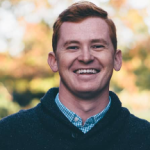
An equally significant story has emerged in recent days. As an Associated Press article recounts, a Chicago fan, Aadam Jacobs, recorded over 10,000 concerts over about forty years, mainly in his city but also elsewhere. His archive is being digitized and published on the Internet Archive – one of the main places for sharing live recordings – becoming progressively accessible for listening.
Jacobs began recording as early as 1984, after discovering that it was possible to (covertly) take a tape recorder to concerts and document them. At the beginning he used rudimentary tools, often borrowed or adapted, and then over the years moved on to more advanced technologies, from DAT to digital recorders. As AP tells it, he never defined himself as an archivist, but simply as a fan: he attended several concerts a week and decided to document them. Over time he became a stable presence in the Chicago music scene, to the point that many venues began to recognize him and let him in for free. In 2023, a documentary was even made about him.
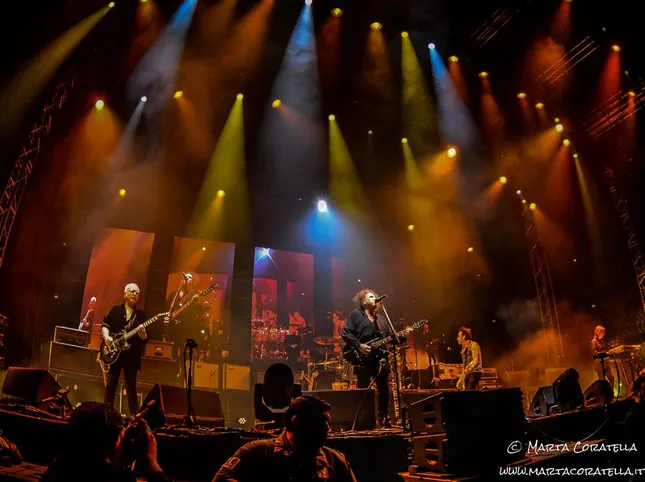
The collection includes performances by artists such as Nirvana before the “Nevermind” explosion, REM already in the 80s (also before mainstream success), The Cure, Pixies, Depeche Mode, Sonic Youth and Björk, as well as hundreds of concerts by lesser-known artists. A few years ago he stopped going to concerts due to health problems, but listens to them online: “Everyone can record concerts with a mobile phone now,” he told the AP
The digitization work is carried out by a network of volunteers between the United States and Europe. The cassettes and DATs are transferred to digital format, restored and catalogued: thousands of concerts have been converted so far, but the process will still take years to complete, with various technical and practical problems: the reconstruction of setlists, song titles, concert details, or the restoration of the tapes. And also with legal challenges: formally the recordings belong to the artists, but the fact that there is no profit makes legal action unlikely. So far only a few musicians have requested the removal of their materials. On the contrary, in some cases Jacobs’ recordings have been used officially: the Replacements integrated his 1986 recording into a live release released in 2023 – as happened with Millard and Pink Floyd
However, Jacobs’ archive is a unique case in terms of breadth, continuity and documentary value: a parallel history of live music, constructed by a single spectator.