Sanremo 70 years ago: “Musetto” by Domenico Modugno
“Musetto (You are the most beautiful)” – Eighth place
Gianni Marzocchi – Sanremo 1956
Author: Domenico Modugno
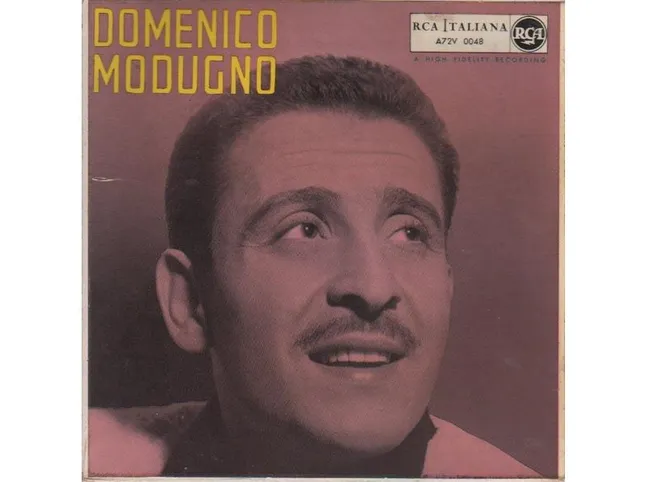
Among the lovely tunes of the years ‘50, deserves a place d‘honor “Musetto”, also known as “You are the most beautiful”, a song that highlighted for the first time in a different way the figure of the woman, here represented by an independent protagonist, at times a little‘ snobbish, with a strong character and very clear ideas. A sign of a profound social change underway. THE‘intuition could only come from a precursor like Domenico Modugno, who recorded the piece in December 1955, together with Side B “Io, mammata e tu”, the last work created for RCA before moving to Fonit. In fact, however, the song was presented at Sanremo in 1956 a few weeks later, entrusted to the voice of‘interpreter Gianni Marzocchi, who in the following years dedicated himself mainly to dubbing. Among his best-known roles, he provided the voice of Cantagallo, the minstrel in the film d‘animation “Robin Hood”, a great Disney classic. “Musetto” placed himself at the top‘eighth place in the sixth edition of the Festival, subsequently obtaining great recognition in popular terms also thanks to an extraordinary reinterpretation carried out by the Cetra Quartet.
«“Musetto” was a delightful song, which achieved enormous success despite not having won. It has remained over time, despite having turned seventy‘years of life. I’m attached to that song becauseand in fact it was also about me, the protagonist mirrored me a lot. I also had messy hair and I really liked frappAnd. I met Mimmo at the Centro Sperimentale di Cinematografia in 1950 and we married five years later. The song was written precisely in that period, for the 1956 Festival, which marked his debut as an author, two years before his triumph with “In blue, painted blue”. Mimmo’s bond with Sanremo has always been special, he participated eleven times and won on four occasions. I remember often telling him: “But who makes you do it? You could rest on your laurels and make a living from it”, but due to his temperament he couldn’t give it up‘adrenaline of the competition and the thrill that that stage could give. In fact, even today, l‘emotion is similar to that of a theater premiere. THE‘edition that I remember most fondly is naturally the one from 1958: the refrain of “Volare”, sung with arms wide open, radically changed our lives. The victory came unexpectedly, like one of those surprises found in‘Easter Egg. And to say that, all‘beginning, no one wanted to sing that song, becauseit is considered too distant from the Sanremo standards of those times. Dall‘organization they proposed to the‘label to have it interpreted by whoever‘had written, thus the first singer-songwriter of Italian music was born.”
Franca Gandolfi (wife of Domenico Modugno)
At Sanremo 1956 the revolution was attempted, staging what we can consider the first true talent show in history. To counteract the rampant stardom in pop music, Rai decided to focus on six debuting performers, selected from 6,496 candidates through a competition of new voices. The final selection took place live on radio and the public expressed their preferences by voting via postcards. The Festival thus adapted to the canons of television, born only two years earlier, and to the requests of the‘publishing industry. Thus they made their debut six “interpreters looking d‘author”: Clara Vincenzi, Ugo Molinari, Luciana Gonzales, Tonina Torrielli, Gianni Marzocchi himself and Franca Raimondi, who graduated as winner with “Open the windows”. There was no shortage of criticism, especially for the‘absence of famous names such as Nilla Pizzi and Claudio Villa, so much so that the‘the following year we returned to the traditional formula, reopening the door to the big names. However, that‘The 1956 experiment left a positive mark: “Musetto”, one of the few songs of that‘edition consigned to history. The song, with a lively and engaging jazz rhythm, tells the story of Lilì, a girl fascinated by the American myth to the point of wanting to change her name to Gigì, to seem more international. The male narrator replies that there is no need to deny oneself to appear modern: she is already beautiful like this, authentic, disheveled and without make-up. Modugno, years later, revealed in a‘interview that it was not a reactionary or conservative proposal, but a playful criticism of the‘xenophilia that distanced Italians from their cultural identity, declaring: “It was a song against the fashion of‘Americanization”. The song was chosen as the soundtrack for several musicals and in the nineties it became the theme song for a television program by Luciano Rispoli on Telemontecarlo, entitled “You are the most beautiful”, dedicated not by chance to the history of the Italian Song Festival. This also contributed to making “Musetto” a timeless tune. The song also marked the‘debut in the competition, as an author, of Domenico Modugno, destined to write and rewrite entire pages of the history of the event. A man of the theater capable of treading the stage like few others, Mister Volare was able to reform our image in the world, without imitating or copying genres that do not belong to us, focusing instead on melody, on‘interpretation, on drama, on romance and on‘irony. Before his exploit, the heavyweights of bel canto used to refer to the great Italian operatic and melodramatic tradition, limiting themselves to performing and not interpreting. It was he who changed direction and charted a new course, thanks to his recitar-cantando which set a precedent, inspiring subsequent generations of singer-songwriters. All while opening your arms wide open: a simple yet revolutionary gesture.
This text is taken, courtesy of the authors and the publisher, from “Sanremo e la classification del tempo”, by Nico Donvito and Marco Rettani (Azzurra Music, 324 pages – book + CD -, €29.90)