Motta: “I made peace with the first album and with that period”
Motta is not someone who likes celebrations and immediately puts his hand forward in talking about the reissue of “La fine dei vent’anni”, his debut album, which was released in stores ten years ago and which is now back in a new, expanded edition: “It’s not an operation done for money, like most operations. When the 2016 revival trend started on social media, I thought about canceling everything: I didn’t want this project for someone to be able to ride that stuff. There’s no nostalgia: it’s a way to make peace with a period of my life.” It was March 18, 2016 when the album arrived in stores.
On the cover the singer-songwriter’s big black and white face, with the features and a grin of Lou Reed from the province of Tuscany. Until a couple of years earlier he had been the leader of the Criminal Jokers, a symbolic band for followers of the Tuscan new wave scene. Then, in 2014, he moved to Rome to study film music composition at the Centro Sperimentale di Cinematografia. And the turning point. A decade later, “La fine dei twenty anni” returns to the shops in various configurations: a deluxe autographed limited edition box set containing the original album on white vinyl and the double vinyl taken from the 2017 Alcatraz concert with unpublished photos and an autographed white vinyl. Motta will return to play the album in its entirety that won him the Targa Tenco as “First Work” in 2016: here are the dates.
Let’s start from the most banal question: why celebrate the tenth anniversary of this album? What did it represent for you and what do you think it represented for the Roman and national songwriting of the 2010s?
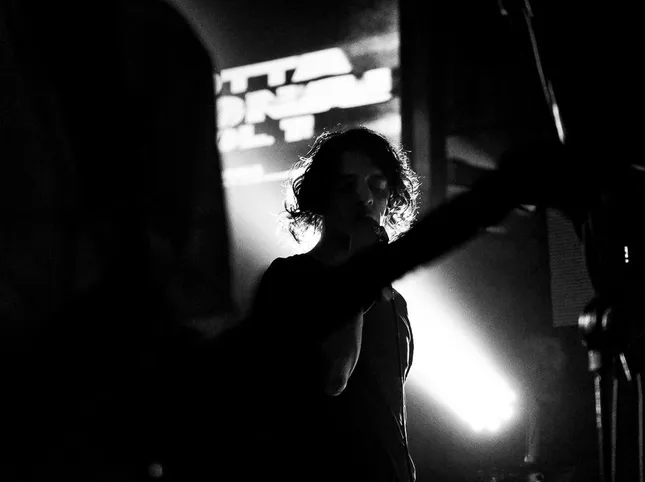
That album represented a me that hasn’t been around for a while and that once again made me curious to go and analyze it and listen to it again. Perhaps the fear of having changed had faded. In all these years there has been an almost too lucid approach in the writing phase: “I’ll keep that thing, I won’t keep that one”. Instead it was very exciting to see the photos, so free, of the tour. At least the publishable ones. Because there are also some that cannot be published, at least for now (laughs, ed.). What happened that year was so shocking to me, after twelve-thirteen-fourteen years of playing. The fact that I went through so much training paradoxically made me even less prepared for the shock that arrived that year.
In what sense?
For me as a former session musician and sound engineer, it was absolutely normal that there were fifty people at concerts, that no one knew who the fuck I was and that there wasn’t a penny. I got used to it. The shock of seeing at a certain point 2,000 people singing my songs destabilized me. This seemed like an opportunity to make peace with that moment, ten years later.
Why did you have an argument with that moment in your career?
Because at a certain point, already from the second album, everyone started talking to me about that album as if another person had made it: “Well, but the first album…”. Everything I did was compared to that project. But a first album is like a first presentation. I can’t come back, it can’t be repeated.
What do you think when you listen to “La fine dei twenty anni” today?
Which hasn’t aged at all. And that perfectly represents who I was at that moment. I had left the Criminal Jokers and Tuscany and moved to Rome to study at the Centro Sperimentale di Cinematografia. I was sick. I came from the end of a band. When I think back to that time, I feel sad. I was doing community service because my driving license had been confiscated. I had broken up with my ex and I didn’t have a penny in my pocket, despite being a session musician for Pan Del Diavolo and Nada, and the sound engineer for Zen Circus. I worked a lot, but I didn’t earn anything. My parents, who had always supported me, began to ask me: “So?”.
Why was that record generational?
Because he talked about a generation full of dreams and ideas, but with very few means to realize them because they were “stuck”. A middle generation, a transition generation between the world of technology and social media and the previous world. A generation without an instruction booklet. I have a lot of faith in today’s young people because they are part of their time and its dynamics, much more than we were.
How central was Rome in the creation process?
The album was linked to the scene of that period. But it had nothing to do with the various exponents of that indie circuit. You could see it from the live shows. The songs lasted up to a quarter of an hour, with very long instrumental codas. Something out of the ordinary. However, Rome was central to the process. Suffice it to say that the meeting with Riccardo Sinigallia took place right in the capital. At first he had to help me with a couple of lyrics and that was it. The production should have been done by another person.
Who?
Manuele Fusaroli, the same producer of the last Criminal Jokers album.
And then what happened?
From the first meeting I understood that Riccardo was the right person. I’ve wanted to meet him for years. I appreciated what he did. Although for many he was known more as a producer than a songwriter, I really liked what he wrote. He was quite firm in telling me that everything I had done in my little room in Pigneto had to remain, in terms of recording. Usually a producer tells you: “Let’s try to do this better, let’s record it in a cleaner way”. For him, however, the winning weapon was precisely the fact that the tests I had brought him carried with them a particular, different idea. My motto was: “I don’t want to do like the others”. I don’t want to get into technicalities, but banally the tuning of the guitar was also dirty, deliberately imperfect.
What did you learn from Sinigallia in those months?
He won me over with a phrase, which I still carry with me: “You don’t have to make beautiful music: you have to make your own music”. Magic was created there. I would have liked to make the second album with him too. It was Riccardo who told me no.
Why?
After “La fine dei twenty years” pressure and expectations from a recording point of view were created around me. Making the second album would have been different. Riccardo preferred not to produce the next album partly to defend our relationship and partly to not force his hand on something that had much more pressure from a recording point of view. I felt bad about it. But today I say that I’m happy that it went like this. The good and esteem have remained unchanged.
Will the concerts focus on “The end of the twenty years”?
Yes. I will play the whole of “La fine dei twenty years”, also bringing the snare drum on stage, as I did on the tour ten years ago. And after having played the entire “La fine dei twenty years” I will make a new song which seems to me to be the linear continuation of that discussion.
Is a reunion with Riccardo Sinigallia planned?
If Riccardo wants to, why not? I would be delighted and it would be the perfect closing of the circle.
In addition to the unreleased material you will play in concert, is there any new music cooking?
Yes, I’m working on the new album. The songs I’m composing have a lot of irony and joy inside them. I’m back to having fun like I did on the “The End of Twenty Years” tour. In recent years I have told a lot about myself, how I was, what had changed. This ego-referencing thing in lyrics bores me. Not only in other songwriters, but also in me. After the drama of the pandemic I realized that it is much more interesting to talk about what happens outside.