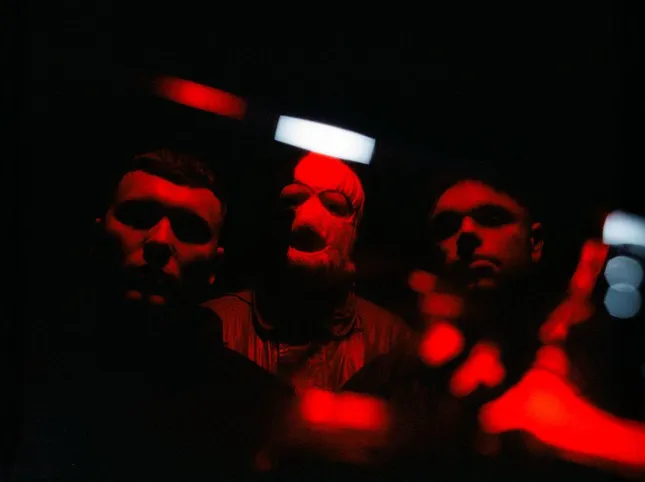
Kneecap return with “Fenian”: an album against repression
The Kneecaps have announced “Fenian”, the new album out on April 24, 2026 via Heavenly Recordings. The album arrives after “Fine Art” and after the biopic dedicated to the band, awarded at the BAFTA and Sundance Film Festival, and takes shape in a moment of strong political exposure and media for the Belfast trio, who have ended up in the sights of the British establishment several times. In recent months Kneecap they have been openly accused of extremism and, in some cases, of supporting terrorismor, with canceled concerts and institutional positions that contributed to building a toxic narrative around the group. Statements by British politicians have fueled the idea that the band represents a public order problem more than an artistic project.
It is from this climate that “Fenian” was born. Not as an impulsive reaction,
but as a thoughtful response to those who tried to silence the group through political and media pressure
. The title takes up a term historically used in a derogatory sense against the Irish and against republicanism, re-appropriated by Kneecap as a symbol of cultural resistance and truth spoken to power.
The album, produced by Dan Carey, has a darker and more aggressive sound than previous works. The first single, “Liars Tale,” immediately clarifies the trajectory of the project
: a ferocious punk-rave song that takes aim at Keir Starmer and a political class described as hypocritical, ready to attack artists when they become inconvenient, using the language of legality to mask censorship practices.
The song’s video, directed by Thomas James, amplifies this tension with a chaotic aesthetic, building a “carnival of distraction” of Irish mythology, satire and anger. A deformed but very lucid reflection of the present, in which media noise often serves to neutralize the real conflict. Throughout “Fenian”, Kneecap maintain an explicit political line, alternating frontal attacks with more intimate moments. Songs like “Palestine” with Fawzi place the album in an international dimensionreiterating a solidarity that has already put the band at the center of strong controversy. Other episodes tackle themes such as identity, addiction, masculinity and mourning, showing a vulnerability that coexists with the harshness of the conflict.
Musically, the album moves between hip hop, punk-rave and acid house, with an energy designed as much for clubs as for those who want to delve deeper into the message. “Fenian” thus presents itself as Kneecap’s most compact and conscious work: a record that doesn’t try to smooth out the edges, but which fully takes on the risk of being divisive. After becoming one of the most discussed political cases in recent British music, Kneecap return with a project that definitively clarifies their position. “Fenian” is not a provocation as an end in itself, but an act of cultural resistance that claims the right to speak, create and take a stand even when doing so means being accused.