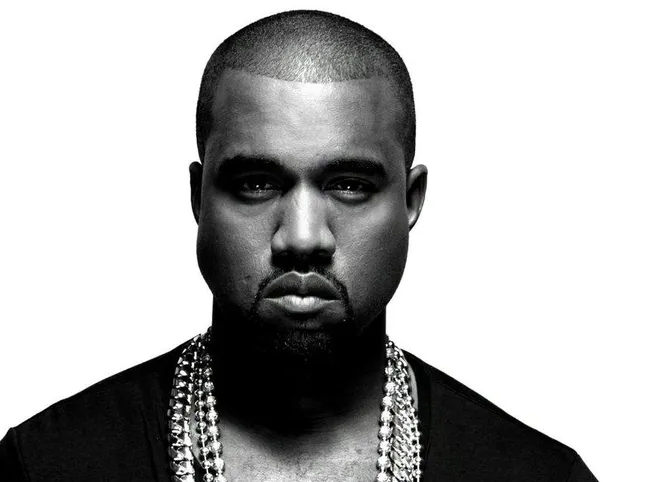
Kanye West apologizes to the Jewish community
The new album is called “Bully” but Kanye West tries to apologize: he published a full-page advert in the Wall Street Journal in which he apologizes for his repeated anti-Semitic outbursts. In the open letter “To Those I’ve Hurt” he explains that the origin of his behavior is an accident in 2002: damage to the right frontal lobe could be the cause of his bipolar behavior and problems in subsequent therapies.
His statements against the Jewish community on social media were the subject of journalistic investigations – such as that of the NYTimes which also documented anti-Semitic behavior in his working relationships – so much so that they cost him advertising contracts with large brands such as Adidas. Kanye says he has found “new and necessary clarity” and also apologizes for attacking the Black Lives Matter movement: “I am not asking for sympathy or a pass, although I aspire to deserve your forgiveness. I am writing today simply to ask for your patience and understanding as I try to find my way home.”
Below is the full text of the advert. Kanye West will perform at the RCF Arena next summer.
Twenty-five years ago I was involved in a car accident that fractured my jaw and caused an injury to the right frontal lobe of my brain. At the time, the focus was on the visible damage — the fracture, the swelling and the immediate physical trauma. The deepest wound, the one inside my skull, went unnoticed.
No thorough scans were performed, neurological exams were limited, and the possibility of a frontal lobe lesion was never raised. It wasn’t properly diagnosed until 2023. That medical negligence caused severe harm to my mental health and led to the diagnosis of Bipolar Disorder Type 1.
Bipolar disorder has its own defense system: denial. When you are in the manic phase you don’t think you are sick. You think everyone else is exaggerating. You feel like you see the world more clearly than ever, when in reality you are completely losing control.
Once people label you “crazy,” you feel like you can no longer contribute meaningfully to the world. It’s easy for others to joke and laugh about it, when in reality it is a very serious and debilitating disease, from which you can die. According to the World Health Organization and the University of Cambridge, people with bipolar disorder have a reduced life expectancy by an average of ten to fifteen years and an overall mortality rate two to three times higher than the general population. It compares to serious heart disease, type 1 diabetes, HIV and cancer — all potentially lethal if left untreated.
The scariest thing about this disorder is how persuasive it is when it tells you that you don’t need help. It makes you blind, but convinced that you have clarity. You feel powerful, confident and unstoppable.
I have lost touch with reality. Things got worse the longer I ignored the problem. I have said and done things that I deeply regret. Some of the people I love most I have treated the worst. You have endured fear, confusion, humiliation, and the exhaustion of trying to love someone who, at times, was unrecognizable. Looking back, I became detached from my true self.
In that fractured state, I became close to the most destructive symbol I could find, the swastika, even going so far as to sell its image on T-shirts. One of the most difficult aspects of bipolar 1 disorder are the moments of disconnection — many of which I still can’t remember — that lead to poor judgment and reckless behavior that often feels like an out-of-body experience. I regret and am deeply mortified for my actions in that state, and I am committed to accountability, treatment, and meaningful change. However, this does not justify what I did. I am not a Nazi or an anti-Semite. I love the Jewish people.
To the black community — who supported me through all the ups and downs and darkest moments. The black community is, without a doubt, the foundation of who I am. I am deeply sorry for disappointing you. I love us.
In early 2025, I spiraled into a four-month manic episode of psychotic, paranoid, and impulsive behavior that destroyed my life. As the situation became more and more untenable, there were times when I no longer wanted to be here.
Having bipolar disorder does not mean you are in a constant state of mental illness. When you go into a manic episode, that’s when you’re sick. When you’re not in an episode, you’re completely “normal.” And that’s when the damage caused by the disease hits hardest. After hitting rock bottom a few months ago, my wife encouraged me to finally seek help.
I found solace in the Reddit forums, of all places. Different people talk about manic-depressive episodes of a similar nature. I read their stories and realized I wasn’t alone. I’m not the only one who completely ruins their life once a year, despite taking medication every day and being reassured by the so-called best doctors in the world that I’m not bipolar, but simply experiencing “autism symptoms”.
My words, as a leader in my community, have real impact and influence globally. In my mania I completely lost sight of this fact.
As I find a new balance and center through an effective regimen of medications, therapy, exercise, and healthy living, I have achieved a new and much-needed clarity. I’m pouring my energy into positive, meaningful art: music, clothing, design, and other new ideas to help the world.
I am not asking for sympathy or a pass, although I aspire to deserve your forgiveness. I am writing today simply to ask for your patience and understanding as I try to find my way home.