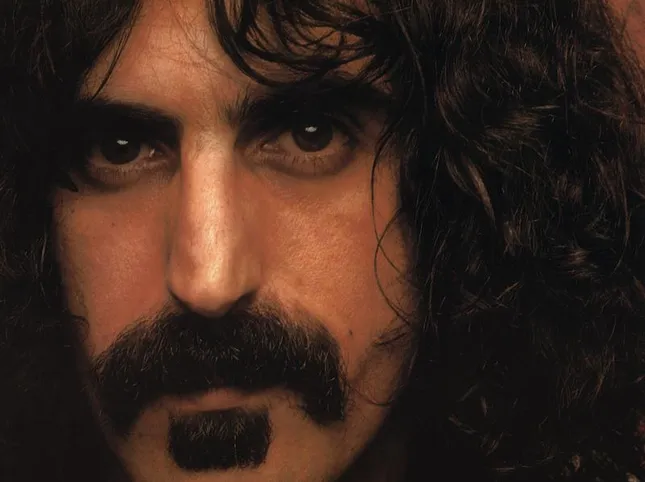
“I want to remember Frank Zappa like this”
There is a picture of Frank Zappa who belongs to the history of rock: the man with the sharp goatee, the cynical look and the conductor’s baton ready to punish every slightest rhythmic inaccuracy. But for Adrian Belewthe man that Zappa took from obscurity to launch him into the firmament of guitar greats, the last memory does not have the scratchy sound of a Gibson SG, but the silent warmth of an unexpected word.
The last meeting The physical encounter between the two took place in December 1993, a few months before Zappa left us. Visiting the historic Zappa home in that period was, for Belew, an emotional shock. The vibrant man, the volcano of ideas that consumed one expression after another while revolutionizing contemporary music, had vanished.
In his place, Belew found a man of just 52 who looked much older. Weak, tiredwith his voice reduced to a whisper and a glass of orange juice instead of the usual coffee. They talked about Frank’s final plans, but the conversation struggled to get off the ground, suffocated by the tiredness of the illness. It was a melancholy farewell, interrupted by Zappa’s need for rest and Belew’s subtle sense of guilt for having taken up his time.
However, Belew chooses to keep a different ending in his heart. An ending that seems written by destiny itself. One night in 1992, Adrian suddenly woke up at six in the morning, fresh from a vivid dream.
In the dream, Frank and I were laughing and talking, having a lively conversation about music. It was beautiful, like a true friendship.
Unable to go back to sleep, Belew went downstairs. In an era when emails were still a technological mirage, he decided to entrust his thoughts to a fax. He wrote to Frank about the dream and, driven by a sudden impulse, he decided to tell him what he had never formally communicated to him: a deep and sincere thank you for everything Zappa had done for his career and his life. At the time, Adrian did not yet know how serious Frank’s health condition was.
The answer was not long in coming. That same afternoon, the phone rang. It was Frank. Despite his reputation as an angular, satirical and often cutting man, Zappa began with a sentence that surprised Belew: “It was sweet”. He used that very word: Sweet. An adjective that critics would rarely have associated with the author of Hot Ratsbut which at that moment perfectly defined the bond between the teacher and the student.
This is the Frank Zappa that Adrian Belew chooses to remember: not the suffering genius of his last days, but the friend who, on an ordinary afternoon, decided to put satire aside to welcome, with unexpected sweetness, a belated thank you.