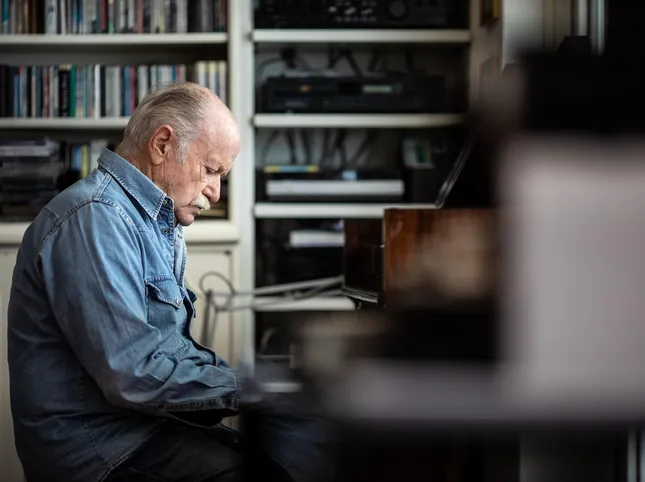
Gino Paoli in Parliament: commitment to music
The disappearance of Gino Paoli brings to mind a less well-known but significant parenthesis of his life: the one spent among the school benches Chamber of Deputies. It was the 1987 when the Genoese singer-songwriter was elected in a political season characterized by extraordinary popular participation, with a voter turnout that exceeded 88%.
That tenth legislature was distinguished by a massive presence of figures from the world of culture and entertainment. Next to Paoli, elected on the lists of the Italian Communist Party and then joining the Independent Left group, sat names such as the director Giorgio Strehlerthe champion Gianni Rivera and the conductor Gerry Scotti. There was no shortage of more provocative or iconic figures, such as Paul Village, Domenico Modugno And Ilona Staller.
Despite the commitment, Paoli was never afraid to define that experience as “misstep“. With his usual frankness, he admitted that he didn’t feel cut out for the corridors of Montecitorio: politics, according to him, required a propensity for mediation and compromise which was poorly reconciled with his direct and unfiltered nature. Although he declared that he had not managed to have as much impact as he had hoped, he recognized those years as having great educational value.
Although he was assigned to the Transportation and Telecommunications Committee, the heart of his legislative activity remained there protection of art. In 1988 he filed a bill aimed at relaunching national pop music (defined in the text as “extracultured music”).
Paoli forcefully denounced how the absence of adequate regulations had weakened Italian production, crushed by the dominance of Anglo-American models. According to the singer-songwriter, this “state inaction” forced local talents to ape foreign styles in order to survive commercially, denying their own cultural roots.
To reverse the trend, the Honorable Paoli proposed pragmatic measures: tax breaks for the sector; stricter copyright protection; the valorization of the musical work as an intellectual heritage to be defended from foreign standardization.