Ginevra Di Marco: “We are not one thing, we have a thousand souls”
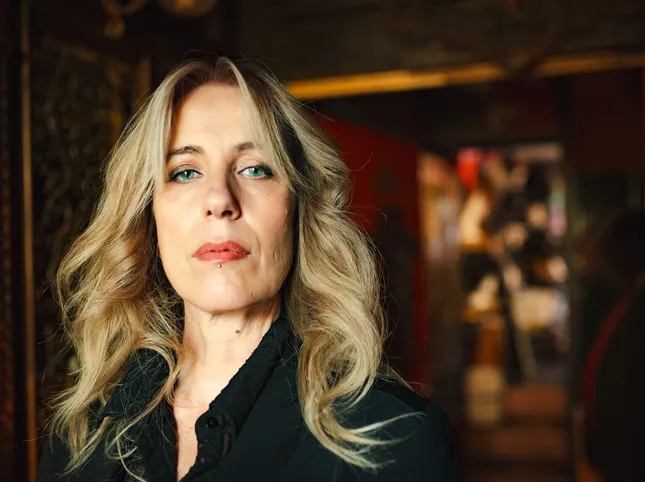
Ginevra Di Marco it is a voice that enchants and overwhelms, capable of crossing genres and decades without losing authenticity. Singer, performer and musical researcher, she blends the tradition of Italian songwriting with echoes of world music, jazz and folk, creating a unique and recognizable sound universe. His art is never superficial: every note, every phrase, brings with it a world of emotions, memory and commitment. From 26 to 29 December the monumental complex of Santa Maria la Nova, in Piazza Santa Maria la Nova 44 a Naples hosts “Women’s Stories”, the free exhibition that explores and celebrates the new sound languages shaped by women. On December 28th, from 7pm, she will be the protagonist.
What to expect from the “Women’s Stories” date?
I often have the opportunity to play at the end of the year, in the period leading up to Christmas. New Year’s Eve, on the other hand, interests me relatively. Playing in churches is something special: I feel the end of the year is a moment in which to take stock of life, rather than celebrate, about our life in general. This concert in Naples strengthens my relationship with the sacred and the profane. We will bring a live show built on the basis of the Christmas one we created between 2010 and 2011 at the Cenacolo di Santa Croce, in Florence. It will be a show that, as that place already suggested to us then, develops an essential conception of music. We live in a world full of frills, superficiality, superfluous elements. Here, however, we will remove: we will get to the bone. The repertoire will range from songwriting to popular tradition.
His latest album “Kaleidoscope” won the Targa Tenco in the “Performer” category. How would you describe it?
This project was not born by chance: it is a sort of celebration of these twenty-twenty-five years of music. It’s an album that pays homage to the many souls that live within it. We spend our whole lives looking for an identity, while the world often tries to sew a dress for us. The beauty, however, is being able to range from one soul to another, because each of us can contain a hundred thousand. When I embrace a soul, I immediately feel the desire to go out and discover another. Here: this album celebrates all of this, the diversity, the passages, the multiple nuances that make us up.
Is the role of the interpreter in Italy underestimated?
The role of the interpreter is wonderful. In Italy it is often considered secondary, but this is not the case: being an interpreter allows you to leave your own mark. Many songs in the world, popular, traditional, world music, would not be known if the performers did not exist. Interpreting is a great opportunity. Popular music is not a fossil: it is born from songs generated by wounds, by struggles; addresses issues such as violence, emigration, resistance. These are all current and urgent topics. Singing an artist like Rosa Balistreri does not mean doing an exercise in nostalgia, but speaking in the present.
In the album his voice returns to duet with that of Giovanni Lindo Ferretti in “African Sunset”.
Yes, that’s a PGR song that we love a lot. It has a world flavor that we wanted to reinterpret in a more afro-rock key, à la Fela Kuti. With Giovanni there is something eternal that goes beyond words: our voices will be recognized forever. While working on this song we had a very sweet meeting. There was a return, a renewed desire to listen to each other after twenty-five years.
And the meeting with the CSIs? There is an air of reunion.
Yes, we met again with the CSIs, there was a meeting. It was very exciting, but everything is still very vague. The intentions are there. We must do something for the people who loved us, who gave us so much. There is something… We feel this desire, we feel this responsibility to reach people’s hearts once again. We don’t know the timing yet, but there is a high probability that we will get back together.
There is a project of his that I love: “What matters – Ginevra sings Luigi Tenco”. How does an artist like Tenco pass on?
With its own sensitivity. When we get close to great authors we can put something of ourselves into it, and we need to find a balance, also in the case of Luigi Tenco, between what he was, what he represented, and my vision in singing him. The attempt was to maintain its characteristics, also bringing in some elements of mine, ours. For example, we rewrote the arcs. I tried to remove his private experience from the songs and bring the songs into a more collective dimension. He wrote some amazing melodies. More than a fighter he was a deserter, which is why he remains a special figure.
How do we talk to the new generations?
I have two teenage children who listen to music mostly through singles and playlists, and that’s fine. But I continue to believe that the size of the album is magical, that it has a profound value. Understanding why an artist wrote a record, how he constructed it, why those songs form that project: all this remains fundamental. It is often said that the new generations don’t pay attention, that they only prefer what is fast, easy, immediate. I, however, believe that we can teach them the importance of a broader vision, of a more complex project, even of an identity that can emerge from a record. I don’t know how long the albums will continue to exist, but I think it’s important to talk about them and make people understand their value.