Fresh Mula: “Music can be a prayer”
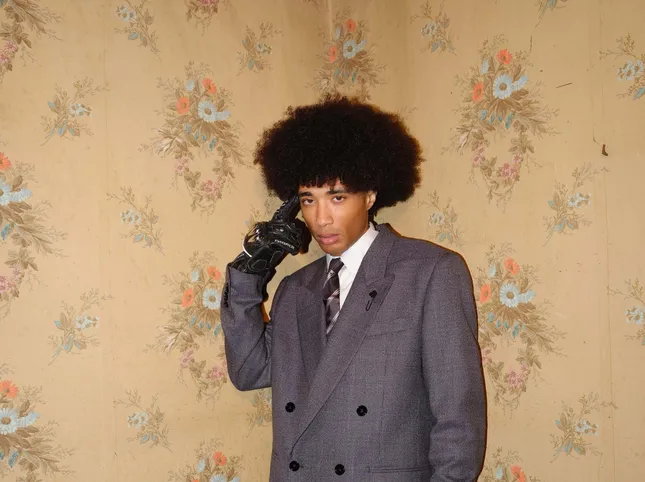
His participation in the international format COLORSxSTUDIOS, a showcase that has consecrated names such as Billie Eilish, Doechii, Doja Cat, Jorja Smith and Ty Dolla Sign, made enthusiasts and professionals go wide-eyed. With a sound that blends rap, soul and gospel, Fresh Mula, stage name of Omar Gueye, born in 1998, born to an Italian mother and a Senegalese father, raised in the province of Bergamo, has an identity that has its roots in black culture and a contemporary dimension of hip hop. Elegance and spirituality also coexist in him: his latest EP “Diario di bordo”, released last year, is the first journey of an artist who has all it takes to go far.
Omar, how did you come to COLORSxSTUDIOS?
Let me start by saying that for me, arriving at this format is one of the biggest dreams I could achieve. As a kid I watched performances, took notes and studied. And in doing so I discovered names that later became among my main listens. I got there with an email: they wrote to me. At first I thought it was a proposal to go and play in Berlin, then my collaborators told me: “Mula, look, these are the ones from COLORS”. And I went crazy with joy.
You presented a double song: “Samuel L. Jackson” and “We have a dream”. The former is more of a statement, the latter has social bars. Why this choice?
Yes, it’s a selection with two different topics. “Samuel L. Jackson” is the song they sought me out for, so obviously I put it on. But I also wanted something else, something that showed my deepest thoughts: that’s why I added “We have a dream”. I didn’t want to limit myself, I didn’t want to go by the standard of rap: money, dealing and more.
For this reason in “We have a dream”, which recalls Martin Luther King, you rap: “They crush the oppressed as they lift oppression high”.
Yes, I wouldn’t call them complaints, they are thoughts about good and evil. And I want to take the side of good, transmitting positive messages to kids who can listen to my music and see themselves in what I’ve experienced. In short, with the double song I wanted to attract a double audience.
What is striking about your songs is the musical research. Where does all this love for black music come from?
I’ve always listened to everything. I love music and for me this is the fulcrum, the skeleton of the project. I’m a detail nerd, they send me a lot of products, but I keep few. Soul, jazz, blues, rap, R&B: I would like all these genres to slowly cross my world. And to do this I cannot limit myself thematically. If I only made super bad pieces, I would chain myself, but that’s what I don’t want. With the kids I work with, who are very strong, we therefore try to develop a broad imagination. Furthermore there is another cornerstone: the tools.
Are you talking about the value added by musicians?
Yes, thanks to them I recover sounds from the past and bring them back up to date. It showed in the set made for Bang & Olufsen. Digital-only productions tire me after a while. The tools add colors and warmth. With these elements I hope to evolve my sound and contaminate it, showing different facets of it.
You didn’t come to this awareness right away. In some of your songs from a few years ago, the sound texture is different.
I was born and raised in Bergamo, music has always been part of my life: in my house we listened to Aretha Franklin, Michael Jackson, Pino Daniele, Mina, Zucchero. The very first songs, in reality, were already jazz and soul, then yes, I actually went elsewhere too. I tried and tried again, I had to find my skills, this is a fundamental process to discover your sound and yourself. It’s true what you say, but I needed time.
Legitimate and also fair. Today the market frenzy doesn’t seem to leave room for maturation and mistakes.
I thank heaven, I thank my every slip and every attempt because now I know who I am, I am convinced of what I do. And they are evolving. I’m 27 years old, I dedicate a lot of time to research and study, this is what matters to me.
In “Logbook” you say: “Brother I don’t feel safe in this place, but maybe if I sing someone will hear us”. What values do you give to music and singing?
I started making music out of necessity, to tell and tell myself. I didn’t have the ability to do it initially, but I did it anyway. And this helped me escape a turbulent adolescence. Because keeping things inside made me feel bad. At the same time today I don’t make music just for myself, I feel a responsibility, I want to communicate something to my generation. I don’t want to air my mouth just for the sake of it.
Does the spirituality that can be heard in many of your songs come from here?
I also make songs to entertain and have fun, let’s be clear, but I strongly believe in the power of words. For me music can be a prayer. Figures like Martin Luther King, Malcolm I want to make music that lasts over time, that goes beyond self-centeredness and money. I’m not making an ideological argument, but a value-based one.
In “Once Upon a Rover” you tell a neighborhood story centered on kids who only have to think about saving themselves.
It’s my first storytelling piece. I love punchlines, but at a certain point I also felt the need to write a piece like this. The song, which uses gangsta language, actually wants to make us understand how much the world of crime and drug dealing distances us from positive things. At the center there is a story, told in detail. For a time I lived in the Celadina neighborhood, which inspired me: when you are in the midst of poverty, you don’t always have a choice.
You are Italian with mixed origins: many young people with the same story can see themselves in you. What value does all this have?
I’ll tell you something a little against the grain: I don’t want to use what I’ve experienced to tell myself. I don’t want to say: “Yes, I live in Italy and I’m black”. My true victory is to be who I am, without further comments. I don’t want to be categorized. I eat polenta, I speak Bergamo, my real goal is normalization. When I read titles like “the Afro-Italian artist”, I say: but why? I want to be an artist and that’s it.
Years ago you had experience in majors. What didn’t work?
I don’t want to complain. If it didn’t go at that moment, it’s because it didn’t have to go. I had to understand who I was, what I wanted. Now it would be different. I had an experience that was useful to me anyway, certain worlds must be known so as not to get burned later.
You wrote: “The only way to escape competition is with authenticity, because no one can be more you than yourself.” What is the song today that photographs this authenticity?
“We have a dream”, I also have the video ready and it’s very hot.
You’ve done feats with Tony Boy, Nitro, Dani Faiv, yet your most representative pieces are the ones in which you’re alone.
They were experiments, very professional training sessions. It’s like training with a very strong footballer at a time when you’re not so ready. I’m happy I did them, there was nothing wrong, but now I want my top ten songs on Spotify to have only my songs.