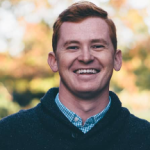
Filippo Graziani: “My father’s music does not fear the ages”
In August this year, in Piazza Martiri della Libertà in Teramo, Ivan Graziani’s music returned to fill the air in an intense evening that united the public and artists in a single, “great scene”. That energy is contained in “80 Happy Birthday Ivan – live in Teramo”with the artistic direction of Filippo Graziani and Marco Battistini, a project that photographs a concert in which many different names participated. The son of the great singer-songwriter who passed away in 1997, who for years has carried on the tradition and his living memory, never dusty, talks about the genesis of the cultural operation set up, the tribute from Marracash, the poetics of Lucio Corsi, which recalls that of the voice of “Lugano addio”, and how his father’s songs are a DeLorean capable of traveling through time, without ever bending.
Where to start from to carry out a project of this kind?
I approached this work in the same way as always. The idea was to create some Polaroids: immerse myself in my father’s repertoire and try to pass it on to those who, perhaps, had never really assimilated it. I involved people who felt, and still feel, an authentic affection towards him: artists who I have had with me on tour over the years, or who perhaps have never met him in person, due to generational issues, but who have made his message their own. Then there are those who really knew him and collaborated with him, like Michele Pecora. There is a great mix of holdings.
Some names involved are prestigious. Is this something that has helped?
I was never interested in the “name” of who to involve, what mattered to me was the fact that they actually had something to say.
What is also striking is the transversality of genre: it goes from pop to rap.
My dad was never interested in gender flags: he didn’t like to close himself in, and this is something I feel is mine too. He had an authentic desire for discovery, he loved contamination. I think this is one of the most interesting aspects of the project: being able to tell a repertoire from different points of view. And I am convinced that this very opening has also been good for the repertoire itself.
How would you describe “Damned gossips”?
It’s a piece that I love very much because I saw it born. I was little, I spent my time annoying my father in the studio, and that moment in my life remained in my memory. I adapted it almost in a country style, because I think the lyrics fit well with that type of sound. It’s a song that, even today, says exactly what it needs to say.
It’s about prejudice and a story between an adult man and a little girl.
There are those who call it “against the grain”, but I don’t really know what is today and what isn’t. However, I know that my father taught me that, sometimes, songs must say things as they are, directly. The difficult topics, the less digestible ones, must be told for what they are. Language also matters: if you’re talking about something unpleasant, you need to use the right terms. Hatred should be called hate, war should be called war. You can’t go around things.
Is “Lugano addio” your father’s masterpiece?
It was born from a friendship that my parents had with some people who lived in Lugano. Friends who I have also seen again recently and who bring back memories of trips from when I was a child: going to Lugano almost seemed like I was leaving for a very distant place. It’s probably one of the most misrepresented songs, the one about which there has been the most speculation about my father over the years.
There are those inside who have seen political sub-messages.
In reality it is a song that talks about love: it tells of a boy who falls in love with a girl who lives in Lugano and who faces a world that doesn’t feel like his own. It is a piece that has had the great merit of resisting time, perhaps because it is a little mysterious, and which today, to all intents and purposes, is considered one of my father’s symbolic pieces.
What did you feel when at the entrance to the Forum in Marracash, for three evenings, you heard a roar for you and your father?
It was a very strong emotion. I arrived at these evenings without really knowing what awaited me, and I found myself in front of a transversal audience, who understood perfectly why Marracash had decided to recover and sample “Firenze (Canzone Triste)”, which is why the audience gave me that warmth. In my opinion, Marra’s greatness lies precisely in this: making people understand the reasons for his choices.
Is this how you really reach people?
It is often said that certain singer-songwriters from the past cannot reach a certain type of audience because they are now dated, but this is not true. Just tell, make people understand the journey that takes those songwriters, and the public perceives it. Often the most incredible things come from the places or people you least expect it from. Marracash managed to do something special, bringing my father to the new generations too.
Your father was at the Sanremo Festival twice in 1985 and 1994. Have they ever looked for you for a tribute, to remember him at Ariston?
No, they didn’t. But neither did the artists on the cover night. I, personally, have never received an official invitation: if it had happened, I would have gone.
Do you think your father isn’t remembered as he should be among the greats of Italian song?
No, I don’t agree with this speech. My father had his own way of telling stories. He wasn’t national-popular like many other artists, he didn’t write lyrics with a “universal” attitude, in the sense that he almost never spoke about “us”, there are no “us” in his songs. This certainly made the difference.
Does Lucio Corsi remind you of your father?
Lucio, from my father, inherited perhaps the greatest teaching: the importance of telling a story, respecting it for what it is and handing it over to time.
What is your dad’s greatest legacy?
That if music is made with sincerity it does not fear the ages and can stop hourglasses, remaining. Artists must not be slaves to fashions, only in this way will they be able to leave something for tomorrow, as my father did.