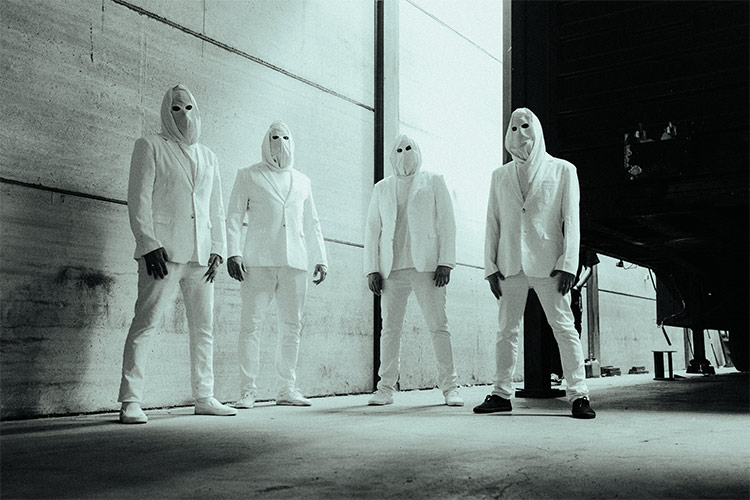
“Death to the algorithm and everything that surrounds it”
After almost twenty years of experience, The Holocaust Altar come back with “Echoes” (Auto, 26), an album that inaugurates a new stage after assuming change without giving up an identity built from spirituality, silence and ceremony.
There are returns that do not consist of returning to the same place. The Salamanca formation The Holocaust Altar understand “Echoes” from there: the result of returning to a band that, although it has remained silent, never stopped being present. “Perhaps it is time to accept that change. After almost twenty years as a band we are faced with an album that can change many things. We were looking for a change of direction, a new echo that resonates within the group”. The break also served to distance ourselves. “We believed it was necessary to be able to take a breath, see things with perspective, reconsider… and come back stronger”. There were ups and downs and difficult moments, but the band ended up prevailing over everything else. Because EADH It is not only the sum of its members. “It’s our way of life”they confirm.
“Maybe it’s time to accept the change”
Returning means reuniting with a brotherhood, but also with that serenity, rage and ceremony that are part of their universe. A return that has also forced us to review the image that accompanied the group for years, diluting the dark iconography of the beginnings without losing its essence. “Like many things within the band, this iconographic part also evolves”. The balance is found in that spiritual dimension of art where they place the essence of the group. “Echoes” It does not seek a radical reinvention. There are new nuances, but the priority has been to preserve a recognizable sound identity. “In general we have sought for the album to sound like EADH… for it to be a hallmark of the band. For it to have our sound”. Finding one’s own personality is becoming increasingly difficult, and the band claims it as a form of resistance. The music of the charros offers a wide space for those who receive it. Without lyrics that impose a closed story, each listener can construct their own interpretation. “In the end it is music and that is what it is about: that each listener interprets it in their own way and it generates those feelings”.
They also hope that the album can function as an escape valve from problems. “That would be the greatest achievement of the album”they assert. “Echoes” It vindicates, in passing, the antithesis of fast listening: extensive songs, instrumental developments and patience. Bet on a piece of almost twelve minutes like “Vortex” It involves taking a risk. “If something lasts more than twenty seconds, it loses immediate attention”. That is why they defend listening to complete albums, understood as works and far from the logic of playlists, applying a resounding diagnosis. “Death to the algorithm, to its soulless expired playlists and everything that surrounds them”.
Spirituality is manifested in the shared feeling and in each live performance, converted into a collective ceremony. “We need to pivot and connect with our audience”. This connection marks the beginning of the new stage: it started in Toledo in September and will continue until well into 2027, carrying out the solid work that is “Echoes” to all those places willing to host the quartet’s homilies.