
Charli XCX Has Officially Killed “Brat”
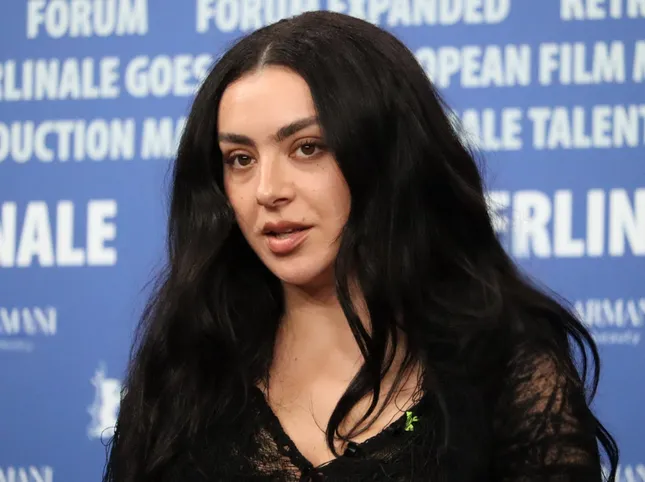
“For me, Brat Summer ended with “The Moment”. And maybe, when something like that ends, you can no longer be the artist you were before”: Charli XCX says it without hesitation in the question that closes the press meeting at the Berlinale, where she has just presented the slightly autobiographical, slightly meta mockumentary in which she stars as a different version of herself. “In the film, the version of Charli that I play decides to get rid of “Brat”, to kill “Brat” – she explains. I did it because I was interested in talking about the life of the works, the risk of staying in the same cultural space for too long.” In the pop scene there have long been those who have cultivated a career marked by eras, but the point is also to find the right moment in which to end them. “In pop it happens easily: fans are always hungry for the next version of you. Making this film was cathartic: I was able to transform real frustrations into amplified situations.”
“The Moment” is a documentary on how “Brat” was born and what it meant for those who wrote it to move from a niche of loyal listeners to a much wider audience. At the same time it is a mockumentary that pokes fun at the entire hagiographic genre of sometimes very melodramatic event films about behind the scenes of big stars’ tours and albums. “The Moment” also comes from wondering what happens when a work, once delivered to the public, ceases to belong to you. The moment to which the title refers is not only the peak of fame reached by her artist (who quips “for decades only queer people listened to me”) but also the breaking point at which he lost that peculiar artistic control over his musical work that living in a niche has guaranteed her for a long time. She explains it herself: “When you release a work into the world and it reaches a huge audience (the largest I’ve ever had) the opinions of others begin to overlap with the work. Its meaning transforms. It’s inevitable, but I had never experienced something similar on this scale. It made me think a lot about how we communicate art, about when it really leaves the hands of its author to pass into those of the public. I felt I had a lot to say about this.”
“The Moment” is therefore the story of Charli who achieves success, or rather, of a version of Charli that ends up going in a different direction from the original, in a continuous meta-cinema in which as spectator and listener one wonders where the grotesque and caricatural version of the singer ends and where thea confession slightly distorted in an alter-ego that she herself interprets. A minimal but necessary artifice to allow her to face this honest confession with an open heart, made up of cigarettes smoked angrily in the vans that take her from one event to another, less and less in control of what her album, her music, her image represent.
A film that is the perfect way to kill “Brat” and be reborn – and which arrives at the same time as the soundtrack of “Wutering Heights”, where he collaborated with John Cale and in which he frequents decidedly darker musical atmospheres.
The director Aidan Zamiri himself explained that the documentary serves this purpose, when approached by Charli with the subject: “The first nucleus of the idea came from Charli. That initial text became the emotional anchor of the film: the feeling of achieving something you’ve always been chasing and, instead of feeling like you’ve arrived, having the impression that it’s slipping through your fingers. It’s a deeply human experience. Even though the story of ‘The Moment’ is fiction, we wanted everything to be plausible: something Charli could have done under certain circumstances.”
That something is losing all creative control, ending up going from the face of nightlife singing about inadequacy and cocaine to a cleaned up, family friendly version of the girl who made it and tells it in her documentary on Prime Video. In the most intense moment of the film, Charli’s alter ego says she feels free, because she no longer feels the music and the project as expressions of herself: she has become the proxy of another’s vision, of a chauvinist and unscrupulous industry that can transform her into a new Demi Lovato or yet another Amy Winehouse, based on his instinct for self-preservation. The grotesque characters that populate the film – including inadequate managers who are not up to the task, a director determined to impose his stereotypical vision and a general rampant misogyny – draw closely on what Charli calls “certain characters” that she met in person. “The situations in the film didn’t really happen in 2024, but with other conditions they could have become reality. I’ve been in the music industry for a long time, I’ve met characters similar to the ones we tell about, I reacted in ways very similar to those in the film. Have I ever had a breakdown behind a piano while smoking an endless amount of cigarettes? Yes.”
The alternation between paradoxical irony à la “Industry” and moments in which Charli shows her fragility recalls the emotional journey that made “Brat” resonate so much with its audience, according to the director: “It’s part of the magic of the “Brat” album: Charli can celebrate hedonism or repeat clichés until she drops, then suddenly become raw and vulnerable. This is what makes the work layered and fluid. In the film I wanted to tell what is authentic about her, her strengths and fragilities.”
Aidan Zamiri, Scottish filmmaker with a long experience in the world of pop music videos (in his CV there are videos of Caroline Polachek, FKA Twigs and of course Charli XCX) has a similar feel and aesthetic to its subject. He is the one who directed the video clip for “360” (Brat Era’s first single) and through friendships and influences he is in turn part of that world told by the parterre of stars of the video, so much so that he shares the same emotional starting point as the film: “During one of the first readings I realized that we were giving voice to our insecurities in front of a crew. It brought us together a lot”.
In a film that continually flirts with reality, it is natural to wonder what is true and what is not. According to Charli, however, in the future “The Moment” will pollute the official historical memory, given that artificial intelligence and the digitization of our memories are already making them increasingly precarious and less verifiable. In short, there will be those who, years from now, will see it and think that the Brat summer of 2024 ended up just like this: “Today we still know how to distinguish artifice from reality, recognize the stitching, the special effect, the manipulation. But if the boundary is destined to become increasingly thinner, to the point of becoming imperceptible, the question will no longer be understanding whether something is fake: it will be deciding what we are willing to consider true”.
