Alan Parsons Project: Progressive (pop) beyond eras
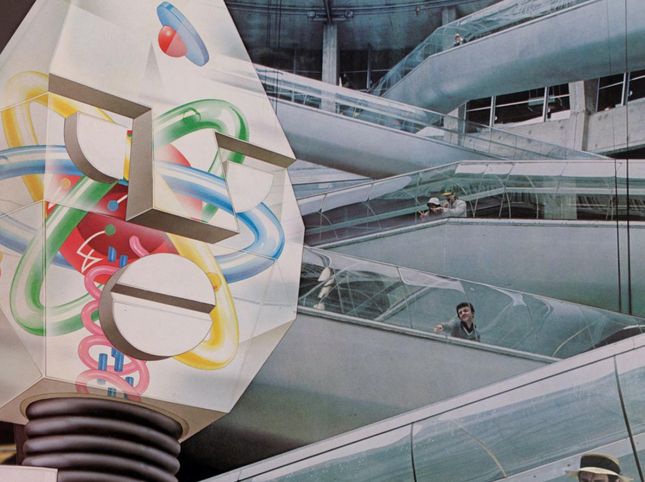
“When tomorrow comes, it will sound like this album.” Thus stated the commercial advertisement of Arista Records to present, in 1977, the release of “I Robot”, the second album by the Alan Parsons Project, as well as the first to be released by the same label. “I Robot” entered the history of rock and pop music by selling millions of copies, and is today reissued (by the prolific Cooking Vinyl) in super deluxe format with four discs and a color book containing rich written notes that tell its genesis.
For those who don’t know, that of the Alan Parsons Project is a story all in itself, which was able to materialize thanks to a detailed artistic vision, made up of exceptional artwork and compositions – both instrumental and sung – of enormous lyrical and compositional depth. The context through which the Project was able to establish itself was that of the historic Abbey Road Studios in London. It was there, in fact, that the fateful meeting took place between the two minds behind the project, Eric Woolfson and Alan Parsons.
The first, Woolfson, was a contract pianist and composer, already alongside the well-known Andrew Lloyd Webber; the second, Parsons, had followed the Beatles’ final recordings (he can be seen, still very young, in Peter Jackson’s 2021 documentary, “Get Back”, listed as a tape operator) and, more importantly, had been a sound engineer on “The Dark Side Of The Moon”. An involvement, his, which in the latter case had contributed to giving Pink Floyd’s milestone the aural solidity for which we continue to spend – in a now superfluous way – oceans of words. He also had the idea of the famous start of the clocks on the song “Time”, included in “Dark Side…”, but when Gilmour and the others also called him for the recordings of “Wish You Were Here”, Parsons declined because he was busy, in the meantime, making sense of his project with Eric Woolfson.
Sharing various roles (Parsons would have dealt mostly with the production, managing with his colleague the programming of the songs and mainly the use of keyboards and synthesizers), the sole aim of the two would have been to compose and record high quality music, being able to count on the services of a multitude of professional session musicians: among these the arranger and composer Andrew Powell, the singers John Miles and Lenny Zakatek, but also guitarist Ian Bairnson, then alongside Kate Bush together with drummer Stuart Elliott and bassist David Paton (also at the service of Parsons and Woolfson).
The musical direction of the Alan Parsons Project
Functioning as a studio band, a priori excluding the idea of performing live concerts (due to the impossibility of reproducing the complexity of their music in live performances), the Project took the form of an entity dedicated to the production of concept albums, a “format” already very popular in the Seventies, especially among the more progressive rock groups. Parsons, Woolfson and their session musicians produced ten albums over the course of a decade (i.e. between 1976 and 1987), ending up over time exceeding the figure of fifty-five million albums sold worldwide. An amazing result for a musical project that never promoted its albums using the concert channel. Different lyrical scenarios expressed in the songs of the Project would have found a focal point in Edgar Allan Poe, master of thrill literature, especially with regard to his debut “Tales Of Mystery And Imagination”, released in 1976 and exceptionally for the film company 20th Century Fox. The work, whose title was the same as a collection of Poe’s novels, presented itself as a work far too intricate and structured to be merely a debut. According to Parsons, the album did not enjoy the right attention both because it was overshadowed by the change of label, since the Project found a safe refuge in Arista, and because in the meantime “I Robot” (1977) would have been released, which was inspired not by Poe, but by the work of the sci-fi novelist Isaac Asimov.
Strengthened by a concept also valid for today’s times – the clash between human and artificial intelligence -, “I Robot” was and remains a masterpiece of melody and experimentation, as demonstrated by the quality of its ten tracks – from the more rhythmic and funky “I Wouldn’t Want To Be Like You” to the deeper “Some Other Time”, “Breakdown” and “Don’t Let It Show” – and should never be missing from the vinyl collection of every good music connoisseur. Parsons was amazed by the fact that the press considered it “prog”, since for him the Project belonged more to a more purely “pop” context. It is no coincidence that if today there is a term that best describes the group’s music, it is “progressive pop”. But if the importance of “I Robot” is undisputed, the elements that made that album fundamental were further strengthened in the Project’s third album, entitled “Pyramid” and released a year later. The work revealed peaks of compositional enormity – look even today at the wonder, to give just one example, of “In The Lap Of The Gods”, an instrumental embellished by the use of an ancient instrument called cimbalion – but it also highlighted, to complete the work, the soft-rock heterogeneity already present on the previous album. “Pyramid” looked at the mysticism of Egyptology and the pyramids, and was also a coup for its artwork curated by Storm Thogerson of the Hipgnosis studio (the same one, just to stay on topic, behind the triangular refracting prism imprinted on the cover of “The Dark Side Of The Moon” – which was not created by Pink Floyd, as many mistakenly believe, but by Thogerson).
The commercial peak and the declining phase
The Seventies for the Alan Parsons Project ended in brilliant form, precisely with “Eve”, another unreleased collection of intriguing songs – albeit less experimental than usual -, whose focus this time was on the strength and behavioral and mental characteristics of women (among the guests was also Clare Torry, creator of the improvised vocalization on the Floydian “The Great Gig In The Sky”). In 1980, however, the Project focused on the problem of gambling with another masterpiece, “The Turn Of A Friendly Card”, which would particularly shine for some of its sound chapters such as the famous single “Games People Play”, the poignant ballad “Time” and the haughty masterpiece-suite of the same name as the album and divided into several parts. Commercially speaking, APP reached the top with the release of “Eye In The Sky” in 1982, bordering on levels of fullness not dissimilar to those of “I Robot” or “Pyramid”. Its powerful introduction, “Sirius”, one of the most abused tracks in international sports and television contexts (even the Italian Tg2 of the time used it as the theme song for the “Spazio Sette” column), merged into the rich emotional textures of the eponymous song and of “Silence And I” and “Children Of The Moon”, while “Psychobabble” and “You’re Gonna Get Your Fingers Burned” highlighted the more canonical side of 80s FM rock.
The Project’s ability to convey a sure sense of balance in the writing of the material, always supported by a certain progressive propensity in the arrangements, continued to enchant its fans, but after “Eye In The Sky” something changed. Parsons and Woolfson’s excessive propensity for catchiness, in fact, ended up penalizing in some way the final part of their musical history. In 1984, the concern towards the themes of environmental exploitation was the cornerstone of the sonic story of “Ammonia Avenue”, a shrewd work but nevertheless lacking the temper that had animated the Project previously (the tear-jerking single “Don’t Answer Me” even went so far as to recall vintage sounds à la Phil Spector), a discussion also applicable to the final albums, “Vulture Culture”, “Stereotomy” (both 1985) and “Gaudi” (1987), which nevertheless continued to explore the concept album tradition. The first criticizing the “vulture culture” of the modern era; the second calling into question the “stereotomy” indicated by Poe in the “Crimes in the Rue Morgue” (a text previously honored by Iron Maiden in the album “Killers”), while the third celebrated the figure of the great Catalan architect Antoni Gaudí.
The legacy of Parsons and Woolfson, today
The Project officially ended in 1990, after a hypothetical eleventh album, the interesting “Freudiana” (in tribute to the figure of Sigmund Freud), ended up turning into a solo work by Eric Woolfson (he would later die in December 2009 from cancer). Today the Project continues to gain proselytes and be appreciated by those who usually spend a lot of time on social networks, where pages relating to the Project are very popular. If interviewed about it, Alan Parsons still expresses himself with a certain enthusiasm, today, in recalling his past with Woolfson. After all, their concept albums are like books that can be read and reread even years after their original release. Which is why, basically, they continue to be periodically reprinted and re-edited in the most unthinkable formats.