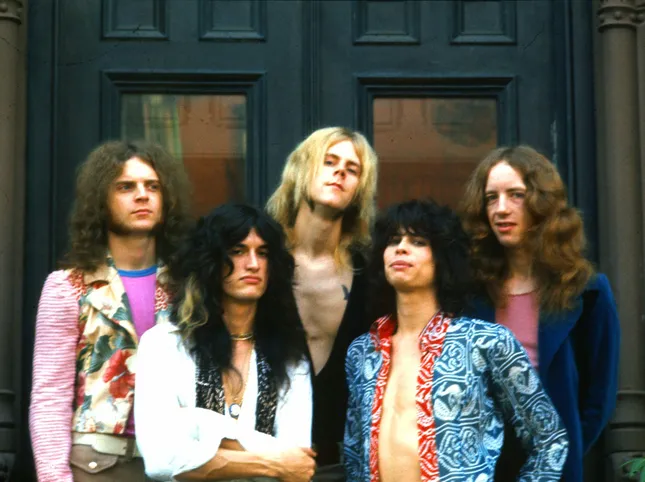
Aerosmith, to hell and back
After having had great success in the Seventies, with the arrival of the Eighties he Aerosmith they knew firsthand the meaning of the word decline. In 1979 the partnership between the group’s frontman broke down Steven Tyler – worn out and put on the ropes by excessive drug use – and the guitarist Joe Perry who temporarily left the band to return a few years later, in 1984.
The albums “Rock in a hard place” of 1982 and “Done with mirrors” in 1985 they were a semi-flop and although they were closer to 35 than 40 they seemed irremediably objects from another era. A second chance to return to his former glories was offered to him by Run-DMC who in 1986 revived the “Walk This Way” of the Boston band in a hip-hop key, conquering the very top of the charts. The music video, featuring the Aerosmithbecame popular on MTV in a period in which clips were fundamental for the public to like or dislike a song. So he Aerosmith they came back into vogue when to most, in the discography, they seemed like a lost cause.
This and other events are included in the volume
‘Raised on Radio: Power Ballads, Cocaine & Payola — the AOR Glory Years 1976-1986’
written by the music journalist
Paul Rees
. The book tells a story of mainstream rock that goes from the mid-70s to the 80s, with a chapter dedicated to the return from the underworld of
Aerosmith
.
In ‘Raised on Radio’,
John Kalodner
then an A&R executive for the group’s label, Geffen Records, says his first priority was to cleanse the band members of any addictions and then recruit, for the 1987 album
“Permanent vacation”
of the authors to work alongside Tyler and Perry: “Guys like Desmond Child and Jim Vallance, who could give inspiration to the great ideas that emerged from them”.
According to what was stated by
Joe Perry
he and Tyler weren’t too thrilled at first about having to work with outside writers. “We had to be dragged kicking and screaming to do it. But in the end, we realized that it would bring new energy and help keep us going.”
Tyler and Perry’s writing sessions with Child produced two hits:
“Dude (Looks Like a Lady)”
(with a video where Kalodner dresses up as a bride) and
“Angel”
. But according to Kalodner, once the
Aerosmith
they returned on the crest of the wave,
Steven Tyler
he was not very generous in giving some of the credit to those who deserved it. “Aerosmith recognized what I had done for them, but a little reluctantly. Tyler said in interviews that the songs were his children, and that I had killed his children.” Steven Tyler explains his point of view in the volume: “I was devastated when there was something I’d sweated over and John Kalodner came along and said, ‘That’s disgusting’.”
Kalodner, however, reports another version of events: “He didn’t like me telling him to make his lyrics more accessible for radio. They might have been too R-rated. A lot of the commercial things that they and Bruce Fairbairn (the producer, ed.) were capable of, I had to reject. They kept wanting Tim Collins (Aerosmith’s manager, ed.) to fire me. I didn’t get thanks, but it wasn’t unusual. That’s the way things are.”
Despite the creative tensions, or perhaps thanks to them, the album
“Permanent vacation”
released on August 25, 1987, ended up going five times platinum, and the follow-up album in 1989,
“Pump”
did even better: it went seven platinum and launched three Top Ten singles,
“Love in an elevator”, “Janie’s got a gun”
And
“What it takes”
. In 2024
John Kalodner
he told Louder, “My management skills are very poor, but the music that comes out is usually worth it. When the record comes out, I suspect most people try to forget they ever had anything to do with me.”