“There is no difference between rock ‘n’ roll and classical music”
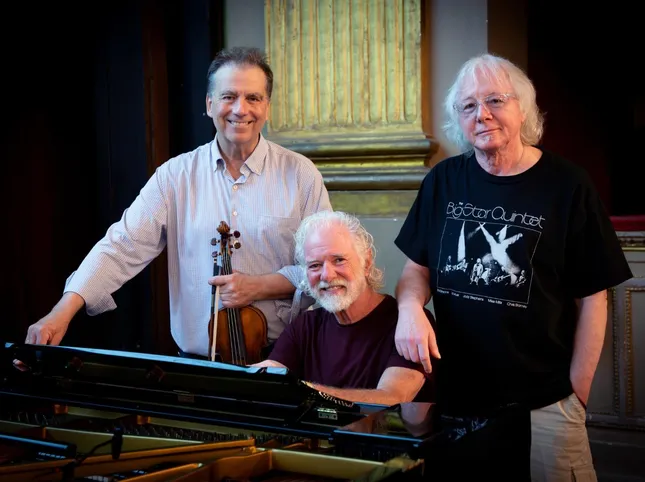
One is REM’s “secret weapon”; the other is the pianist of some of the most important rock bands of all time. The other is a classical musician who has directed the Rome Chamber Music Festival for years. They share roots in Georgia, a great friendship and the pleasure of playing together – as they will do on Sunday 21 June in Rome. Mike Mills, bassist of REM, and Chuck Leavell, keyboardist and musical director of the Rolling Stones for over forty years, have been called by their friend Robert “Bobby” McDuffie to the capital: at the Teatro Argentina they will bring a rearranged version of their show “A Night of Georgia Music”, which includes Ray Charles, James Brown, Outkast and REM and which will arrive at the Carnegie Hall in New York at the end of July, one of the most prestigious theaters in the world.
Hearing them talk is almost as much a pleasure as hearing them play: you can see that this (im)probable trio was born from an authentic friendship and a common love for music, despite starting from very different paths.
Between classical and rock
“Our stories aren’t that different. Bobby and I played and sang together a lot in church when we were younger,” Mills says. “It seems strange, given the contrast between our music. But we want to make people understand that there is not much difference between classical music and rock and roll.”
Yet rock and pop music are still perceived as “light” and contrasted with the “high” culture of classical music. It is precisely these barriers that the trio wants to break down.
“Chuck isn’t classically trained, but he wrote one of the greatest piano pieces in rock history, and I think a lot of classical pianists would have a hard time playing it,” says McDuffie, referring to the Allman Brothers Band’s historic performance of “Jessica,” which Leavell was part of in the 1970s. “Who cares if he can’t read music? Even classical music, historically, was popular music. We want to create beauty in the way we can.”
This contrast between high and low has been transformed, in rock, into a search for legitimation through the use of the language of classical music: arrangements with orchestras, repertoires reread in a symphonic manner and so on. “The really big difference,” Mills explains, “is that anyone can sit down and pick up a guitar and in the space of a week learn hundreds of songs. You learn three chords and you can play five hundred. You can’t do the same thing with the violin. There’s a level of technical competence that classical musicians must have that isn’t essential in rock. I know this because I tried to play the violin…”
Then he adds: “That said, classical music is not just for wealthy ladies and gentlemen of a certain age. Our goal is to bring classical people closer to rock and roll and rock audiences to classical music.”
“We’re trying to introduce different styles and different reflections on what it means to make music together, with classical and contemporary instruments,” adds Leavell. “After all, it all started when Robert challenged Mike to write a concerto for a rock band and violin,” he says, referring to the album that the two recorded together a few years ago (and played at the Rome Chamber Music Festival).
From classical music to classic rock
The paradox is that, while classical music continues to be considered the repertoire par excellence, today rock also has its canon. It is no coincidence that there is a genre called “classic rock”.
“If you last long enough,” Mills smiles, “if your career lasts long enough, if you can exert enough influence and make enough people happy, then yes, you become a classic. It’s not classical music, but it’s a classic. When rock and roll was born, no one knew when it would become less revolutionary and more adult.”
The music of Georgia
The concert they will bring to Carnegie Hall is entitled “A Night of Georgia Music”, the Roman version will have the same repertoire, just with a different orchestral formation. The reason is that all three see the Southern State as a sort of unique musical crossroads.
“There’s something in the water, man,” quips Leavell, who was born in Alabama but has lived in Georgia for decades. Then he gets serious and mentions the extraordinary concentration of talent that Georgia has produced over the decades: Ray Charles, the great songwriters, soul, country, rock, hip hop. “I may be biased,” he admits, “but I think Georgia has something really special. Texas has its musical history, California has its, New York has its. But there’s something unique about Georgia.”
For Mills, REM’s success also helped change the perception that the rest of the United States had of the South. When the band began in the ’80s, coming from the South and not New York or Los Angeles and playing alternative rock was an anomaly: “Before the Internet, the South was considered a sort of backwater: country music and little else. But we knew there was much more. We weren’t trying to challenge convention or prove anything. We simply wanted to make the music that we loved. When people started listening to us, they realized that there was a much wider variety of music coming from Georgia than they imagined.”
When I ask to choose a song that represents Georgia, the discussion almost turns into a playlist. Mills points to “Georgia on My Mind”: “It has that slow, laid-back, swampy Southern feel. It’s wistful, beautiful and encompasses a lot of what it means to be from Georgia.” McDuffie chooses “Midnight Train to Georgia,” while Leavell cites “Rainy Night in Georgia.” Three different songs that tell the same land.
“Nightswimming” and REM
Among the songs in the setlist there is also “Nightswimming”, probably the REM song that most naturally dialogues with the language of the orchestra: the base was written by Mills himself, completed by the band and orchestrated together with John Paul Jones, who took care of part of the arrangements of “Automatic for the People”.
“I wish I could say I had that foresight,” Mills says. “I just played it on the piano because I liked listening to it. I didn’t even think it would become an R.E.M. song. Then Michael (Stipe) heard it during a rehearsal and said to me: keep playing it. He sat there and started making up lyrics. Then we took it into the rehearsal room and realized it was a real song.”
Only later did the strings arrive, with the Atlanta Symphony Orchestra and John Paul Jones. “Like all REM songs, it was the result of the work of all of us. I’m proud to have been part of REM, not of a single song.”
The Stones and the lesson of the blues
Chuck Leavell has been with the Rolling Stones for over forty years: he is their touring pianist, their “musical director”. And he continues to be amazed by the profound knowledge that Mick Jagger and Keith Richards have of American music: “When we are rehearsing, a song by Muddy Waters or Howlin’ Wolf can come on and Mick knows all the words, Keith all the chords. The veneration they have for that music is truly remarkable.”
The thing he still loves most about the Stones today isn’t even the concerts. “Rehearsals are my favorite time. We play things that the audience will never hear. Old blues, obscure Stones songs, songs that won’t make the set list. They are truly precious moments.”
I point out to him that Jagger and Richards often seem more American than Americans when they tackle blues, country and rhythm and blues. “It’s true,” he laughs. “And when Mick takes out the harmonica you immediately know he’s a real bluesman.”
From “Aida” to Eric Clapton
The circle closes with Mills recalling his musical origins in the family: “My father was a dramatic tenor. At home we listened to a lot of opera and the one that has always stayed with me is ‘Aida’. As a child I even took part in a production in Atlanta. It’s music that still brings me back to many beautiful memories today.”
Leavell, for his part, responds with an anecdote. “At the end of the Stones’ 1989-90 tour I came home and found a message on my answering machine. It was Eric Clapton asking me if I wanted to come play with him. If I had to choose a rock musician to bring into a classical context, I’d choose Eric. He did an extraordinary job with that concert written by Michael Kamen that we played together after that phone call.”
I jokingly suggest a future performance at La Scala in Milan. “Sounds like a great idea, man,” they say, smiling. To hear them talk, the line between classical music and rock and roll is much more blurred than one tends to think; at the basis of their Roman meeting there is the love of music, regardless of whether it is classical or rock, cultured or “light”. As long as it’s good.