Iron Maiden at San Siro: discography album by album (1-7)
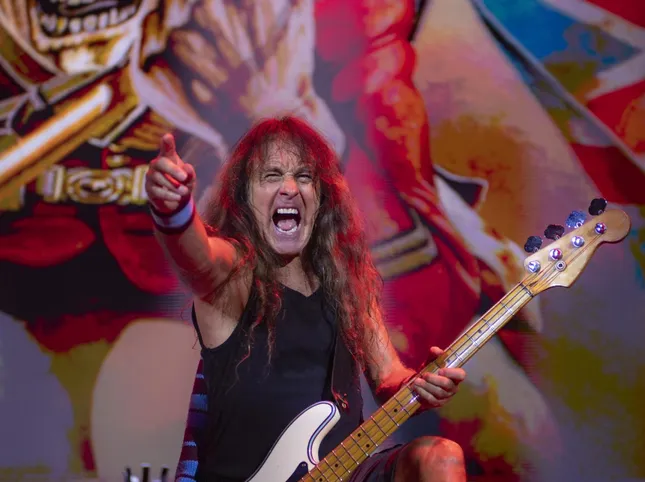
On 17 June 2026 Iron Maiden will perform at San Siro for their “Run For Your Lives World Tour”. The event celebrates fifty years since the founding of the band, proposing a special lineup focused on the songs published between the self-titled debut of 1980 and “Fear of the Dark” of 1992. For the occasion, we retrace the group’s discography chronologically, dividing it into three significant eras (and into two episodes: the second will be published tomorrow, Sunday 7 June).
1. The Golden Epic: the Eighties
“Iron Maiden” (1980):
Raw and “punk-oriented” sound, led by the rough voice of Paul Di’Anno and the dominant bass lines of Steve Harris, supreme leader of the group. Eddie, Maiden’s mascot, debuts on the cover appearing as a suburban thug, and with strange features that make him look like a cross between a zombie and a ghost. In terms of content, “Phantom of the Opera” pays homage to the novel “The Phantom of the Opera” by Gaston Leroux with complex tempo changes. “Running Free” embodies the anthem of urban youth rebellion, while “Remember Tomorrow” experiments with tense dynamics between calm arpeggios and sudden explosions of sound. Simply essential.
Symbol song: “Phantom of the Opera”
“Killers” (1981):
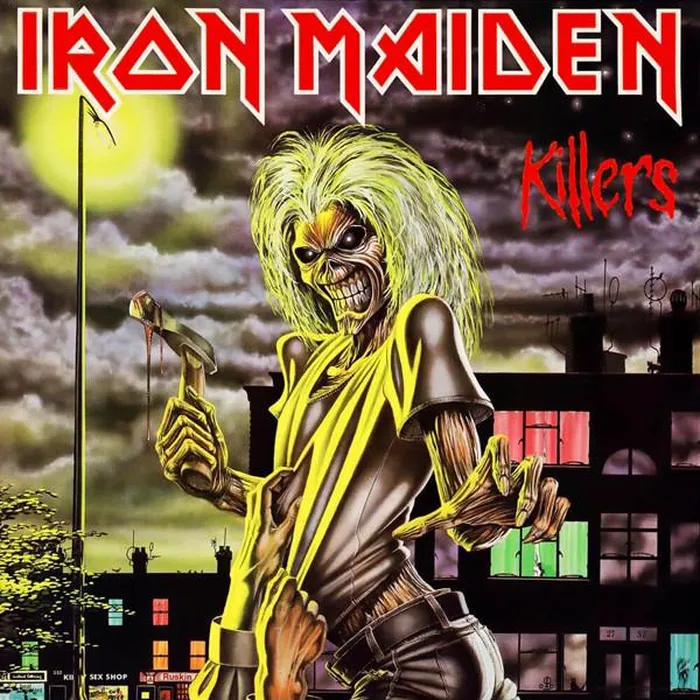
An absolute must to approach the Iron Maiden universe, the album presents a decidedly more horror-like Eddie than his debut, as he holds a bloody ax in the alleys of London and under the already iconic logo of the band. On a sonic level, the leap in quality is evident thanks to the production of Martin Birch and the debut of Adrian Smith on guitar (instead of Dennis Stratton): the understanding with Dave Murray shapes sharp twin guitars, capable of making tight riffs coexist with large melodic openings. Tracks like “Murders in the Rue Morgue”, inspired by Edgar Allan Poe’s story, enhance the perfect combination of tempo changes and guitar melodies, while the instrumental “Genghis Khan” evokes the fury of a military charge through fast dynamics and very tight plots.
Symbol song: “Wratchild”
“The Number of the Beast” (1982):
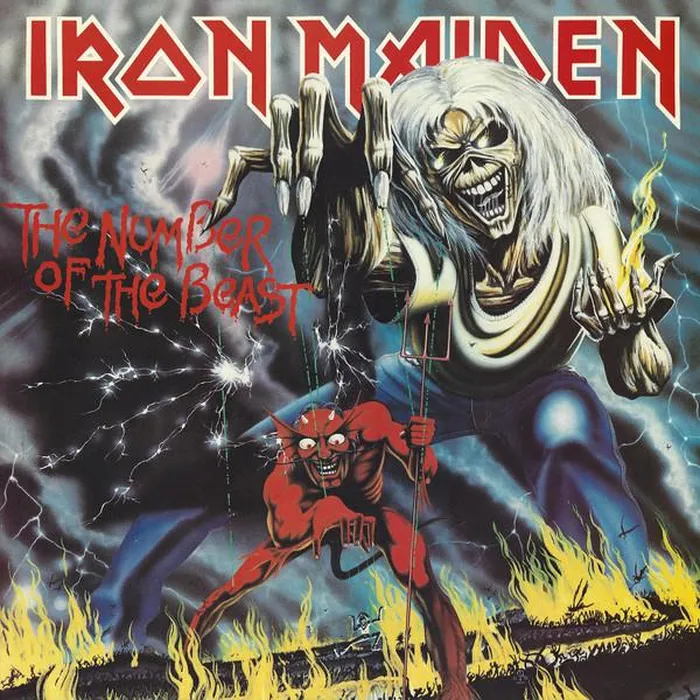
Here Eddie becomes a puppeteer who manipulates the Devil himself, but it is the epochal arrival of Bruce Dickinson on vocals that introduces an operatic, acute and theatrical style. The compositions benefit from this turning point: “Children of the Damned”, inspired by the 1964 science fiction horror film “The City of the Damned”, enhances his vocality, while the famous “Run to the Hills” combines the narrative of the historical clash between Native Americans and colonizers with a galloping drum rhythm, supported by harmonic guitars. The best comes at the end, with the chills given by “Hallowed Be Thy Name”. Iron Maiden’s best album, according to some.
Symbol song: “The Number Of The Beast”
“Piece of Mind” (1983):
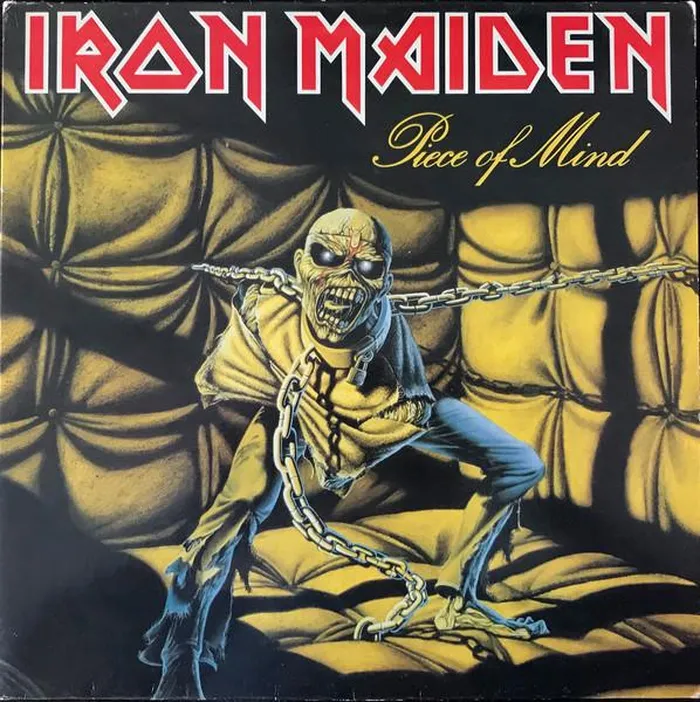
The entry of Nicko McBrain introduces more technical drums that favor structured and epic compositions, mirroring a lobotomized Eddie chained in a dreamlike asylum, as per the cover. The album, impeccable in every aspect, is full of cultural references: “Flight of Icarus” reinterprets the Greek myth in the key of adolescent rebellion with a melodic and unforgettable pace; the evocative “Revelations” combines religious mysticism and poetry quoting the literature of GK Chesterton, while one of the band’s most historic warhorses, “The Trooper”, evokes the charge in the Crimean War inspired by the poems of Lord Tennyson.
Symbol song: “The Trooper”
“Powerslave” (1984):
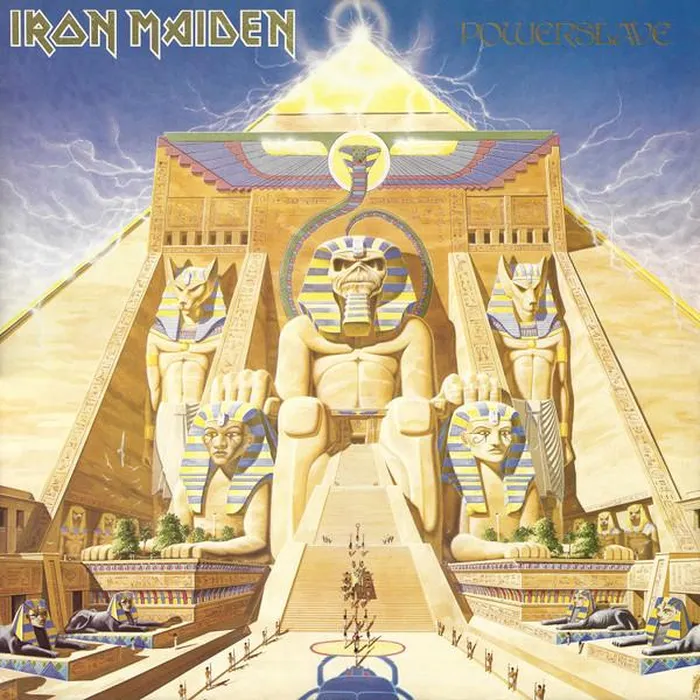
Considered by many, rightly so, the band’s absolute masterpiece, the album offers heavy metal that is synonymous with Iron Maiden itself, enriched by complex virtuosity and historic solos. Eddie takes on the divinatory guise of a giant Egyptian pharaoh, ideal for symbolizing compositions that push the album’s global impact to the max: the lightning-fast “Aces High” describes World War II dogfights with tight riffs; “2 Minutes to Midnight” denounces the danger of a nuclear holocaust by quoting the Doomsday Clock, while the monumental “Rime of the Ancient Mariner” masterfully transposes Samuel Taylor Coleridge’s eighteenth-century poem of the same name into music.
Symbol song: “Aces High”
“Somewhere in Time” (1986):
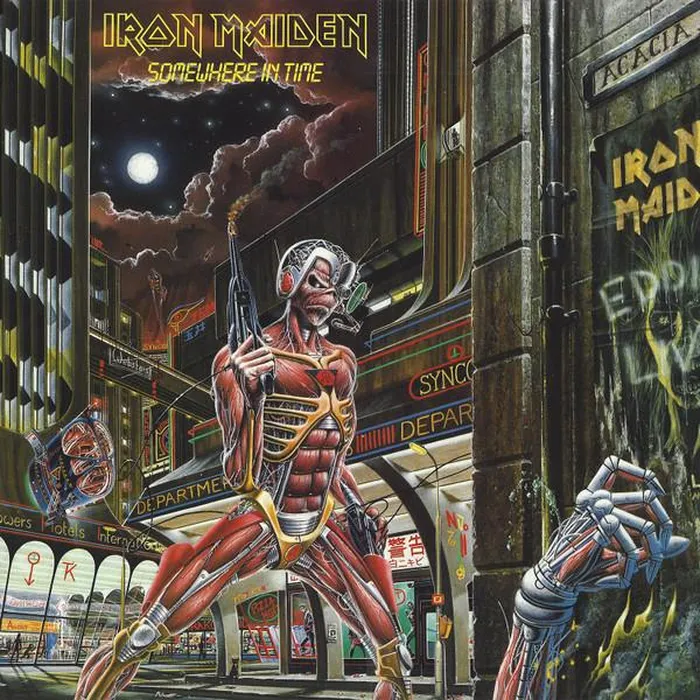
Further and radical sound change, with the introduction of synthesizers for guitar and bass that create a futuristic sound. Eddie transforms into a cyborg that harks back to the cyberpunk cinematic imagery of “Blade Runner”. This new Maidenian guise shapes compositions of absolute importance: the opener “Caught Somewhere in Time” describes the sensation of loss in space-time; the epic “Heaven Can Wait” tackles the topic of near-death experiences through a rousing central chorus; the nostalgic “Wasted Years” rests on the memorable and immediate isolated guitar work by Adrian Smith; “Alexander the Great” traces a detailed historical biography of the Macedonian leader. Among the leaders of the British band.
Symbol song: “Wasted Years”
“Seventh Son of a Seventh Son” (1988):
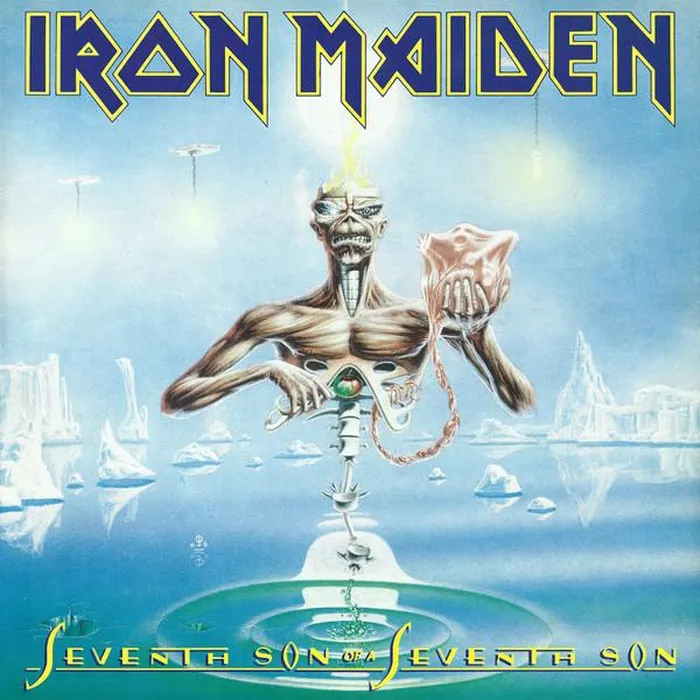
The first authentic concept album under the name Iron Maiden, the work fuses mysticism and clairvoyance through the structural introduction of keyboards. The sound evolves into a layered musical fabric, guided by compositional architectures that touch on progressive but also an unprecedented sense of melody. On a thematic level, “Moonchild” outlines the conceptual framework evoking Crowley’s occultism, while the direct “Can I Play with Madness” focuses on the narrative fulcrum of the meeting with the fortune teller. The style of the album oscillates between experimentalism and urgency: the complex title track expands into a cinematic instrumental section, while “The Clairvoyant” translates into music the anguish of the psychic crushed by his own power. Without offending anyone, but let’s talk about the last great album signed by Harris and his companions.
Symbol song: “The Evil That Men Do”