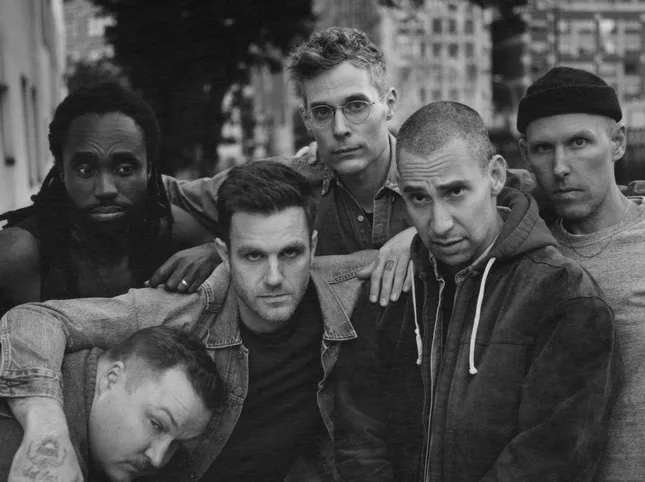
Jack Antonoff: “The Internet has made nostalgia impossible”
He is one of the most important producers of the last decade and is the brains of Bleachers, a project that carries forward a pop-rock sound deeply linked to New Jersey, his homeland and that of his friend Bruce Springsteen, with whom he has often collaborated. With “Everyone for ten minutes”, out today May 22nd, Jack Antonoff signs “Everyone for ten minutes”, an album that he defines as autobiographical and optimistic, even if it was born from a very harsh vision of the present: “The Internet has made the way we communicate terrible”.
We interviewed him amidst impossible nostalgia, “potentially kitsch” sax and the relationship between the producer and the artist who coexist in the same person.
“Everyone for ten minutes” evokes Andy Warhol’s famous aphorism about 15 minutes of fame for everyone. Is that so?
Not so much the fame, but the accessibility. For me it’s about how we communicate today. My job as an artist is to communicate. But today the Internet is a failed experiment and the way we communicate has become terrible. I have shared very intimate parts of myself, but today every thought is monetized and resold. For me, inspiration, free will and making music have to be the opposite of that. This album was born from there: from things that boil inside me.
Even the cover seems to suggest a different imagery from the past: less “on the road”, more intimate.
That photo just happened. But when I saw it I thought it perfectly represented what it feels like today: vulnerable in a public place where we shouldn’t be naked, while still trying to protect ourselves and live in the present. This is a strictly autobiographical album. Sometimes I write about others, about other thoughts, then I return to myself. But this album is all about me. I don’t know exactly why, but that’s where I was.
Many artists say that as their career progresses, it becomes more difficult to write about themselves. Does this apply to you too?
No, because what I write is never really about success or career. It’s always about big existential questions. The fundamental things that torment me and drive me to write have not changed. But I’m optimistic: it’s difficult to really say everything you feel, and even more difficult to share it. Then you go on tour and find a way to celebrate it with your community. Everything about writing music, recording it and performing it live seems profoundly optimistic to me.
Nostalgia can be heard in your music. Do you agree?
I don’t even know if nostalgia is still possible. I have the feeling that time no longer flows normally. When I talked about the past years ago, it really seemed past to me. Now, when I talk about the past, it almost feels like I’m talking about the future.
But in “The Van” you mention the “glory days”. What are you referring to?
For the first ten years almost no one came to the concerts. The recordings didn’t interest many people. But I deeply loved what I did, and that never changed. That was a kind of golden age for me, because we were completely alone. Nobody asked us to do it: we just had to do it. We used our money, whatever resources we had, to continue.
Where do Bleachers songs come from? From the lyrics, from the sound, from the images?
“Usually from a text or an image. From something you feel the need to say. Almost like a topic you would bring up in therapy. ‘The Van’, for example, was born from the thoughts of people with whom I shared a huge part of my life and who today I no longer speak to. There is no accusation, just that strange feeling.”
The saxophone is almost a trademark of Bleachers and, in some ways, also of New Jersey, where you come from.
I like sounds that you don’t hear often. Saxophone, harmonica, even harpsichord on this record. I like working with things that might even be kitsch and finding ways to make them work.
Is there a ‘New Jersey sound’?
Absolutely yes, if you think about Southside Johny, about Springsteen: it’s above all a sensation. But if I had to describe it, I would say there’s the brass, the winds, this idea of coastal music. And then New Jersey is geographically very close to New York, so there’s always this feeling of wanting to leave, get away. For me it is this: horns playing melancholy but hopeful melodies.
How do producer Jack Antonoff and artist Jack Antonoff coexist?
For me they coexist very well. Everyone asks me how I find time to do everything, but it seems natural to me. It all happens at the same time.
When you work on Bleachers do you have to ‘unlearn’ something about your job as a producer?
No. They’re just different areas of the brain. Writing, recording, producing – they’re different parts, but I’m comfortable switching between them.
Producers today are much more visible than in the past.
I think today we talk a lot more about how things are done in general. Not just in music. It is the historical moment in which we live.