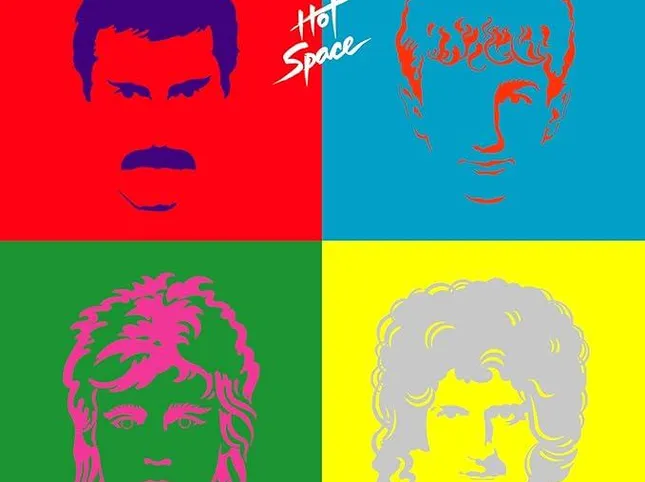
In 1982 Queen’s most criticized album was released
Fans of Queen they had to wait a year and a half for a new album from their favorite band, after the movie soundtrack “Flash Gordon” published in December 1980 and, even before that, in June 1980, “The game”. It actually came out in October 1981 “Greatest Hits” which, to date, is the British band’s most commercially successful album with over 25 million copies sold.
Ahead of the release of their tenth studio album,
“Hot Space”
May 21, 1982, i
Queen
embarked on a massive world tour. Like its predecessor too
“Hot Space”
it was recorded in two distinct phases: in the summer of 1981 at Mountain Studios in Montreux and from December 1981 to March 1982 at Musicland Studios in Monaco. As well as continuing the collaboration with the manufacturer
Reinhold Mack
i
Queen
they also worked with the sound engineer
Dave Richards
.
Although it was included in the final draft of the album the collaboration with
David Bowie
For
“Under Pressure”
this was actually a completely separate project, dating back to July 1981. Bowie was in Montreux to see his old friends and to sing backing vocals on another song,
“Cool Cat”
. Ultimately, Bowie didn’t appreciate his contribution to that song and his parts were eliminated, but he was intrigued by the bass line of
John Deacon
in a work in progress entitled
“Feel Like”
.
A late-night scat jam session began to take shape, with Freddie Mercury and Bowie exchanging ideas and verses, “Under Pressure” he lived up to his title. The song, once released as a single, would later transform “Bohemian Rhapsody”in the group’s second number one single in Britain.
That it was considered a preview of
“Hot Space”
or a song of its own,
“Under Pressure”
it wasn’t really representative of the album as a whole.
“Hot Space”
has long been considered a rather controversial move in the career of
Queen
as much of the vibe is defined by the dance and funky disco they had previously explored with
“Another One Bites The Dust”
.
The album cover, designed by
Freddie Mercury
is inspired by the style of the silk-screen prints of
Andy Warhol
and shows the four members of the group portrayed in separate panels. In a 1981 interview, Mercury pointed out how the group no longer socialized much, as they were now inseparable for work, and how they arrived at concerts in separate limousines. But after ten years of working side by side, all in all it wasn’t surprising.
The band was criticized for incorporating electro-funk and New York urban groove into their sound, but they didn’t plan to change their artistic trajectory. In fact, they had a date at the Record Plant in Los Angeles. They were about to turn into “Radio Gaga”.