“Animals Against The Wall”: a lot of smoke and little fire?
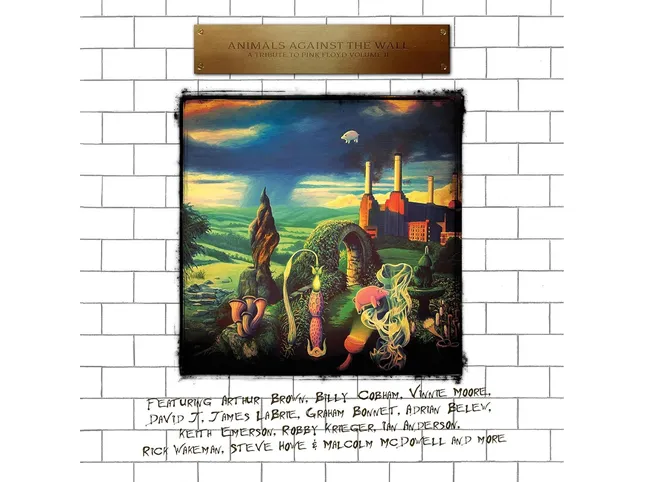
A box set with a triple CD tribute to Pink Floyd was published a few days ago (from 24 April in the UK) which already makes your mouth water from the title: “Animals Against The Wall”. It should be specified that this is not a new project, but a collection of two already published works, “Animals Reimagined” from 2021 and “Back Against The Wall” from 2005, brought together today for the first time in a single package.
The label that released this new title, Cherry Red Records, announces it with these words: «A lineup of classic, prog and art rock superstars that recreates the ambitious 1977 album “Animals” and the 1979 art rock operatic masterpiece “The Wall”». The presentation continues as follows: «Each track of this innovative work has been completely reimagined with modern production and refined musical interventions, while remaining faithful to the compositional complexity of the original records».
Given that the two chapters in question are probably among the most loved by fans of the British band, it should be remembered that the “Pink Floyd Sound” in those works offered a significantly transformed version compared to the group’s previous and famous standards. To make a long story short, the sounds found in the grooves of works such as “Atom Heart Mother”, “Meddle”, “The Dark Side Of The Moon” and “Wish You Were Here”, which released between 1970 and 1975 span five years of history, were somehow swept away by what the quartet recorded towards the end of the Seventies.
A new style, less “Floydian” than usual, has now been “completely reimagined” and this is a positive note, as carbon copies of similar projects often do not convince or satisfy the buyer. Pink Floyd’s sound from the 1977-1979 period, despite having evolved compared to the past, still remained in line with their previous musical proposal. With this conviction I started listening to the entire tribute but, as the music flowed, the first doubts arose that had already alerted me while reading the (very long) credits.
Yes, because in Pink Floyd’s “Animals” and “The Wall”, especially in the former (only some guests appear in the “Wall”), the musicians involved are always the four historical members of the band, namely Gilmour, Mason, Waters and Wright. “Animals Against The Wall” instead offers a plethora of top-level performers which risks making each of the thirty-one songs present uneven.
The names of the musicians involved are mostly of the highest caliber level. Starting with the rereading of “Animals”, citing them in alphabetical order so as not to offend anyone (and adding a reference band), alternate in the various songs: Jan Akkerman (Focus), Carmine Appice (Vanilla Fudge), Martin Barre (Jethro Tull), Graham Bonnet (Rainbow), Joe Bouchard (Blue Öyster Cult), Arthur Brown, Billy Cobham (Mahavishnu Orchestra), Jon Davison (Yes), Albert Lee, Al Di Meola, David J. (Bauhaus), James LaBrie (Dream Theater), Pat Mastelotto (King Crimson), Vinnie Moore (UFO), Patrick Moraz (The Moody Blues), Jordan Rudess (Dream Theater), Billy Sherwood (Yes), Kasim Sulton (Utopia), Nick van Eede (Cutting Crew) and Rick Wakeman (Yes)!
The songs on “Animals”, played by these gentlemen (mostly Americans, and it’s no small difference in terms of style), certainly gain in technique and instrumental solidity, but almost never manage to convey a real thrill. Of course, it is difficult to imagine a sacred monster like Di Meola reinterpreting Gilmour, just as hearing Billy Cobham pounding on the skin makes any remote desire for comparison with Mason’s more essential and modest technique impossible.
I noted Martin Barre’s delicate interpretation on “Pigs On The Wing (Part One)” and the compactness of “Dogs”, in which he displaces the voice in salsa heavy metal by Graham Bonnet. There is an absence of bite in the final solo of “Pigs (Three Different Ones)”, while the reinterpretation of “Sheep” with the voice of Arthur Brown, Floyd’s old friend since the “fabulous sixties”, is daring, although the unforgivable lack of the final guitar solo weighs heavily. I liked the final track “Pigs On The Wing (Part Two)”: although due to some mistake the same lyrics as the first part were sung, Jon Davison’s voice and the counterpoint of an anonymous backing vocalist make it particularly pleasant.
“The Wall” also suffers from the massive presence of session men different in each song, which undermines the uniformity of the sound. The prevalence of overseas musicians – including an actor and a DJ – is also considerable in this project: Ian Anderson (Jethro Tull), Adrian Belew (King Crimson), Jordan Berliant, Gregg Bissonette (Joe Satriani), Vinnie Colaiuta (Frank Zappa), Geoff Downes, Aynsley Dunbar, Elliot Easton (The Cars), Keith Emerson, Larry Fast (Peter Gabriel), Tony Franklin, John Giblin (Simple Minds), Gary Green (Gentle Giant), Glenn Hughes (Deep Purple), Steve Howe (Yes), Tony Kaye (Yes), Robby Krieger (The Doors), Bob Kulick (Lou Reed), Jim Ladd, Tony Levin (Peter Gabriel), Alex Ligertwood (Santana), Steve Lukather (Toto), Malcolm McDowell, Ronnie Montrose, Steve Morse (Deep Purple), Del Palmer (Kate Bush), Mike Porcaro (Toto), Steve Porcaro (Toto), Jay Schellen (Asia), Jason Scheff (Chicago), Tommy Shaw (Styx), Billy Sherwood (Yes), Michael Sherwood, Chris Squire (Yes), Rick Wakeman (Yes), Fee Waybill (The Tubes), John Wetton (King Crimson), Alan White (Yes), Dweezil Zappa.
Compared to “Animals”, there is the general feeling that we wanted to respect the original work more. “In The Flesh?” is excellent, while Anderson’s flute (as well as his voice) is spot on on “The Thin Ice”. Steve Morse on “Another Brick In The Wall, Part One” scratches like Gilmour and Billy Sherwood’s voice is sufficiently “Watersian” for “The Happiest Days Of Our Lives”. “Another Brick In The Wall, Part Two” is not very convincing, thanks to Ronnie Montrose’s guitar, while John Wetton’s performance on “Mother” is worthy of note, among the best interpretations of the tribute also thanks to Adrian Belew’s solo. Thrills for Steve Howe’s acoustic on “Goodbye Blue Sky” and it is surprising to find Robby Krieger of the Doors on “Empty Spaces”, followed by the convincing “Young Lust” entrusted to the voice of Glenn Hughes and the vibrant guitar of Elliot Easton (if Ritchie Blackmore had been there we would have cried a miracle!). Appropriate choice to leave the keyboards of “One Of My Turns” in the hands of Larry Fast and those of Geoff Downes in “Don’t Leave Me Now”, made even more solid by Krieger’s touch and Tommy Shaw’s voice. On “Another Brick In The Wall, Part Three” the two Totos, Steve Lukather and Steve Porcaro, deserve a full ten, together with the excellent Tony Levin, who also plays up the following “Goodbye Cruel World”.
The second CD opens with “Hey You”, which features Wetton’s bass, Lukather’s guitar and White’s drums. Followed by “Is There Anybody Out There?”, which traces the dark atmospheres of the original embellished with Anderson’s flute and Belew’s acoustics. We continue with the poignant “Nobody Home” which offers a fine embroidery by Rick Wakeman, while “Vera”, with the contribution of Howe, and the imposing “Bring The Boys Back Home”, sung by Sherwood, anticipate the long-awaited “Comfortably Numb”, entrusted to the voices of Squire (also on bass) and Sherwood, who approaches the guitar without claiming to approach the unattainable wonders of Messer Gilmour. “The Show Must Go On” features Belew on vocals and Colaiuta on drums, setting the stage for the powerful energy of “In The Flesh” with Keith Emerson’s roaring keyboards. “Run Like Hell” is entrusted to Jason Scheff (vocals and bass), Dweezil Zappa on lead and the magic of Tony Kaye’s keyboards. In “Waiting For The Worms” the rhythm section of Levin and Colaiuta stands out, with Emerson giving a masterful organ solo and speaker Jim Ladd – well, he was with Waters on the 1987 “Radio KAOS” album and tour – replacing Roger in the song’s famous proclamations. The short “Stop” anticipates the moment of judgment, “The Trial”, in which none other than Malcolm McDowell (Alex from the film “A Clockwork Orange”) is involved for a crazy interpretation. “Outside The Wall” closes the opera leaving the narration to the firm and warm voice of Jim Ladd.
Ultimately, the impression is that the fierce array of performers recruited for the two tributes suggests a preference for the prestige of the name to the detriment of artistic effectiveness. The structural limit of both operations lies in the absence of Pink Floyd’s distinctive features: that technically “imperfect” but instantly recognizable trademark which here almost completely vanishes. For the enthusiast, the Floyd sound is sacred matter; however, in “Animals Against The Wall”, the sense of bewilderment prevails over the ability to appreciate the new interpretations. Too often we find ourselves faced with a lot of stage smoke which, for those hungry for true Floydian substance, leaves only a void: unfortunately, not even a shadow of the roast remains.