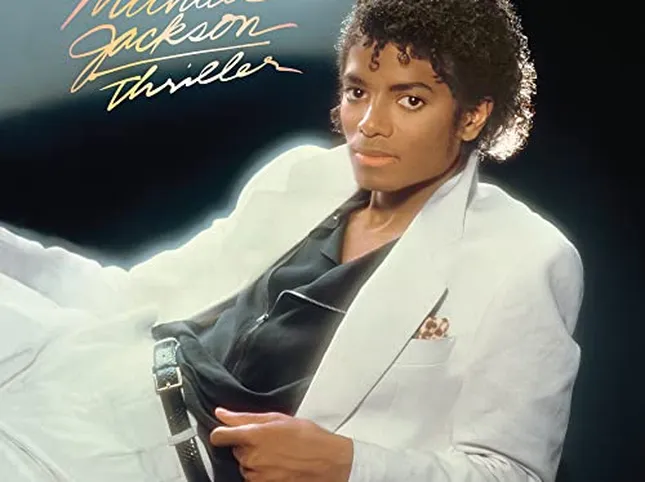
Michael Jackson was familiar with great cinema
The biopic Michael has brought the extraordinary (and economically fruitful) impact of Michael Jackson on the big screen. But the relationship between the King of pop and cinema it was an unparalleled artistic marriage, which redefined the concept of the video clip, elevating it to the dignity of a short film. Jackson didn’t just want to be filmed singing and dancing; he was looking for authors capable of translating his synaesthetic vision into cinematic narration. More than a client, he was an extremely demanding executive producer. His ability to attract great directors demonstrates that the video clip was for him the means to complete the sound work, making it a total and immortal visual experience.
Let’s analyze the most iconic collaborations with some titans of the seventh art.
John Landis – Thriller (1983), Black or White (1991)
If there is a “Big Bang” in the world of music videos, this is it Thriller. Jackson chose John Landis after seeing An American werewolf in Londonfascinated by the director’s ability to mix horror and humor.
Thriller it was shot on 35mm film with an unprecedented budget of $900,000. Landis brought along legendary makeup artist Rick Baker for the “werecat” transformation (chosen so as not to exactly replicate Landis’ werewolf). It was the first video to launch the “making of” concept and continually played with the metacinemathe breaking of the fourth wall and theambiguity between reality and fiction. Before Thriller the video clips were more promotional material; after that, budgets exploded and no one underestimated the visual support of the songs anymore.
In Black or WhiteLandis used one of the first commercial applications of the morphing digital (curated by Pacific Data Images), a then cutting-edge technique that allowed fluid transitions between faces of different ethnicities.
Martin Scorsese – Bad (1987)
For the main track of the album BadJackson wanted a “street” narrative, which distanced itself from the “fairytale” image of Thriller. Who better than the director of Taxi Driver? Scorsese accepted, bringing the screenwriter with him Richard Price and the director of photography Michael Chapman.
The full video lasts 18 minutes and is a tribute to the musical West Side Story, Mean Streets and, of course, with the dirty realism of the same Taxi Driver. Scorsese used a fluid and dynamic camera to capture the choreography in the subway station of Hoyt-Schermerhorn. The contrast between the initial black and white scenes (shot in an almost neorealist style) and the explosion of color and choreographed violence at the end is pure Scorsese. It was also the launching pad for a very young man Wesley Snipesthen almost unknown. Scorsese imposed an aggressive and naturalistic acting, very distant from the “television” acting typical of video clips of the time. This marked a turning point: the music video could have actors, conflicts, social subtext and authorial direction.
Francis Ford Coppola – Captain EO (1986)
This collaboration represents the meeting of three colossal minds: Jackson, Coppola and George Lucas (as executive producer). Intended for Disney theme parks, Captain EO it was intended to be a multi-sensory attraction. It was filmed in 70mm 3D with special effects in the room (lasers, smoke, lights). With an estimated cost of around $30 million for 17 minutes of footage, it was for years the most expensive film per minute in history ($1.76 million/min).
Coppola had to manage a complex production that integrated animatronic puppets, mass choreography and Lucas’s spatial aesthetic, all under the watchful eye of the Oscar winner (Apocalypse Now, Reds And The last emperor) Vittorio Storaro to photography.
Spike Lee – They Don’t Care About Us (1996), Bad 25 (2012), Off the Wall (2016)
The collaboration with Spike Lee marks the more political and crude phase by Jackson. Lee directed the documentary Bad 25 And They Don’t Care About Us, filmed in Rio de Janeiro (in the Dona Marta favela), where Lee had to negotiate directly with local drug lords to ensure the safety of the crew.
The director of Do the right thing used low angles and frenetic editing to emphasize the message of social protest, moving away from the glamor of previous videos to embrace a visceral, documentary aesthetic. He interpreted Jackson as a radically innovative black artist, a figure transformed by the global white industry and a symbol of the contradictions of American fame.
Michael Jackson’s Journey from Motown to Off the Wall (2016) is instead a documentary which explores MJ’s artistic transformation between the end of his time with the Jackson 5 and the creation of his seminal 1979 album, Off the Wall.
David Fincher – Who Is It (1992)
Before becoming the master of the psychological thriller (Se7en, Fight Club), Fincher was one of the greatest music video creators of the 80s and 90s (there is a Wikipedia page ad hoc on the topic, for those who want to learn more). In Who Is It you can already see all of its stylistic features, made up of deep shadows, cold tones and noir atmospheres.
The video is a masterpiece of soft lighting. The narrative is fragmented and sophisticated, dealing with themes of identity and betrayal through the use of costumes and transformations that prefigure Fincher’s obsession with visual precision and aesthetic cool.
John Singleton – Remember the Time (1992)
Fresh off the success of Boyz n the HoodSingleton took Michael to a sumptuous and “all black” ancient Egypt: he pushed for a cast entirely composed of high-profile African-American actors (Eddie Murphy, Iman, Magic Johnson). He built a very rare Afrocentric imagery into the mainstream of the time, founded on African royalty, luxury and Afro-descendant power, where MJ becomes the symbol of the African diaspora.
The video is famous for its pioneering use of computer graphics due to the effect of the sand recomposing itself in Jackson’s body. Fatima Robinson’s choreography, under the direction of Singleton, blends hip hop elements with a pharaonic aesthetic. One of the most iconic videos of the 90s.
David Lynch – Dangerous teasers (1991)
Last but definitely not least: David Lynch. Although they never collaborated on a full music video, Lynch directed a teaser for 30 seconds for the album Dangerous. In that handful of moments, Lynch managed to instill his typical sense of restlessness: Michael appearing amidst velvet curtains, flashes of strobe light, and industrial sound design. It is a pill of pure surrealism that demonstrates both the director’s brilliant madness and Jackson’s openness towards unconventional visual languages.
Jackson deeply admired Lynch and his surrealism Twin Peaks, Blue Velvet or Lost Highway; Lynch, for his part, spoke several times of Jackson’s enigmatic charm as an almost “unreal” figure. Many Jacksonian video clips from the 90s (Ghosts, Scream, Stranger in Moscow) they share with Lynch’s universe the fragmented identity, the dreamlike atmosphere, the sense of estrangement, the disturbing theatricality and an expressive use of sound and silence.
Curiosity: according to Lynch’s memoirs, to shoot this short clip, Michael Jackson spent between eight and ten hours on make-up, also spent choosing the outfit – even if only his head had to be filmed.