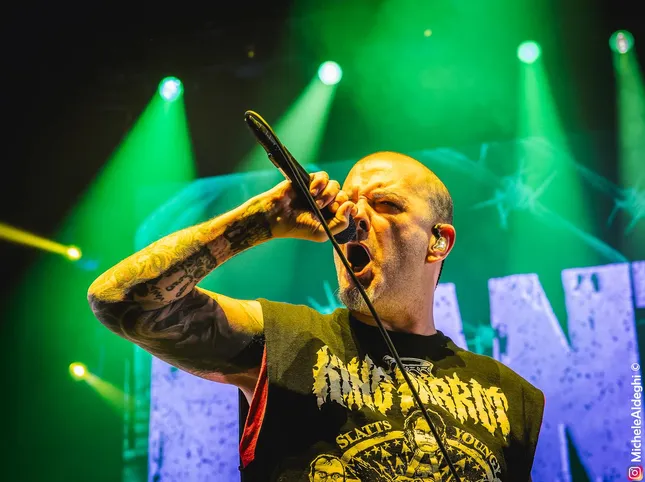
When Pantera bit the world, 30 years ago
May 1996. While the world of mainstream metal was seduced by post grunge melodies and the first stirrings of nu metal, Panther they decide to set fire to the manual of commercial success. The result is The Great Southern Trendkillan album that today, thirty years after its release, remains the darkest, most technical and uncompromising chapter of the Texan band.
The genesis of the fracture
One of the best known and technically relevant aspects of the production of Trendkill it’s there physical separation of the band. Vinnie Paul, Dimebag Darrell and Rex Brown recorded the backing tracks at Chasin’ Jason Studios in Texas; Philip Anselmo recorded the vocal tracks at Nothing Studios in New Orleans (owned by Trent Reznor).
This distance arose from logistical reasons (Anselmo had other commitments), but also aesthetic ones. While the rhythm section pushed towards surgical and almost industrial precision, Anselmo explored the boundaries of physical pain through his voice, influenced by the Louisiana sludge/hardcore scene. The producer Terry Date performed a miracle of engineering, managing to glue these two seemingly incompatible worlds into a cohesive and brutal wall of sound.
If Far Beyond Driven had brought Pantera to number one in the rankings, Trendkill pushed them towards more extreme territories. From a technical point of view, the album is an essay of sonic extremism.
Beyond the limit
It’s a record where the sound goes beyond the limit. The use of saturation is at an all-time high and even lower tunings are experimented with, to give even more heaviness to the riffs. Songs like Suicide Note Pt. 2 they show a very strong use of the Digitech Whammy pedal, used to create dissonant glissades that challenge the tonality of the song.
On the drums, Vinnie Paul here he perfected his “clicky” sound (a very specific, dry and defined kick drum sound, reminiscent of the noise of a “click” or a click pen, rather than a dull, resonant boom). The use of kick triggers, combined with devastating playing dynamics, allowed the double bass sixteenths to emerge with absolute clarity even over the most saturated distortions. His ability to go from furious thrash tempos to slowed down bluesy grooves it’s the glue which keeps the album from collapsing into noise.
The solo of Floods
We can’t talk about the 30th anniversary of this album without mentioning the solo by Floods. Voted several times among the best of all time, it represents the perfect synthesis between technique and feeling. A melancholic melody based on arpeggios precedes it, which then flows into a heavy, dark rhythm section. The final clean guitar riff, recorded years before the composition of the song, closes the album with a feeling of cosmic resignation, almost a premonition of the end of the band itself.
The Great Southern Trendkill it has aged better of many of his contemporaries. It is a record that has rejected trends (the “Trendkill” of the title) to become a standard itself. While previous works were anthems of strength and pride, this album is a raw reflection on substance abuse, hatred of the media and social isolation. Not only the creative testament of a band at the peak (and at the same time collapsing) of its strength, but also the roar of a wounded animal which, before succumbing, decides to show its teeth and bite.