Italy in the 1960s was not a country for rockers
Italy in the 60s was not a rock country. It would become so little by little in the 70s, when the progressive not yet prog would have titillated the melodic soul of this land and convinced many kids to move that way. Before it was a coal business, underground in the true sense of the word. The music of the new generations was not taken seriously or at most it was considered a trend that would soon run out.
What mattered a lot was the fact that big or small rockers didn’t come to our area to hold concerts, unlike what happened in France, Germany, Switzerland, the Netherlands; and when they came, there were little fiascos or funny incidents that made it clear how much we were not in tune with that new language. Leo Wachter brought the Beatles to Italy in June 1965, eight shows in Milan, Genoa and Rome, and it didn’t make a big deal; none of those shows were sold out, and I really believe that something like this only happened here. A record producer who at the time looked after the Carisch press office in Milan confessed to me years ago that he had distributed few accreditations for the Vigorelli show, and some free tickets were even left at the box office.
The Who quickly descended on our land at the beginning of 1967 and their Roman show was interrupted when a fireman went on stage with a hose due to the smoke released by Pete Townshend’s shattered guitar, according to the band’s classic ritual. That spring the Rolling Stones also appeared in Italy for the first time, with a show that included a young emerging band, my friend Franco Fabbri’s Stormy Six, but also, er, an intruder like the much more emerging Al Bano.
There were usually two shows, afternoon and evening, due to the fact that the parents didn’t let us children go out after dark, when the rock devil was wandering around with his pitchfork. The afternoon however was allowed, some called them “dancing teas”; and following that ritual Jimi Hendrix also played in our area, five Italian dates in May 1968, in front of an audience this time larger but given to mythomania. If you ask around you will find a few thousand people ready to swear that they were present at the Piper in Milan or at the Teatro Brancaccio in Rome, proudly challenging the law of the impenetrability of bodies; and a few dozen will confess to you with a smile that they have stolen something from him, a wah wah or one of the strange devices available for his astral travels.
“I was there” is always a magic formula, which is used even (especially) when it is not true; as in that other case of Bob Dylan, who at the beginning of his career ended up in Rome to join his beloved Suzie (the girl on the cover of The Freewheelin’) and according to a vainly denied urban legend he held a concert at the Folkstudio, the sacred hole in Trastevere, stormed by hundreds of onlookers. It was 1962, Dylan had just released his first LP in the United States and in Italy, but I would say also in Europe, only his closest relatives knew him.
The plastic demonstration of this Italian delay towards the new rock forms occurred at the beginning of May 1968, when some reckless daring decided to organize an International Pop Festival in Rome (here comes “Pop”), the contours of which are still unclear today. In the United States there had been Monterey and a splendid, forgotten Northern California Folk-Rock Festival, in London the 14th Hour Technicolor Dream of April 1967 had become legendary; but that was the Anglo-Saxon rock world, in formidable blossoming, while here enthusiasm and curiosity were almost at zero.
The festival was launched at the beginning of the year with a press release promising splendid names from the British avant-garde scene, from Cream to the Who, from Pink Floyd to John Mayall and Soft Machine, plus scattered names from America such as Country Joe and the Fish, Buffy Saint Marie and Quicksilver Messenger Service (even with Bo Diddley!). It was soon understood that many names had been thrown around like this, blindly, to test the waters, a bad habit that would continue into the 1970s; but even when the dust cleared on the internet, excellent artists still remained, spread over four evenings and shouted out on the colorful poster of the event.
What actually happened is still a mystery today. It seems that the event lasted only three days, with the final Tuesday being cut, and that some shows were relocated to the Piper Club. The only certainty is that it was a disaster, due to insufficient promotion, the very low turnout, the terrible acoustics. However, we can assume Donovan, Brian Auger and Julie Driscoll, the Move, the Giganti, the Association, Captain Beefheart with the Magic Band (!); and again the Samurai, the Fairport Convention and the Byrds (moved to the Piper). Pink Floyd, who had just re-established themselves with David Gilmour, made their debut with us on the sly in front of a few close friends; Nice was much more acclaimed, with Keith Emerson engaged in his period rituals, climbing the organ and whipping the guitarist.
I would like to write that the disaster of that festival left its mark, but I would be lying; the truth is that no one noticed, and apart from a confusing article in “Ciao 2001” it was never talked about. Large rock gatherings continued to flourish elsewhere.
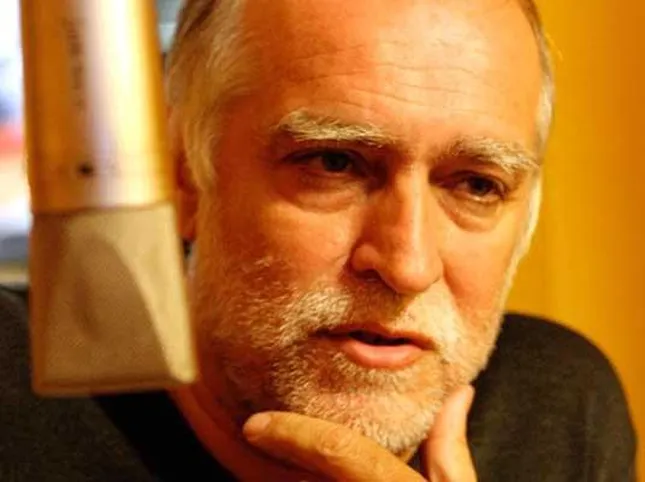
Taken from “I Lived in Penny Lane” by Riccardo Bertoncelli
© Giangiacomo Feltrinelli Editore Milan
First edition in “Scintille” March 2026
ISBN 978-88-07-17536-7
We thank the author and publisher for their kind permission.