Eleven songs that marked the origins of grunge
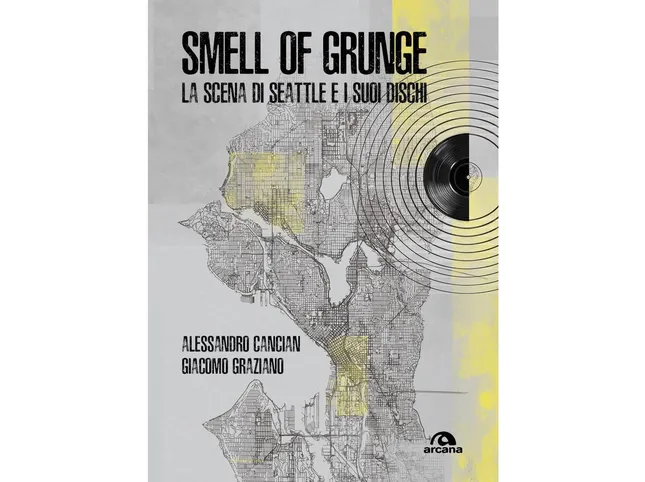
Alessandro Cancian and Giacomo Graziano are the authors of “Smell of grunge – The Seattle scene” (Arcana, 392 pages, 19 euros), a passionate and documented journey through the records (from the essential to the forgotten ones) of the music scene of the Emerald City. I asked them for a sort of playlist of songs compiled using the repertoire of the eleven artists included in the first chapter of the book, “the baptism of the Seattle scene”. Here it is below.
Green River – Come on Down
The first cry of a musical scene that wasn’t yet such, Green River’s “Come on Down” is the most shining example of the heretical fusion between hardcore instances and glam-rock ambitions that fueled the Northwest bands in the second half of the Eighties. On the one hand the punk fury and sarcasm of Mark Arm and Steve Turner, on the other the homage to the aesthetics of epic rock and the long solos of Stone Gossard and Jeff Ament. Different approaches for different artistic goals: it couldn’t last long! Yet Green River survived until Halloween 1987, leading the way for other bands on the local scene. For them, Bruce Pavitt of Sub Pop used the definition “ultra-loose GRUNGE that destroyed the morals of a generation”, delivering – without meaning to – the definitive slogan to frame a unique music scene of its kind.
Skin Yard – Hallowed Ground
Probably, without Jack Endino the Sound of Seattle would never have existed. The producer and guitarist of Skin Yard put his signature on every Sub Pop release, at least until the mainstream explosion of the grunge phenomenon. With Skin Yard he vented his rock and psychedelic impulses together with bassist Daniel House (who admirably managed the other small Seattle label, C/Z Records), intertwining a dark and brainy sound with the garage rudeness of singer Ben McMillan. The instability of the line-up (after Matt Cameron there was never peace behind the skins!) and the collateral commitments of the respective members did not allow Skin Yard to establish itself on a mainstream level, despite their influence being central to the entire music scene.
Mudhoney – Touch me, I’m Sick
If the Seattle scene ever had an anthem, it has to be “Touch Me, I’m Sick.” Quintessence of the disruptive Northwest sound, Mudhoney debuted on Sub Pop with this single, which was initially released in 800 copies on brown vinyl (crowning an eschatological dream of Bruce Pavitt) defining the stylistic coordinates of the entire scene. Guitars saturated with fuzz, pounding percussion and Mark Arm’s acid uvula, capable of condensing in a few verses full of irony the irreverent mood of a youth made of garage-punk, Rainier beer and concerts in the small clubs of Seattle, where anything could happen.
The toilet bowl on the cover of “Touch Me, I’m Sick” is more than a statement of intent: it’s a big middle finger to the establishment.
Blood Circus – Two Way Street
Like Mudhoney, Blood Circus also had their (very brief) moment of glory when they released the single “Two Way Street” / “Six Foot Under”, becoming one of the main attractions at concerts at the Central Tavern, one of the liveliest clubs in Seattle. As with Mudhoney, the inspiration for their sound drew on the Stooges’ assault garage, with small variations towards rock ‘n’ roll or surf-rock and a decisive alcoholic drift. For Blood Circus, music was simply entertainment, as well as an outlet against the depression in their lives. Unlucky and short-sighted, they disbanded on the eve of Seattle Sound’s consecration among the alternative press of the time.
TAD – Sex God Missy
With Jack Endino’s productions and Charles Peterson’s photographs, Sub Pop had defined respectively the musical side and the aesthetic side of “their” Seattle. All that was missing was a slogan for this handful of young outcasts, addicted to alcohol and nihilism: Loser he was the perfect archetype. And who better than Tad Doyle, a former butcher from Idaho, with a rough character and a powerful build, could summarize the aesthetic of the underdog? TAD’s music was in the image and likeness of Doyle: pachydermal, demented and apocryphal, all while contentedly brandishing a chainsaw in the desolation of a forest. Without ever distorting themselves or compromising, TAD, in their unfortunate career, have been able to provide crazy and irreverent musical moments, such as “Sex God Missy”.
Love Battery – Between the Eyes
Seattle wasn’t all dirty, fuzz-soaked guitars and flannel shirts. Love Battery were among the bands most influenced by the psychedelia of the Sixties, in particular by Pink Floyd (the cover of “Ibiza Bar” appeared on their debut album). Ron Nine’s raspy voice, Kevin Whitworth’s guitar and dreadlocks or the wall of sound erected by the band were among their distinctive characteristics. “Between the Eyes”, released as a single in 1989 on red vinyl, is probably the best example of psychedelia applied to the Seattle Sound, as well as being one of Love Battery’s artistic peaks. Although they had a more than decent career (the excellent “Dayglo” or the unfortunate “Far Gone”) they failed to find that convincing foothold to reach the general public. A band definitely worth rediscovering.
Soundgarden – Loud Love
First to release a single for Sub Pop (“Hunted Down”/”Nothing to Say”, in 1987 on blue vinyl), first to sign for a major label (A&M Records in 1988), Soundgarden were predestined for success. Yet, before finding their stylistic dimension, they renounced their punk roots, flirted with heavy-metal, were accused of machismo (in the song “Gun”) and Satanism (in “Jesus Christ Pose”) and left for a long tour with Guns N’ Roses.
Supported by Chris Cornell’s incredible voice, by the particular rhythmic chemistry between Matt Cameron and Hiro Yamamoto (who resigned after the album “Louder than Love”) and by Kim Thayil’s drop D tunings, Soundgarden with the song “Loud Love” traced the decisive furrow between their past in the small clubs of Seattle and the large arenas around the world.
Nirvana – School
Nirvana struggled to attract the attention of Sub Pop, who initially wanted to limit themselves to the release of a single (the infamous “Love Buzz” / “Big Cheese”, now a cult object among collectors). Only a late-night raid by a particularly angry Krist Novoselic at Bruce Pavitt’s house produced the contract that guaranteed Nirvana’s release of “Bleach” (and saved Sub Pop from bankruptcy two years later). The rest is history.
Yet, in the narration of a united and compact music scene, the witty pen of Kurt Cobain insinuated himself, who in School sardonically criticized the Seattle scene for its orthodoxy, the artistic prejudices of the label and a few too many bursts of egocentrism, expressing how suffocated and oppressed he felt, as if he were still in high school. Let’s face it, we all shouted that one together at the top of our lungs You’re in high school again, which seemed to free us from all evil.
Screaming Trees – Subtle Poison
Having escaped from the small and desolate Ellensburg where they recorded their first works, the Screaming Trees managed to make a name for themselves in Seattle too. Although the internal dynamics were often complex and turbulent, with frequent disagreements on the artistic direction to be undertaken between Mark Lanegan (charismatic frontman) and Gary Lee Conner (main author of music and lyrics), in 1989 the Trees released an epochal album like “Buzz Factory”. The album, produced by Jack Endino, combined Conner’s lysergic drifts with the influence of the Seattle Sound, as well documented in “Subtle Poison”, by far the band’s “grungiest” song.
Mother Love Bone – Chloe Dancer / Crown of Thorns
The first martyr of the Seattle scene, Andrew Wood was the great regret of an entire city. Once Green River disbanded, Stone Gossard and Jeff Ament saw in the histrionic singer and bassist of Malfunkshun the key to turning their sound towards glam-rock shores.
Polygram and manager Kelly Curtis invested a lot of resources in this new creation, Mother Love Bone, which promised a sparkling rock of guitars and epochal riffs with the extravagance of a singer who preached love, who adored the piano and the songs of Elton John. Heroin broke young Wood’s dreams at just 24 years old, leaving lost friends (Chris Cornell) and bandmates (Gossard and Ament), who only through music will find the strength to get back on their feet. The 1991 Temple of the Dog project is dedicated to him.
Alice in Chains – Man in the Box
Strongly influenced by metal, Alice in Chains had a completely different artistic path than many other Seattle bands. They landed a big recording contract almost immediately, thanks to Columbia Records and the chance to record a debut album with a sizable budget, seemingly in a hurry. Yet, Alice in Chains certainly did their job. The space of a former disused warehouse like the Music Bank not only became the band’s rehearsal room and a meeting point for young musicians, but above all it was the home for the wandering Layne Staley.
With Jerry Cantrell he formed an inspired duo of authors, different in approach, but equally exciting: “Man in the Box”, in particular, offered an unprecedented invective against the themes of censorship and control with a visionary and dystopian language.