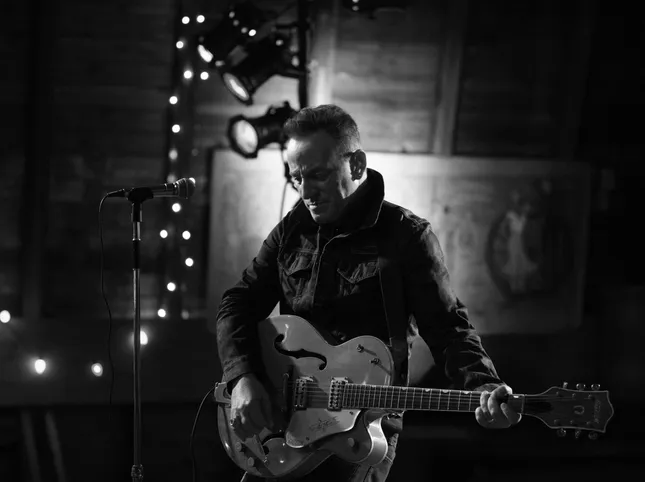
Bruce Springsteen and a song that comes from far away
“A Rainy Night in Soho” by the Pogues, sung live by Springsteen in Kilkenny and Dublin in May 2024 and now officially released by the New Jersey artist, has a long history full of charm and humanity, a history that did not stop with its recording and first publication.
The Pogues’ 1986 original was the result of a session in which there was love and disagreement, union and escape. Elvis Costello, who produced the Irish band, was fond of a version where the oboe stood out. Shane MacGowan, the author and leader of the Irish band, wanted, and tried, a cornet, an instrument derived from the clarion, typical of bands and with a sound similar to that of a trumpet. MacGowan prevailed, taking the tape and completing in his own way the mix that circulated the most, the one found in the e.p. “Poguertry in Motion”. No one knows how, Costello’s version ended up on the Canadian mini album press.
Before making its debut in a Bruce Springsteen live setlist, the song had been, a year earlier, in May 2023, the ideal soundtrack of an Irish week built around the three sold out events of the E Street Band at the RDS Stadium in Dublin (5, 7, 9 May). Springsteen was driven to Rathangan, County Kildare, 65 kilometers from the capital. Rathangan is the anglicized form of Ráth Lomgháin, the place where the BlueBells & Buskers Festival, a centenary gathering of street musicians, is held every year in May, and where some of the European roots of the artist (who, let’s remember, also has Italian and Dutch blood) lie.
During the short visit, in the days off from the tour dates, Springsteen – who had started the European tour of “Born in the USA” in 1985 at Slane Castle in Dublin – visited churches and cemeteries, schools and town halls, pubs and private homes, tracking down documents and registers that could certify the presence of his ancestors in those areas. After a few pints of beer, he sang “My hometown” for the few present in the Burrow Pub in Rathanghan, prompting a chorus and certainly a reminder that his great-grandmother Anne Garrity lived in the Prospect area of that same county. He also stayed near the Wilson Bridge on the Grand Canal where his great-grandfather had worked. In Dublin he was then accompanied to a red brick house in the suburb of Sandymount. Victoria Mary Clark, Shane MacGowan’s wife, opened the door. The singer, beloved not only in Ireland, was spending the last months of his life suffering from a serious infection and many complications. Springsteen knew it, he wanted to go to him to pay homage to him and to show him all his esteem and affection with a thank you and a kiss for the music he produced. Adding, “I don’t know if anyone will be listening to Bruce Springsteen in a hundred years, but they’ll definitely be listening to your songs, Shane.”
The new “A Rainy Night in Soho”, soberly produced by Ron Aniello, comes to remind us of these ties and is a prelude to “20th Century Paddy – the Songs of Shane MacGowan”, a tribute album to MacGowan which will also include this new recording in addition to reinterpretations of the Pogues’ repertoire by other artists.
All this while the band, although orphaned of its leader, announces its reunion and Springsteen underlines that “Shane’s voice was so profoundly authentic, profane and honest, his writing so bright, alive and historically rich that its genesis appeared a mystery to everyone, including, I believe, its creator”.
“A Rainy night in Soho” in Springsteen’s new version is a clear homage to that genuine art, so warm and folk that it influences many and reminds us how a piano, a personal and earthly voice, a trumpet played with a mute can still find space and touch feelings in this time so afflicted by sly and hasty music and by aspic clashes all over the world. A song, the one composed by MacGowan forty years ago, which talks about union and hugs, and where in his last lines the protagonist reminds his ginger lady, his ginger-haired woman (Springsteen, curiously, also married one), “you are the measure of my dreams”.
The performance has a flavor that brings Springsteen a little like the Belfast Cowboy Van Morrison but a lot like the Tom Waits of the Asylum period, when the songs went from Waits to the Eagles, from John David Souther and Warren Zevon to Linda Ronstadt and the Troubadour in Los Angeles saw the birth of an unrepeatable generation of talents. We can also trace some methods already experimented by Springsteen on tour with the Seeger Session Band, in which nostalgic ballads and arrangements resulting from Celtic culture emerged.
When Springsteen sings “I’m not singing for the future / I’m not dreaming of the past
I’m not talking about the first times / I never think about the last” we are in a timeless terrain, where the songwriting continues to find some bright openings in these uncertain times.
It is the third non-album track that Bruce offers to the web. Could this be the beginning of a phase in which you accumulate singles as was done in the Sixties and then collect them on a record? A kind of Odds and Sods.
If “A lonely night in the park” brought us back to us after fifty years the young voice of Springsteen in “Born to Run”, and “Streets of Minneapolis” the biting one of the indomitable champion of good causes, “A rainy night in Soho”, almost whispered, conveys the feeling of the seventy-six year old who does not abdicate and who indulges in all his fragilities and a bit of nostalgia.
New York, Dylan’s Minnesota, Dublin with its rainy nights. What a trip. Three songs with different sounds, but three beautiful titles to read together. Three “walks”, three looks at the world.