The most iconic moments in Hole history
Taking advantage of the rumors of a reunion of the Hole (Love, Erlandson, Auf der Maur, Schemel), already denied by them, we return to the steps of a band that left its mark on the alternative rock of the 90s. For some a vehicle of Courtney Love’s charisma, for others a dynamics laboratory soft-loudof visceral noise rock and, subsequently, of a layered and complex Californian power pop.
1991: the abrasion of “Pretty on the Inside”
Hole’s debut, produced by Kim Gordon (Sonic Youth) e Sean Joyceis a treatise on noise rock and nihilistic punk. The massive use of feedback and open tunings constitutes its sonic DNA. Eric Erlandson introduces a guitar style that favors dissonances and textures dirty compared to traditional ones.
The recording sessions in which Gordon pushed Courtney Love to take her vocal register to the extreme, leading to the birth of that guttural “rattle” that would become the trademark of the kind. Technically, the album is a wall of lo-fi sound influenced by The Fall and The Slits.
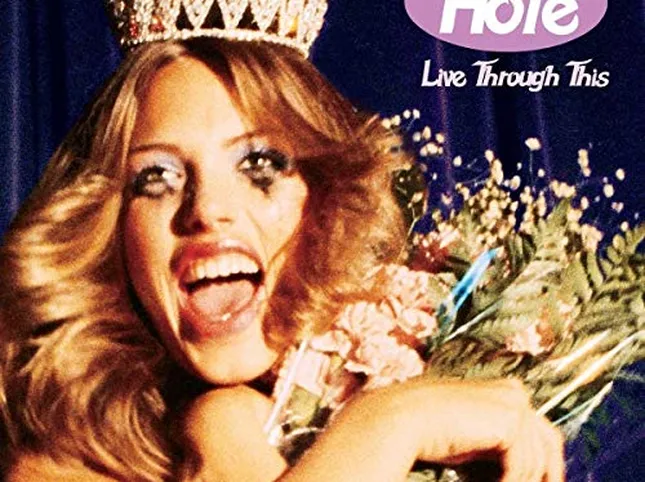
1994: “Live Through This” and grunge perfection
Released just a week after Kurt Cobain’s death, this album represents the band’s technical and compositional peak. The entrance of Kristin Pfaff to the bottom and Patty Schemel on drums he transforms Hole into a steel rhythm machine.
Often overlooked, Schemel introduced a drumming powerful and linearessential for supporting Erlandson’s abrasive guitars. His style on “Miss World” is still studied today for the management of sixteenth notes on the hi-hat in an alt-rock context.
The album is the manifesto of the transition from noise to structure. Tracks like “Violet” and “Doll Parts” use the clean verse/distorted chorus formula (typical of grunge) but with a superior melodic sensitivity.
1995: MTV Unplugged and acoustic vulnerability
In an era where the Unplugged were the litmus test for any rock band, Hole deliver a performance that technically lays bare the quality of their writing.
Without the wall of distortion of the Big Muff pedals, the band’s folk and baroque influences emerge. It is the official debut of Melissa Auf der Maurwhose melodic bass style and vocal harmonies would define the group’s future sound.
The cover of “You Know You’re Right” (then titled “You’ve Got No Right”) demonstrates how the band knows how to manage extreme dynamic tensions even with acoustic instruments.
1998: The Metamorphosis of “Celebrity Skin”
With this album, Hole leaves Seattle to embrace the sun (and darkness) of Los Angeles. It is a technically impeccable album, produced by Michael Beinhorn. Billy Corganthe leader of the Smashing Pumpkinscollaborates in the writing of several songs, bringing an almost mathematical precision to the chord progressions.
Technically, “Celebrity Skin” is a triumph of sonic layering. The guitars are no longer just distorted, but brilliant, with extensive use of Vox AC30 and 12-string guitars. Auf der Maur’s bass is more present, with lines reminiscent of 70s classic rock (Fleetwood Mac).
The video of title track and their performance at the 1999 Grammys marked the moment Hole entered the Olympus of rock, combining punk attitude with million-dollar production.
The “dissolution” and the search for reunion
After the dissolution in 2002 and the questionable return with “Nobody’s Daughter” (2010) — effectively a solo album by Love under the name Hole — the band’s true importance was reevaluated. Fans hope to see the original lineup back on stage: Love with her Fender Venus (designed especially for her), Erlandson with her effects-laden modified guitars, and the Auf der Maur/Schemel rhythm section. “No Hole reunion, Melissa Auf der Maur will be present in some shows where I will play new songs” says Love herself, who could go on tour to play the songs of “Died Blonde“, the album he has been working on for eight years and which should also feature Auf der Maur and Michael Stipe on backing vocals.