How the Band’s “The Last Waltz” was born
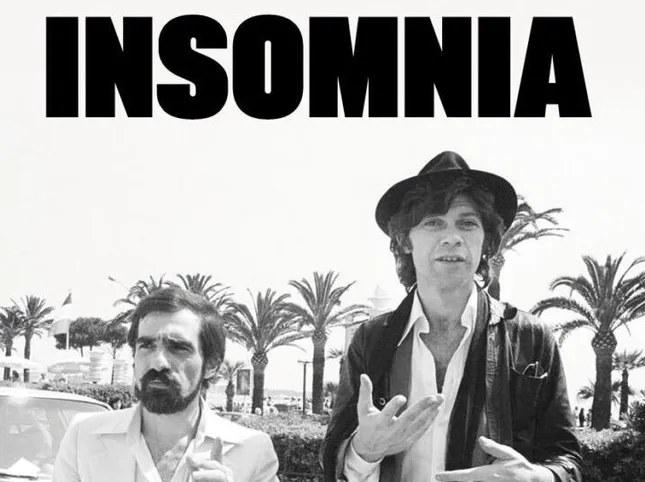
Also released in Italy, by Jimenez, is “Insomnia” – the posthumous book by Robbie Robertson which recounts the years following the dissolution of The Band and his friendship with Martin Scorsese, which led to the completion of “The last waltz” – a concert film shot during the group’s last performance in ’76, with Dylan, Neil Young, Van Morrison, Joni Mitchell. From there was born a friendship and a collaboration that continued without interruption from “Raging Bull” (1980) to “Killers of the Flower Moon” (2023), released in the year in which Robertson passed away.
By courtesy of the publisher, we publish an excerpt: the pages in which Robertson talks about the post-production of the film.
In our editing room, activity was frenetic. Marty and his editors, Yeu-Bun Yee and Jan Roblee, were immersed in the work of assembling concert footage for The Last Waltz.
Yeu-Bun had already worked with Marty in the past, on the film Woodstock, while Jan had been involved by him, who believed in her talent. From the attitude and reactions they had while working, I could tell that they thought this project could become something really special.
I thought so too. Our vision was to make something no one had ever done before, a film that went beyond the concert itself. Not long after the concert, I told Marty, “At the concert, because of the audience and everything, there were limitations to what you could do with the camera.” The floor of the Winterland was soft in places, and when spectators jumped, the cameras shook. They had to drill holes in the ground to anchor them, but that meant the cameras were fixed. I had seen New York, New York and other Marty films and I knew what he was capable of when he moved a camera, how much of the charm of his work came from a kind of ballet, from the choreography of the camera movements.
I said that I wanted to understand how I could give him the opportunity to express all his talent in this project too. «There were some things at the concert that we weren’t able to capture» he says.
I served. «We didn’t do anything gospel. What do you think if we did The Weight with the Staple Singers? They were the first to cover it. We didn’t even do country. How about Emmylou Harris? I wrote a waltz that the band could sing along with. And then… I have a dream – and I know it may seem a bit kitsch for a rock and roll film – but I would also like to write a musical theme, like the one from The Third Man».
“Everything would be amazing!” Marty said. “And we should shoot it on the MGM sound stage, where they made all those great musicals.”
It was Marty who conceived the idea of adding interviews. “We have the concert, the music, the extraordinary performances,” he said. «But… why are we here? In a film you have to know where you are and why. In my opinion you should sit down and tell stories about life on the road, so the public can get to know the guys in the Band. We need to make people understand what “The Last” really means
Waltz.” Otherwise, there’s no heart.” He then decided to bring in his friend and collaborator Mardik Martin, to understand what the viewer needed to know; then Marty would ask us those questions in front of the camera. He thought that all these new elements, put together, could create a truly immersive cinematic experience.
When we saw the color footage in the editing room, it took everyone’s breath away. The concert had been filmed by world-class cinematographers in 35mm, with a cinematographer, Michael Chapman, bringing refined cinematic techniques to the framing and lighting of each scene. Everything seemed to jump off the screen. No one had ever seen anything like it in a documentary. It simply didn’t exist.
Marty, Yeu-Bun, and Jan were completely immersed in their work. Yeu-Bun had his editing station at one end of the room, Jan at the other. They were working on two different song cuts.
ti, while Marty moved from one station to another, suggesting shots, evaluating angles. “If we cut here we lose this in the background, but it’s a more intimate shot” he would say, or “No, no, let’s stay on this and then cut here.” It was all about choices, hundreds and hundreds of choices. We discovered the film as we worked, finding the rhythm of it, so that the whole
flowed like a dance or a symphony. When Marty showed me a rough cut of our performance with Neil Young in Helpless, he was laughing to himself, thrilled with how it turned out. He would never self-aggrandize – too cool to do that – but he seemed to take immense pleasure in musical performances. From the silhouette of Joni Mitchell singing behind the marquee, to Neil joining Rick and me on the microphone, I saw a gleam in Marty’s eyes. For him it wasn’t just about cinema or camera movements. In the end, everything
it depended on the music, on the connections between the musicians on stage.
“Insomnia” by Robbie Robertson is published in Italy by Jimenez, with translation by Gianluca Testani.