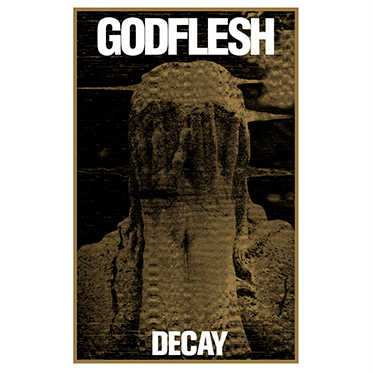
Review of ‘Decay’, the new Godflesh album that premieres this Friday
The weight of time, physical punishment and alienation manifest with an unprecedented harshness in “Decay”tenth and penultimate album by godflesh and the prelude to the definitive closure of one of the pioneering bands of industrial metal. In an era saturated with nostalgic reunions, the dissolution of the group is perceived as something painfully necessary.
Justin Broadrick has confessed that maintaining the level is already difficult for him “physically impossible.” After undergoing major surgery for an abdominal hernia caused, according to himself, by all these years of screaming in front of the microphones, the musician has significant consequences that, added to his coexistence with autism and PTSD, make clear the decision of one of the most prolific musicians of the last thirty years, responsible or collaborator of projects such as Fall Of Because (pre-Godflesh), Jesu, Napalm Death, God, Sunn O))), Ice or Techno Animal, among many others.
Justin Broadrick and his inseparable partner and bassist Ben “GC” Green deliver, with Relapse Records, a work that transcends mere sonic brutality to become a medical and spiritual testimony created between 2020 and 2025 through songs written during the pandemic confinement. Although much of the album was recorded before the hernia operation, the agonizing passages of some songs were recorded with it at its highest point of discomfort and pain, and the mixing was completed postoperatively. “Decay” It directly captures the physical pain of a human body at the limit of its capabilities with six claustrophobic cuts that cover the loss of identity, exhaustion or parasitism of Broadrick’s environment.
Between the muddy and first “Master And Slave” and the final and buttress “Consume Me”Broadrick drags himself in fatigue and agony, leaving behind a solid core of four aggressive and hate-filled songs of about five minutes each: the visceral “Living/Ending”, the cynic “Feral Colony”the alienating “Fear Of Man”and the critic and attacker with consumerism and society “Fodder.” There are six themes that at some moments show that they shared space-time with “Purge”, but infinitely dirtier, darker and noisier.
“Decay” stands like a suffocating disk to the brim and the eve of a goodbye that, although it buries godfleshwill not stop Broadrick from exploring new horizons. Promising one last experimental record statement in the coming months with, apparently, some special nod to “Streetcleaner” (that distant debut album by the English in 1989), “Decay” remains as a celebration of a natural decomposition and extinction of an unrepeatable sound beast that almost four decades later maintains its validity and originality without slipping.