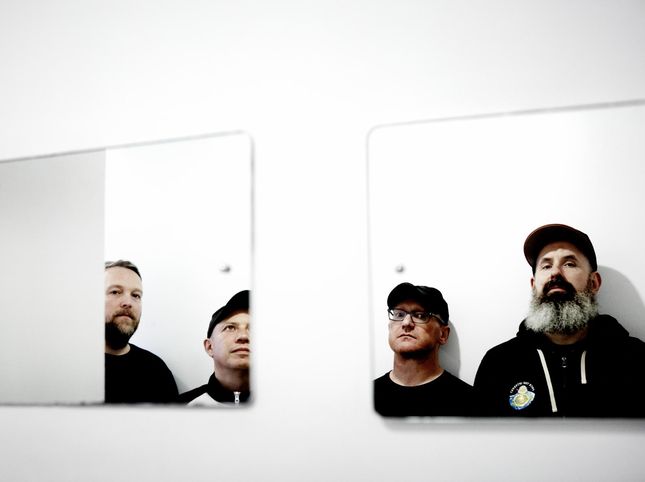
Mogwai, the return: “We never want to be the same”
Songs that sculpt new worlds, that reject nostalgia and dive into tomorrow. “The Bad Fire”, Mogwai’s new album, out on February 24th, four years after the success of “As the love continues”, was recorded in Lanarkshire, with the producer John Congletona Grammy Award winner, who joined the post-rock band in the studio. “The Bad Fire”, Scottish slang for hell, draws inspiration from a series of difficult personal moments in which the band found themselves and is a sort of exorcism in music. Colors, explosions, magical sounds: the Scottish band is back to leave their mark, once again, with captivating instrumental songs. A trademark. They have not yet been announced dates in Italy in this 2025, but something is cooking because, as the founder Stuart Braithwaite reveals, the relationship has always been strong: “I also remember with pleasure when we created the soundtrack for ZeroZeroZero, a series based on the novel by Roberto Savianoit is work of which we are deeply proud.”
A restart
But at what point does “The Bad Fire” arrive? “The release period of the previous album, ‘As the love continues’, was interesting, but difficult, the project came out during the pandemicit was a painful and very complicated moment for the Planet, there was the idea of going on tour immediately after the release of the album, but it was complex – says the artist and musician – in the end things apparently returned to normal after the pandemic period, but in reality terrible problems appeared, also linked to family and personal dynamics. So in reality this new album was even more complicated, the studio doors slowly opened and we saw the light. We are very proud to have made it all the way to the realization of this project”.
A volcano on the cover
A volcano appears on the cover, the fire is colourful, it looks like pop art. “What’s really interesting is that the Dltdesigner studio created this cover without knowing which songs we were working on and above all without knowing the title we had chosenwas a process independent of ours, but which led to a similar result. In short, we have reached the same point,” continues Stuart Braithwaite. The production of the project was handled by John Congleton, already working with St Vincent, Angel Olsen and John Grant. “The most interesting aspect of working with him is the spontaneity – recalls Braithwaite – the process was very fluid: shall we do this? Okay. Shall we work on this song? Okay. We didn’t like to think about things too much, we just did them. John has worked with big names, but he grew up with underground music, he knows how to control certain situations. And then he has a good sense of humor, that helps”. The album is rich of present and future, even in sounds, and therefore free of nostalgia: “As a band we always try to look beyondyes we photograph what has been, I think of the documentary we made, but then we look further ahead. We don’t want to be the same, repeat ourselves or recall what we were. For me, art looks towards tomorrow, not backwards”.
New sound paths
This not settling, seeking new sound solutions, is confirmed by pieces such as “Fanzine Made Of Flesh”. “It was written in Brooklyn while I was at the house of Alex Kapranos of Franz Ferdinand, in the fall of 2023. In my head it sounds like a cross between ABBA, swervedriver and Kraftwerkeven though it might seem ridiculous. At first there was a direct voice, but the last day in the studio we recorded it with a vocoder, it’s not the first time we’ve used it, but it’s very present here. It’s quite different and I’m happy with how it turned out,” recalls Braithwaite. Mogwai have been around since the mid 90’s and still today they remain a symbol. “We have changed, undoubtedly – he admits – we went from a small dimension of friendship to playing concerts in very large places. Today there are many people who work for us. But I’m sure we would be doing all this, playing and making records, even if we hadn’t turned it into a profession and if the band wasn’t popular. We would work a second job, but we would still make music. The connection between us and the fans is special, that kind of energy is our real driving force. This is what has remained unchanged in all these years: the desire to play, to make music together.”
A unique story
It came out last year the documentary “If the stars had a sound” in which we see the band’s journey from the underground to achieving mainstream numbers. Today, in the age of streaming, would a path of this type still be possible? “I think so, because making your music known today is potentially easier, but certainly economically difficult, in the sense that streaming reaches everyone, but does not allow significant revenues – he concludes – we started in an analogue era when it was really complex to reach the public, we made it thanks to the concertswhose importance has never changed.”