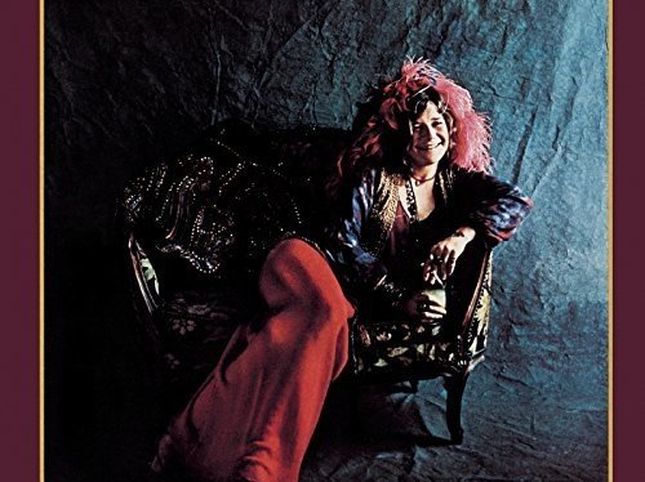
Janis Joplin, buried alive in the blues
The 4 October 1970in a hotel room in Los Angeles, rock lost one of its most beautiful voices. A rebellious and wounded spirit, free and damned. Fifty -five years later His death, the echo of Janis Lyn Joplin still lives in those who are not satisfied with this world and its limits.
The first boundaries to be torn down are around her from birth, to Port Arthur, who defines as “Christmas prison”. The conservative and male chauvinist environment is close to a girl who represents a new femininity, not domesticated, ready to scream the fragility and desires of a generation that dreams of the revolution. Of that era embodies everything: impulses and contradictions, dreams and excesses. At school – first in superiors, then to college – is derided for its appearance and for the ideals of equality in which she believes. Among the school desks The first demons are born who will lead her to look for comfort in alcohol and drugs, until they are sinking. Fortunately, however, he discovers another conditioner for the soul: music. And it is from there that the most beautiful consolations will come.
He begins by performing in the Country Clubs of Houston and other cities of Texas. As soon as it raises enough money, takes a bus to California. AND The hippy era And Joplin becomes part of several municipalities, establishing himself in San Francisco for a few years. There he becomes the vocalist of “Big Brother and the Holding Company”, a band with which in a short time he reaches such success as to convince himself that his solo career is not then such a crazy dream. In 1968, the silhouettes of the blues rock icons are well outlined: Mick Jagger. Jim Morrison. Jimi Hendrix. Janis Joplin. With the last two, Janis will also share fate: entering the circle sadly known as “Club of 27“, Of which the artists who died at just 27 years old, crushed by success and self -destruction are part.
The world is still in shock for Hendrix’s death when the news arrives on 4 October 1970 that at the Landmark Motor Hotel in Hollywood, California, the lifeless body of Janis Joplin was found. Heroin overdose. A devastating loss, even more lacerating if you think that it has not made time to live the publication of its great masterpiece: “Pearl” was released posthumously, in January 1971, and remains at first place in the ranking for nine weeks. It often happens, in the face of premature deaths: they upset and push the public to give the artist the success he would have deserved in life, like a sort of late and embarrassed mea culpa. It was the same for Jim Croce, and for many others. But the legacy that the pearl leaves is so powerful from transcend any concept of time.
More than half a century has passed since its disappearance, yet that voice hurts as it did in the sixtiesin Woodstock. From the classics, “Piece of My Heart”, “Me and Bobby Mcgee”, “Cry Baby”, to the most hidden treasures, “Turtle Blues”, “One Good Man”, “Work Me, Lord”. Vocal cords that are rust and honey together, fury and tenderness, blues melancholy and psychedelic fire. Rough and visceralJanis teaches us that imperfection can become beauty; that femininity can, must and continue to be revolutionized, also and above all when it is hindered; That The music is carnalthat on stage we consume, that in a song there is sometimes a distillate of despair to be handled with care, and to be celebrated forever.
A few weeks before his ashes were scattered in the Pacific, Joplin had bought the plaque of the tomb of Bessie SmithAmerican blues stars between the 1920s and 1930s, as well as his inspiring muse. He made us record a phrase: “The largest blues singer in the world will never stop singing”. As if he knew that, shortly thereafter, someone would say the same as her. A destiny already written in the fifth and prophetic song of “Pearl”: Buried Alive in the Blues. Buried alive in the blues.