“I have fun looking back, but I don’t particularly miss the past.”
Wendy James will lead Tranvision Vamp on the tour that will bring the band to our country in September and October. We contacted the vocalist to verify that she has things very clear… and that she is not happy about the possibility that her band could be considered a ‘One Hit Wonder’.
(You can check their tour dates at the end of this interview).
To begin, I would like to briefly comment on each of the three Transvision Vamp albums and get your opinion on each of them, starting with “Pop Art” (MCA, 88).
“Pop Art” was like a collection, a joint vision of the songs. Futuristic pop derived from classic pop, punk and glam rock influences. The New York Dolls, Marc Bolan, The Stooges, The Velvet Undergound and girl groups like Martha and the Vandellas. We loved “Blade Runner,” we loved Halo Jones, the feminist cartoon; By the time we appeared on the TV show ‘Top Of The Pops’, our ethos, our image, our music, our vision… had been completed!
What can you tell me about “Velveteen” (MCA, 89), surely your most successful album?
Perhaps it is a more sophisticated album, with more production details, especially on the title track, “Velveteen,” which included string arrangements. “Baby, I Don’t Care” was a huge worldwide hit. I guess this album is really important because it catapulted us, to a greater or lesser extent, to success in every country in the world. For a moment, at the time when pop music reigned, we were on everyone’s lips as ‘the band of the year’! It was 1989. It was awesome to release “Pop Art” in 1988 and come back again with “Velveteen” in 1989. Most music journalists usually warn about the ‘second album’ curse, but that wasn’t the case for us. We reached world number one.
“The media was completely sexist, with lewd presenters asking inappropriate questions”
For its part, “Little Magnets Versus The Bubble Of Babble” (MCA, 91) was the group’s last release.
I was going from my teens to my twenties. Both Nick (Christian Sayer) and I were evolving towards cultural influences like Dr. John and, as always, films of the period, with influences from many film clips and many references to Dr. John. We felt very good about the content of this album: “If Looks Could Kill” is one of my favorite Transvision Vamp songs. The album became our biggest sales success in the United States! At the same time, the head of the British record label decided he didn’t like the direction the band was taking. Because of that, it delayed the national release, which was crazy: while the rest of the world received the album very well, in the UK it was delayed. Then life did its thing and we decided to separate on a tour of the United States, in San Diego. So we split up before the album was released in the UK. It’s now available on a box set released by a label owned by the BBC! It has nothing to do with me, they gave the rights to Universal Music.
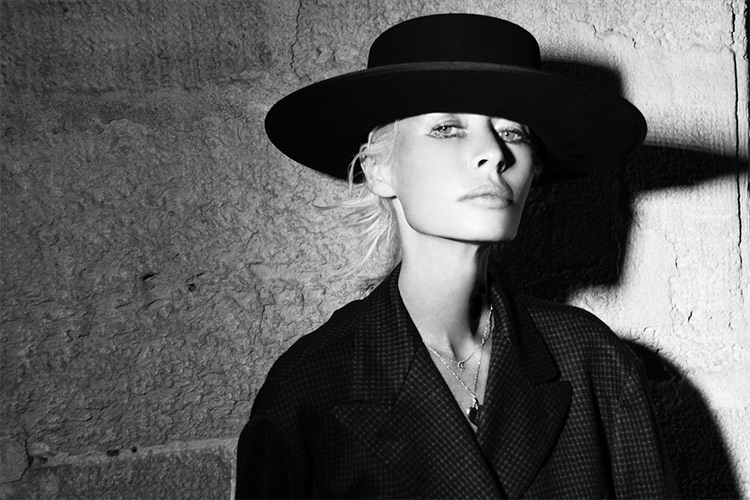
In that year, 1991, you starred in a spectacular cover of the prestigious magazine The Face. How do you remember it?
It was a very interesting phenomenon! In the pampered world of haute couture, everyone thought it was fabulous. The stylist went to Paris and borrowed a catwalk piece from Thierry Mugler, Jurgen Teller was behind the lens and we all thought we had achieved the same beauty. Then, the reality is that, when the magazine came out, the music press destroyed me. They were already a sexist institution: journalists, both men and women, published very negative and clichéd comments about female artists and praised the more banal male artists. And then, reality hit me even more! I lived on Portobello Road and the local newsboy, John, thought he was doing me a favor by ordering a huge number of copies of the magazine and plastering the cover all over the wall of his shop. Seeing my almost naked body in my own neighborhood and its availability for everyone to see was a bit shocking! The hype was so shocking that I booked a ticket to New York, but in the cabin of the plane everyone was reading the magazine, and when I arrived in New York… all of Broadway was also wallpapered with the cover! I had to live with it!
What would you say were the main influences on Transvision Vamp? It seems obvious that The Runaways and Blondie would be among them, but did you have any singers that you especially looked out for?
I have always said that I didn’t pay attention to anyone and I always felt on the same level as the others. Although Debbie Harry was certainly my pin-up and she had Blondie albums since I was ten years old! In those days I didn’t like The Runaways too much. I love pure female vocals, like in The Shangri-Las, Martha & The Vandellas… A lot of girl groups that sang realistically. As for female rock & roll, I loved Elastica!
What was the music industry like in the late ’80s and ’90s for a woman leading a band? I can imagine that some issues were not entirely pleasant, being that at that time it was a predominantly male industry and I would say almost proudly sexist.
The media was sexist, but I only realized that by looking back and watching videos on YouTube, etc. At that time, it was a given in society that male bosses pressured their female subordinates and that women were tasked with raising a family, while men earned money and enjoyed freedom. The media was completely sexist, with lewd TV presenters throwing out their inappropriate questions. However, my personality meant that I never considered myself less than anyone. I felt like a winner from the beginning, so I never felt intimidated or subordinate to anyone! Plus, he was in some kind of gang! A gang of musicians for which I was the leader and who treated me the same as the rest. That’s the wonderful thing about musicians in rock and pop. It is very much an equal opportunity culture where you win or lose, but gender has nothing to do with it.
Were you ever afraid that Transvision Vamp would turn out to be a ‘One Hit Wonder’? Do you think that, in some way, “Baby I Don’t Care” unfairly overshadowed the rest of your career?
What an illogical question! Maybe for someone who doesn’t care much about music, but heard “Baby, I Don’t Care” on the radio, that’s all they know about me, but considering I’ve written and recorded ten albums and have loyal fans all over the world… I’m known for a lot more than that song!
In any case, “Baby I Don’t Care” still sounds really good today. What do you feel today when you play this song live?
My band is the best, so when we play it we do it with the vigor and enthusiasm of eighteen year olds. It’s pure joy!
What were the reasons for the separation of Transvision Vamp in 1992?
Absolute exhaustion! We did three world tours in 1991 and, as crazy as it sounds, the only decision Nick and I could make to give ourselves a break was to split up. We never officially announced the end of the band, we just stopped! I collaborated with Elvis Costello, then I started writing new songs and finally, in 2002, I moved to New York. Fantastic!
What do you think would have happened in the 90s if you had remained active as a band? Would you have fit into the Britpop trend?
It’s all guesswork. Who knows. I try to reach a good level every time I release music or give concerts, so it’s very possible that yes.
You have a good handful of solo albums. How do you see your career outside of Transvision Vamp with the perspective of the passage of time?
I feel totally proud, safe and happy. The adventures I’ve had in life recording all these albums, the places (Paris, Sydney, California, New York…) And also the musicians I recorded with! From Lenny Kaye to James Williamson or Jim Sclavunos; the engineers I’ve worked with are also incredibly talented. All the people I work with every time I record an album! We know each other and we know what we are doing.
In fact, one of the first things you did after the dissolution of Transvision Vamp was to collaborate with Elvis Costello on what was your solo debut, “Now Ain’t The Time For Your Tears” (MCA, 93). How did that collaboration come about and how did it work?
I was on Transvision Vamp’s latest US tour and ran into Pete Thomas, the drummer of The Attractions. I told him we were going to split up in about ten days and asked if Elvis would write me a song, and Pete said, ‘Why don’t you write to him?’ So I did it! That night, on hotel letterhead, I wrote to Elvis. Afterwards, Transvision Vamp continued to tour the West Coast of the United States, and when I returned to London, on my doormat there was a cassette full of his songs. He has since published them all, calling them “The Gwendolyn Letters.” We recorded in the south of France and mixed in Hollywood, at Sunset Sound, where the Stones made “Exile On Main Street” (Virgin, 72). It was an exciting and crucial experience: I decided that, from then on, I would only sing my own songs and my own lyrics.
What is nostalgia for you? Do you think it’s a good or bad thing?
It’s so fun to think that my life is an archive now! When young people see old images from the eighties and nineties it’s very funny, because that’s from when I was in my twenties. So my brain, my life and my memories are now like a BBC archive reel. But I also always live in the present. So it’s fun for me to look back, but not in the sense of missing it especially. I enjoy the here and now, every day!
Why did you decide to resurrect Transvision Vamp in 2025? What are your expectations for the next concerts?
Transvision Vamp resurfaced by being in the right place and at the right time. I had contacted some Australian promoters to plan The Wendy James Band’s tour of Australia and New Zealand, and the promoter said, ‘Why not Transvision Vamp?’ And I said, ‘Okay!’ Dave Parsons, from the original band, is still in my lineup and I continue to work with James Sclavunos, Alex Ward, Pip Stakem and Matt Millership. They’re amazing musicians, so we definitely sound more authentic than the first line-up. We included songs in our repertoire that the first version of Transvision Vamp never played!
What is the current line-up of Transvision Vamp live and what are your current concerts like and what are the main differences with the Transvision Vamp concerts of the late eighties and early nineties?
Wendy James on vocals, Alex Ward on guitar, Pip Stakem on guitar, Dave Parsons on bass, Matt Millership on keyboards and James Sclavunos on drums. The main difference is that we will play for one hour and forty minutes, all the hits and favorite songs from all the Transvision Vamp albums. And as I said before, the musicians are incredibly talented, so we give it our all. This is a fucking good band!