
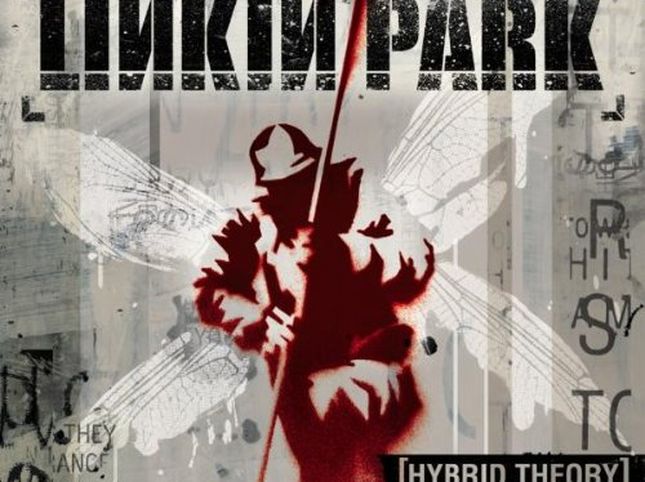
“Hybrid Theory”, the best-selling debut of the century, turns 25
On October 24, 2000 i Linkin Park released their debut album titled “Hybrid Theory” (read the review here): pure nitroglycerin. There was everything in it and everything worked like a charm. The heavy guitar riffs mixed perfectly with the hip-hop rhymes. Without forgetting the essential element that distinguishes every song that aspires to be remembered: the chorus.
The Californian band knew how to write a chorus and in no song more than “In the End” this ability comes out. The song was released as the album’s fourth single “Hybrid Theory” on 9 October 2001 and remains, after all these years, the best-known and most representative song of the group. Just to give an example that can be considered objective, the song’s plays on Spotify are close to three billion.
About the song
Mike Shinoda
he honestly admitted, “You can’t say ‘This is what’s going to be popular’ and then make that thing. You can only say that in retrospect. The fact is, yes, it was one of our biggest songs, it was our biggest song for a long time.”
The group was formed in 1996, it was composed of the then nineteen year old
Mike Shinoda
together with the guitarist
Brad Delson
and the drummer
Rob Bourdon
and his name was
Xero.
The band quickly realized that what they needed was a rock singer of great impact and power. This is where it comes into play
Chester Bennington
that when he heard the pieces of the
Xero
he immediately understood that there was plenty of tripe for cats in that place. As he recalled in 2002 speaking to Rolling Stone magazine: “When I got that tape, we (Chester and his first wife, ed.) looked at each other and said, ‘There you go, that’s the one. It’s going to happen, even if it takes five years.'”
Bennington then decided to move from his native Arizona to California working like never before together with Shinoda, Delson, Bourdon and the other members of the band: the
DJ Joe Hahn
and the bass player
Dave Farrell
. From
Xero
they transformed into
Hybrid Theory
– yes, exactly what would be the title of their first album some time later – and, finally, in
Linkin Park
.
Chester Bennington
he gave body and soul to the realization of the project, as he recalled in conversation with Revolver. “I went there and spent a year without working. All we did was the band. We lived the band! We did three years of work in those nine or ten months before we finally got picked up by Warner Bros.” As he explained
Brad Delson
to Rolling Stone: “We’ve all made sacrifices, but Chester’s sacrifice was unique. He really had a lot to risk, he was extremely motivated. He told us, ‘Guys, I don’t think we’re trying hard enough.'”
Mike Shinoda
he recalled in a 2020 interview with MusicRadar how he worked side by side with Chester and how he was won over by his enormous vocal abilities. “He was really extraordinary in that way. We didn’t know. I feel like we didn’t even know the scope of him when we met and started writing together and experimenting with how he would fit into the band. One minute he’s Dave Gahan from Depeche Mode and the next minute he’s Layne Staley. He’d basically come to my house and it would just be me and Chester or me, Chester and Brad. It was maybe ’99, or ’98, we were working on new material and we saw in which direction we could push his voice. At the time he was still developing his identity as a singer.”
Chester Bennington
he had had, to say the least, a turbulent adolescence. He experienced the tunnel of drugs and, even if he had emerged from it, he still bore deep scars, especially mental, which were probably the basis of his suicide in 2017. Chester channeled these traumas into the pieces of
Linkin Park
. In
“One Step Closer”
in
“Crawling”
or in
“Papercut”
. Although the most important song of
“Hybrid Theory”
it was, without a doubt,
“In the End”
. The song took shape during rehearsals in a space the band rented in West Hollywood.
Mike
Shinoda
he told it like this
“In the end”
to Rock Sound: “The song is about the fact that there’s a strange struggle with desperation and the ephemeral nature of time and our lives. The strange thing about the song is that it talks about these things and says, ‘I have no answers.’ Because usually a song isn’t about not having answers. It just goes around in circles, lyrically. Especially when I was young, that’s just how I felt, that’s how we all felt. We didn’t know what to think of things and, in a in a certain sense, this is what still happens today. It’s a universal and timeless thing.” In another interview, with AltWire, he said: “Sometimes I feel like a song is really special. I had that feeling with ‘In the End’.”
Always Shinoda, always talking about
“In the end”
he told Rock Sound: “I think Rob Bourdon was the first one to show up at rehearsal the next day. I played it for him and he was delirious.” “It’s the song we’ve been waiting for,” the drummer would have commented
Linkin Park
after listening to it.
After a 2013 interview by
Chester Bennington
with Vmusic some got the idea that the singer of
Linkin Park
hated
“In the end”
. Here’s what he said: “I don’t really get involved in choosing singles. I learned that after making ‘Hybrid Theory.’ I was never a fan of ‘In the End’ and honestly, I didn’t even want it on the record. How wrong was I?” Afterwards
Mike Shinoda
clarified to
Howard Stern Show
that things weren’t exactly like that. “He didn’t hate it. No, no, no, no. It’s actually a misconception. Some people think he hated the song, but he liked it. He only liked the really heavy stuff, and so when people said, ‘This should be a single,’ he’d say, ‘Uh, okay. That’s okay.’ That’s not what he would have chosen.”
In fact, already in that interview with Vmusic Bennington admitted that he needed some time to appreciate the song. “Now I love ‘In the End’ and think it’s a fantastic song. Now I really understand how beautiful it is, it’s just that it was hard for me to understand at the time.” Be that as it may, the numbers in their indisputable truth tell us that “Hybrid Theory” it has sold over thirty million copies worldwide and is the best-selling debut album of the 2000s. I’d say that’s enough.
