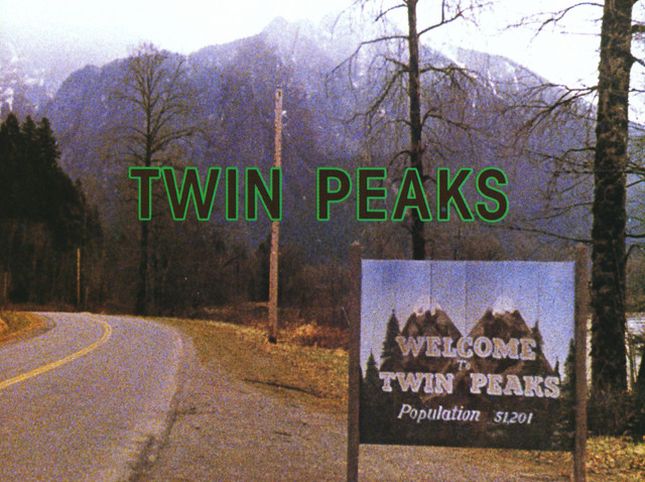
How “Twin Peaks” changed TV series theme songs
Today the adjective “iconic” is in fashion, but if there is a truly iconic sound in the history of TV it is that of the “Twin Peaks” theme song: a few suspended notes that create a world, that of a series that has redefined the boundaries of the television story and its relationship with music. David Lynch was one of the most visionary and original directors of recent decades – also for his work on soundtracks, especially together with the composer Angelo Badalamenti, who passed away at the end of 2022.
The two began working together in 1986 with “Velluto blu”, continuing the partnership until the noughties. But their best-known work together is the soundtrack to “Twin Peaks”, with which Lynch arrived on TV in 1990: at the time it was unthinkable that an “auteur” film director would work for the small screen.
Created together with Mark Frost, “Twin Peaks” told the mysteries linked to the murder of Laura Palmer, a girl from the American northwest, with a dark and original language that insisted on the dark sides of the American province, in a disturbing way, in stark contrast with the reassuring stories that were seen on the small screen. In reality the ratings were anything but exciting: after the first episodes they dropped significantly, so much so that the series ended in 1991 after just two seasons. But it profoundly marked the imagination of the period and Lynch wanted to make a third one in 2017, 25 years after its debut.
Part of the mystery was built precisely through the music, and in particular with the theme song, Falling: it was composed by Angelo Badalamenti and released both in the instrumental version and in the version sung by Julee Cruise, with the lyrics written by Lynch himself. It differed starting from the length: not that of a short theme song but that of a traditional song (2 minutes and 36 seconds, an eternity for TV). Music was delegated the role of confusing the spectator while at the same time recalling narrative models as high as cinema and as popular as soap operas.
The sung version already appears in the first episode, when Julee Cruise performs at the Roadhouse, the town bar where many important events take place: she sings Falling And The Nightingale while a fight breaks out in the club. The Roadhouse will also return in the third season of 2017, with special performances in almost every episode, from Julee Cruise herself to Eddie Vedder.
With “Twin Peaks” Lynch completely rewrites the model of theme songusing it in a more evocative than didactic way, and transforming the soundtrack not only into a sonic trademark of the series, but into a leitmotif also recurring within the sequences. With Twin Peaks the theme song is no longer just a gateway to the world of the series: together with the music and songs in the episodes, it becomes an integral part of the story. Something that from the zero years onwards will become a constant of seriality.
In this video, Badalamenti explained how the theme of the series was created