How rock stars were in the Nineties
Among the famous peoplefrom exponents of cinema to music to television personalities, especially international ones but not only, a new social trend has taken hold which shows what they were like in the nineties. This trend, summarized by the title “What were you like in the ’90s?”, has led to the proliferation of short videos constructed as small montages of memoryin which a present image – often shot today, in slow motion or posed – is followed by a sequence of photographs and archive clips capable of take audiences back thirty years. It is a simple but powerful mechanism, which fits into a broader movement of nostalgia and revival which has been crossing pop culture for years, between aesthetic returns, continuous references to MTV, to the language of video clips and to a form of public exhibition that is still analogue, less filtered, more physical, where artistic identity was built through iconic images even before through the algorithm.
It goes without saying that it is the background to this trend “Iris” by Goo Goo Dollswhich from the first notes reactivates a collective memory, capable of spanning different generations. The song, originally released by John Rzeznik’s band on its 1998 sixth studio album, “Dizzy up the girl,” is a song that millennials have never really abandoned and that Gen Z has rediscoveredhelping to bring it cyclically back to the center of contemporary listening. Last year it returned among the most listened to songs in the United States, also thanks to its presence in the soundtrack of “Deadpool & Wolverine” and in the “Shrinking” series, so much so that the frontman defined this as the group’s moment of greatest success in an interview with the “Wall Street Journal”. Today “Iris” becomes the perfect soundtrack to accompany an only apparently light question, “What were you like in the 90s?”, which turns into a visual reflection on identity, transformation and permanence. It is not surprising that among the first to participate in the trend are the Goo Goo Dollsbecause their trajectory in the Nineties perfectly describes the transition of an entire scene, from a rougher and alternative matrix, still linked to independent circuits and college radio, up to a progressive opening towards a more accessible and adult sound, culminating in the success of “Name” and then definitively consecrated by “Iris”, which marks the band’s entry into a global dimension, between soundtracks and continuous radio rotations.
Among the participants in this recent social trend we find many artists who have become a symbol of the nineties or who linked a significant moment in their career to that decade, such as Billy Corgan of the Smashing Pumpkins and Bryan Adams, but also Bon Jovi. Alongside them, other icons of that era – from Oasis to Blur, from Pearl Jam to Foo Fighters – have not necessarily joined the format, but some of them still continue to work on memory, re-proposing archive materials, historical performances or images that reactivate the same type of nostalgia. THE Red Hot Chili Peppersfor example, in recent days they have recovered Ross Halfin’s shots from 1990, i Pearl Jam they re-proposed a live video of “Black” from 1992’s MTV Unpluggedwhile i Blur make archive sharing a constant practice. Even Lenny Kravitz, but above all No Doubt, continue to propose photo or video from thirty years ago. For Gwen Stefani’s band they arrive above all with a view to exploiting the popularity of “Don’t speak” to remember the reunion that will take place with the residency scheduled for May at the Sphere in Las Vegas. Then there are those who don’t want to be outdone by participating in the trend, but in their own way, like Robbie Williamswho after a current selfie of his – instead of proposing old photos of himself from the Nineties – pranks everyone with a historical shot of Norman Wisdom.
The same irony is also implemented in Italy by Cleothe singer of Bambole di Pezza. Remaining within the borders of our country, J-Ax instead decides to take the trend on TikTok seriously. Alice Cooper, on the other hand, does everything on his own, bending the trend to his own aesthetic, and participating with a video with the right caption, but choosing one of his songs, the hit “Poison”, instead of “Iris”. There is no shortage of pop stars like Natalie Imbrugliawho linked much of his fortune to the Nineties with “Torn”, and rap stars like Snoop Dogg or the symbolic groups of that decade such as Spice Girls And Backstreet Boys. SZA instead participates in the trend by personally rereading the Goo Goo Dolls classic. In between, there are also institutions such as Abbey Road Studios, which are riding the wave of the trend with a carousel of great musicians who crossed the threshold of the historic studios three decades ago.
Among the bands that went through an important transition thirty years ago are the Bon Jovifor example, who in the nineties abandoned the excessive aesthetics of the previous decade to build a more mature identityboth sonically and visually, moving from “Keep the faith” to “These days” and demonstrating an ability to adapt that keeps them at center stage even in a context dominated by alternative rock. For Jon Bon Jovi’s band, participation in the trend is even doubleboth through the frontman’s club profile on Instagram and the band’s official profile on TikTok:
Aerosmith doesn’t hold back eitherremembering how they went through the decade transforming their hard rock into an increasingly hybrid language, capable of communicating with MTV and cinema, until they found in “I don’t want to miss a thing” a perfect synthesis between ballad and global spectacle.
Participation in the trend of, among others, Bryan Adams who with his radio rock was one of the protagonists of the decade between 1990 and 2000, opening the nineties with “(Everything I do) I do it for you”, soundtrack of “Robin Hood: Prince of Thieves” with Kevin Costner, and number one in 1991 on the annual singles chart in the United States of “Billboard”.
In parallel, the decade also constructed another narrativemore underground but equally decisive, which arrived with the affirmation of punk and alternative music outside the underground. THE NOFXwith “Punk in Drublic,” embodied a form of resistance to the industry, rejecting the major labels just as the genre returned to center stage. While the saga of Eric Melvin against Fat Mike continued, the latter shared a video on his official social profile to ride the wave of the “Dad, what were you like in the 90’s?” trend, with photos that hark back to the group’s golden period in the Nineties.
The Offspringwith “Smash” and then “Americana”, transformed that same language into a global phenomenon, helping to bring those fast-paced, melodic hardcore-inspired, yet captivating sounds out of the underground and into the mainstream. The band participated in the trend by choosing Guy Cohen as the protagonist of its video, the “white guy” of the well-known video clip of “Pretty fly (For a white guy)”, the group’s hit and symbolic song of the Nineties and the establishment of punk rock on the radio and on MTV.
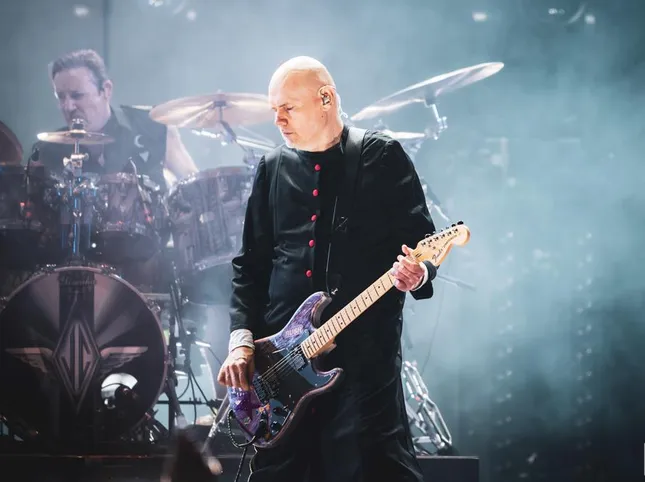
The Smashing Pumpkinsinstead, they perhaps represented the most complex synthesis of the decadeestablishing itself as a band capable of move between introspection, artistic ambition and commercial successmoving from “Gish” to “Siamese dream” to “Mellon Collie and the Infinite Sadness”, and building a visual and sound imagery that still today defines the very idea of alternative nineties. Not shying away from the trend, Billy Corgan takes audiences back to that period with a carousel of archive photos which somehow retrace the first years of the band with its changes in styles and hairstyles.
Even those who were not yet protagonists in those years, like i Simple Plandecided to use the trend for talk about the period of your training and apprenticeshipbefore the actual debut at the beginning of the 2000s. “I’m just a kid”, taking the title of their first single from 2002, is the response that the Canadian band gives to the trending question “What were you like in the ’90s?”.
Queen also indulge themselves on TikTok and they don’t shy away from participating in the trend of the Nineties. After a clip of Brian May and Roger Taylor of Queen taken from their speech to receive the Polar Music Prize in 2025, the film offers a series of photos of your artists to remember their decade after the death of Freddie Mercury in 1991. Some images of the carousel are in fact taken from the Freddie tribute event held on 20 April 1992 at Wembley Stadium in London.