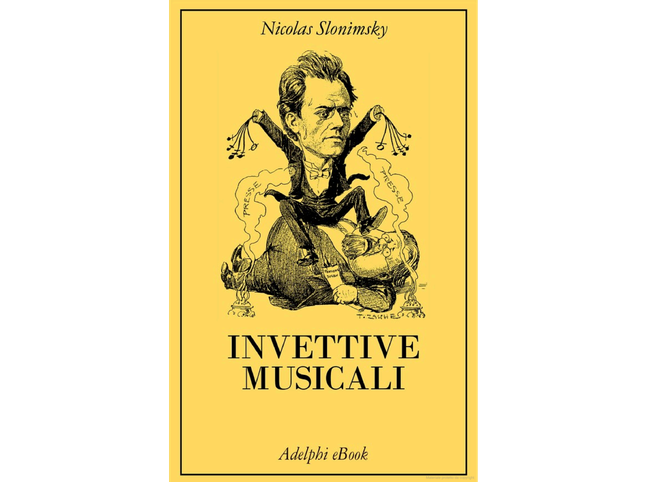
Carlo Boccadoro, when the critics don’t mince their words
«Musical invectives», the book by Nicolas Slonimsky recently published by Adelphi Edizioni, is a sample of «prejudiced, unfair, rude and singularly unprophetic judgments» that authoritative – but not always so enlightened – critics have expressed towards great composers, from Beethoven to Copland. We discover for example, by scrolling through the quotes cut out by Slonimsky’s sharp scissors, that Berlioz’s music is similar to “the babblings of a great baboon”, and Gershwin’s “An American in Paris” is “a rant… vulgar, verbose and useless. Brahms was called a “sentimental epicurean”, Wagner was called a “demented eunuch”, Verdi was labeled as an “Italian gentleman” author of “rants for brass instruments and tinkling cymbals”, Liszt as “a snob released from a mental asylum”… Slonimsky’s anthology can therefore be read with great enjoyment, and with a bit of regret for how the criticism has been reduced contemporary – also and above all that of popular music – which no longer dares (or can no longer dare to) be “truly” free and independent criticism.
I spoke about this with Carlo Boccadoro, who is the editor of the Italian edition of Slonimsky’s book.