“This album is an exploration of who I am right now”
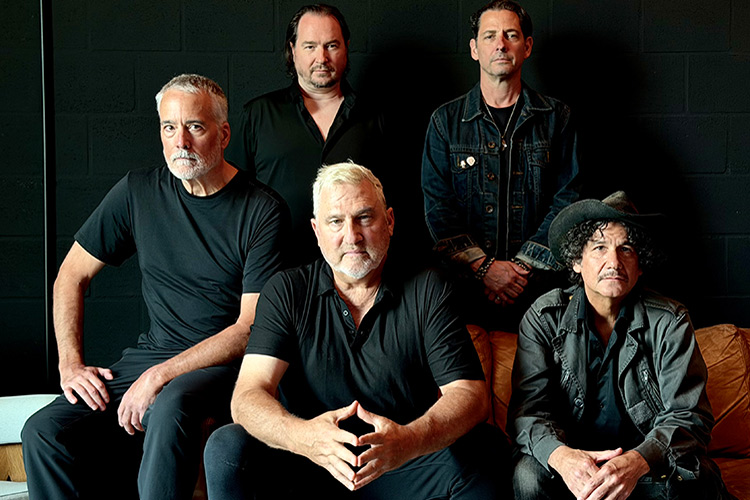
Greg Dulli has been using songs as a mirror for almost forty years. He does not write diaries or memoirs. His way of documenting the passage of time is the albums he has published with The Afghan Whigs and under other projects. And the next chapter of the story, “Soft Control” (Royal Cream/BMG, 26), once again confirms that idea.
“Soft Control” does not seek to reinvent the sound of The Afghan Whigsnor look to the past. It simply captures who is today one of the most personal songwriters in American rock. Although “Soft Control” gives off a very defined identity, a charming Dulli assures that he never starts from a previous concept. The songs appear independently and only later do you discover what unites them. “There was no general theme. The songs appeared and I began to find connections between them. I wrote many for this album and I stayed with the ones that seemed to belong to the same family. When I have three or four songs that I know will be on the album no matter what, then I understand that the album has started its journey.” This way of working explains that pieces as different as “The Deepest Part of the Darkest Shadow”, “Mariah Luster” or “Memphis, Texas” share the same atmosphere despite having been written at different times.
“I learned a long time ago that I could show my vulnerability in a song.”
Each disc of The Afghan Whigs It has its own character, but Dulli rejects the idea of building fictional universes. For him, each album is, as we said at the beginning, simply a photograph of a specific moment in his life. “I have never written a diary. My records do that function. This is the tenth album with The Afghan Whigs and I can go back to old records to remember perfectly who I was then. ‘Soft Control’ is me right now. “It’s an exploration of who I am at this moment in my life.”. That sincerity has been a constant throughout his career. Far from softening it over the years, he believes that precisely accepting his vulnerability was what allowed him to grow as a composer. “A long time ago I learned that I could show my vulnerability in a song. Since then I stopped being afraid to say anything. That gave me enormous freedom. I think albums like ‘Congregation’ (92) or ‘Gentlemen’ (93) made people start to trust me.”
It is surprising that, after so many years, The Afghan Whigs continue to avoid any sense of repetition. Dulli is clearly right. He continues to listen to music with the same curiosity as when he was a teenager. “I listen to music all day. I follow radio stations from different countries and I constantly use Shazam to discover new artists. I’m always looking for inspiration and I think that has allowed us to maintain our identity without ever making the same album.” Among his recent discoveries, one name stands out. “There is a Swedish group called Dina Ögon that I love. “It has been my great discovery in recent months.”
But back to the album. One of the most striking features of “Soft Control” is the balance between darkness and hope. A duality that, according to Greg, is still a reflection of life itself. “The darkness will always find you. You don’t have to go out looking for it. Maybe when I was younger it did. Now I’m still a hopeful person. I try to believe in the best in people because not doing so would be a kind of death.”
Recorded between Joshua Tree and New Orleans, in an environment of absolute trust, the album flows completely naturally. “They are places where I feel completely free. I have been working with these people for decades and I don’t have to worry about anything other than the music”. He also believes that this comfort has contributed to his best vocal performances. “I think I sing better than ever now”. The explanation has its own name. “Singing with Mark Lanegan again forced me to become a better singer. He was one of the best vocalists I’ve ever heard. If you went out of tune with him you were completely exposed. Singing with him was like going to singing school.”
Instead, his songwriting remains as idiosyncratic as ever. It never begins with words. “I start with a riff, then I build the arrangement and then a melody appears made up only of sounds and syllables. The words come at the end. I listen to those recordings many times until some begin to emerge on their own and then I build the story.”. This method causes even him to discover the meaning of some compositions once finished. “Songs like ‘Mariah Luster’ and ‘Memphis, Texas’ take several listens. Even I had to wonder what they were really talking about. I like a song to remain a mystery even to the person who wrote it.” Although not all of them work the same. “I also enjoy songs that you understand immediately. There’s room for both.”
Of course, after months of living with “Soft Control”, He still has a very clear favorite. “It’s ‘Loose Talk’, the last song I wrote. I had never written a pop song like that and I fell in love with it. Maybe because it was the most recent I listened to it over and over again. I have a special affection for it”. Now comes the time to see how those songs breathe on stage. Some have already demonstrated their potential during the first concerts in spring, while others are still awaiting their premiere.
“It’s been great playing ‘House of I’ and ‘Duvateen’. The latter has a very important emotional weight for me. But I’m also really looking forward to playing ‘Loose Talk’, ‘My Lover’ and ‘Jungle Roux’. There are songs we haven’t tried yet and I’m looking forward to finding out what happens when we play them in front of an audience.”